Woven away: Tabriz weavers exit as Iran’s carpet legacy frays
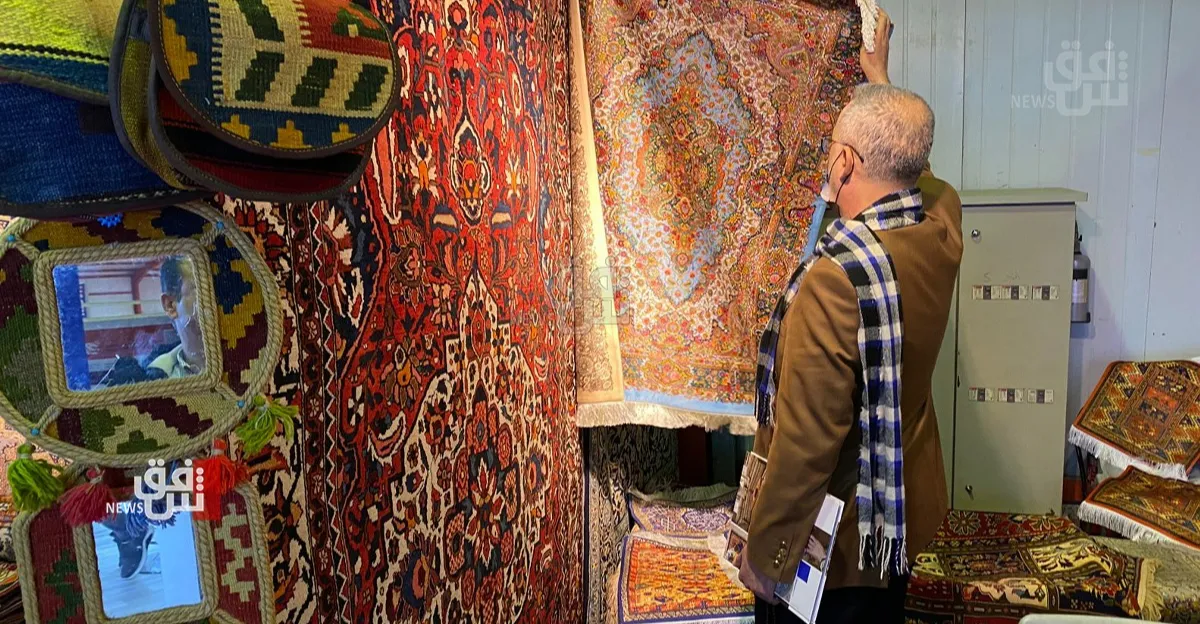


Shafaq News- Tabriz
Iran’s centuries-old carpet industry is confronting an accelerating talent drain, as skilled weavers from the northwestern city of Tabriz migrate to the Kurdistan Region of Iraq and Turkiye in search of steadier income and working conditions.
Officials in Tabriz’s handicrafts sector say artisans from West Azerbaijan and other border provinces are relocating in growing numbers to Erbil and Turkish cities, warning that continued neglect of the handwoven carpet sector risks hollowing out one of Iran’s most iconic industries.
In remarks carried by Fars News Agency, Ayoub Bashiri, deputy head of the Carpet and Tourism Committee, said the Kurdistan Region and Turkiye have become primary destinations for migrating carpet weavers.
Speaking at a specialized session at the Tabriz Chamber of Commerce on challenges facing the carpet and tourism sectors, Bashiri described the outflow as a warning bell, cautioning that inadequate livelihood support and limited welfare provisions are pushing skilled labor toward markets that offer more predictable returns.
For decades, Tabriz has stood at the center of Iran’s handwoven carpet identity, a brand synonymous with intricate design and export prestige. Industry representatives now fear that the erosion of its artisan base could weaken both production capacity and cultural continuity.
Bashiri stressed that carpet production extends far beyond loom work. A single rug sustains as many as 15 professions, including designers, dyers, spinners, weavers, finishers, transporters, and exporters. Any disruption in that chain, he said, would carry economic and social consequences that transcend borders, given the interlinked trade networks between Iran, Iraq, and Turkiye.
Industry officials also criticized the absence of specialized carpet exhibitions in Tabriz in recent years, arguing that a revived international fair could attract traders and investors from neighboring countries, strengthening cross-border tourism and commerce. Bashiri added that the long-anticipated Tabriz Carpet Museum building is structurally complete and awaiting interior outfitting, positioning it, if finalized, as a cultural anchor for the city’s historic industry.
Mohammad Maleki, second deputy head of the Carpet and Tourism Committee, said tourism tied to handicrafts has been among the sectors most affected by current economic pressures. He urged authorities to introduce targeted support packages to prevent what he described as a looming crisis in a service industry that binds regional communities through shared heritage and trade.
As skilled weavers depart, the challenge for Iran is no longer simply export competitiveness. It is retention, of craft, of labor, and of a cultural asset long woven into the country’s economic identity.