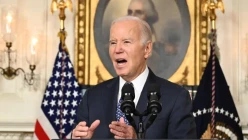
Trump slows Iran strike amid broader strategic review


Shafaq News
By Frank Musmar*
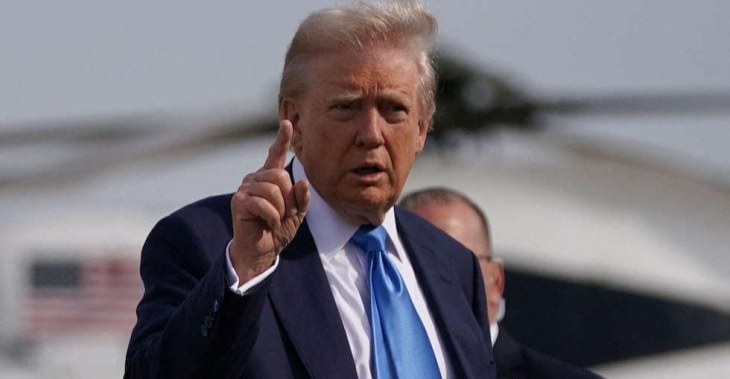
US President Donald Trump has reportedly delayed planned military strikes onIran due to a combination of diplomatic concessions, requests from allies, and tactical reassessments. Highlighting these factors can reassure the audience that decisions are made with caution and consideration. The delay reflects a careful approach, emphasizing that the situation remains under review and not subject to impulsive action.
Some reports said Israeli Prime Minister Benjamin Netanyahu asked Trump to postpone the strikes to give Israel time to bolster its missile defenses against a guaranteed Iranian retaliation. Other reports noted that Gulf allies —specifically Saudi Arabia, the United Arab Emirates, Qatar, and Oman— have lobbied the administration to avoid military escalation, reflecting shared concerns about regional stability and security. Recognizing these regional worries can help the audience feel that their security interests are acknowledged and considered in decision-making. While military action is paused, the administration maintains that"all options remain on the table.” This openness can help the audience feel informed and trust that the situation remains under careful review.
The tactical reassessment is the most important, as the need for US aircraft carriers to arrive in the region is a key factor in the delay. As of mid-January [2026], there are no US aircraft carrier strike groups currently in the Persian Gulf. The nearest carrier, the USSAbraham Lincoln, was in the South China Sea and is reportedly being repositioned toward the Middle East to support regional security. This journey could take about a week. This deliberate repositioning demonstrates a careful strategy to strengthen US military readiness, thereby reassuring the audience that the delay is a thoughtful and well-planned decision.
The US aircraft carrier strike group's arrival in the Arabian Gulf largely depends on its starting location and the operational tempo of the transit. From the Indo-Pacific/Indian Ocean, a carrier can arrive in approximatelyone week. The USSAbraham Lincoln, currently repositioning from the South China Sea, is expected to enter the region by late January 2026, a journey of about 7 days. From the US West Coast, a standard transit involving stops and exercises typically takes4-6 weeks. In an urgent scenario, it might be possible in just under a month (around 28 days). From the US East Coast, atransit to the Middle East requires crossing the Atlantic and then the Suez Canal. A carrier can reach the entrance to the Mediterranean in about 5-10 days, and the entire journey to the Arabian Gulf could take two to three weeks. Accordingly, I am expecting the strike to be rescheduled to the end of the month.
Why is it essential? Considering requests from allies not to use the American bases in their countries to avoid retaliation from whatever is left of the Iranian regime's supporters, it would be more reasonable to use the aircraft carriers and to give the Iranian regime the reason to attack the Gulf states, which will expand the conflict and affect the oil market.
*Dr. Frank Musmar is a political analyst specializing in American politics and the Middle East.
These opinions are the author’s own and do not necessarily reflect the views of Shafaq News.