Iraq under US financial scrutiny: When corruption meets sovereignty


Shafaq News
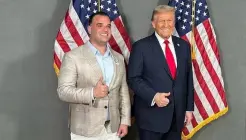
The US Envoy Mark Savaya’s announcement of a comprehensive audit of payments and financial transactions, coupled with potential sanctions targeting “malicious networks,” has sparked widespread political and legal controversy across Iraq amid escalating US pressure over suspicious financial activities and fiscal integrity.
This dispute unfolds as Iraq ranks 140th out of 180 countries on Transparency International’s 2024 Corruption Perceptions Index, amid repeated US accusations of smuggling and money laundering networks linked to armed factions and Iran.
While Washington frames its actions as a defense of the international financial system and anti-terrorism financing, Iraq remains polarized. Some condemn these measures as infringements on national sovereignty, while others interpret them as external pressure triggered by persistent domestic failures to curb corruption.
Escalating Sanctions
The sanctions campaign mainly dates back to 2018, targeting Iraqi banks, money transfer companies, investment and tourism firms, aviation sectors, political figures, and armed faction leaders.
Since October 2023, escalating tensions between Iran and its regional allies versus Israel, backed by the United States, have driven a marked intensification of US sanctions targeting Iraqi individuals and entities accused of advancing Iran’s regional agenda. The Office of Foreign Assets Control (OFAC) began by sanctioning senior Kataib Hezbollah commanders and intelligence operatives, including Hasan and Muhammad Qahtan Al-Sa’idi and Haytham Sabih Said, for their support of Iran’s IRGC-Quds Force.
By January 2024, sanctions expanded to Iraq’s aviation sector, blacklisting Fly Baghdad and its CEO, Basheer Abdulkadhim Al-Shabbani, for facilitating the transport of personnel and equipment for Iran-aligned groups.
The campaign widened further in 2025, targeting financial and commercial elites such as Ali Mohammed Ghulam Hussein Al-Anssari and banking executives Ali and Aqeel Meften Khafeef Al-Baidani for laundering funds and sustaining “militia” financing channels. Treasury officials also dismantled a major oil-smuggling operation led by Iraqi-British businessman Salim Ahmed Said, accused of disguising Iranian crude as Iraqi oil to funnel revenue to Tehran. Additionally, OFAC sanctioned Al-Muhandis General Company and Baladna Agricultural Investments, identifying them as fronts diverting state contracts and commercial profits to Iran-backed factions deeply embedded in Iraq’s political economy.
Sovereignty at Stake
Hassan Fadam, senior official from Iran-aligned Wisdom Movement (Al-Hikma) led by Ammar Al-Hakim, asserts Iraq is a sovereign state with institutions actively combating corruption and striving to control its sources and channels, acknowledging that government efforts are “clear,” despite enforcement weaknesses.
In remarks to Shafaq News, Fadam rejects any external interference, framing enforcement weaknesses as an internal Iraqi issue.
He urged Iraq to leverage foreign intelligence on illicit funds but criticized international cooperation, especially from the US, as inadequate. “The US can identify and freeze much of the embezzled money, but has withheld sufficient cooperation.” He insisted that foreign involvement should be confined to “tracking suspects, arresting them, repatriating them to Iraq, and returning stolen funds,” deeming this the sole acceptable framework for anti-corruption collaboration.
Earlier, Savaya revealed discussions with the US Treasury and the Office of Foreign Assets Control focused on reforming Iraq’s public and private banking sectors, emphasizing enhanced financial governance, compliance, and institutional accountability.
Both sides agreed to conduct an exhaustive review of suspicious payments and financial operations involving Iraqi institutions, companies, and individuals linked to smuggling, money laundering, fraudulent contracts, and terrorism financing. They also mapped out forthcoming sanctions targeting entities and “malign” networks undermining financial integrity and state authority.
Read more: Sovereignty strain: US sanctions trigger Iraq's liquidity nightmare
Legal Backlash
Salih Al-Shadhar, professor of international relations, condemns any foreign intervention, regional or international, as blatant interference in sovereign affairs. He also underscores that Iraqi law and international norms “prohibit imposing external will,” even by major powers like the US.
In an interview with Shafaq News, Al-Shadhar brands Savaya’s actions and similar interventions as guardianships imposed by global agendas, adding that they are “illegal under international law.”
Nonetheless, he concedes that internal abuses and misappropriation of authority and public funds since 2003 have “dragged Iraq into regional and international suspicion,” partially rationalizing these interventions in some circles. Al-Shadhar insists the solution lies not in succumbing to foreign guardianship but in resolving Iraq’s economic crises and forming a government capable of managing economic, security, and regional challenges to restore trust domestically and internationally.
Security Perspective
Security and military expert Sarmad Al-Bayati attributed the “intervention” to Savaya’s direct mandate from the US president, arguing that “it is inevitable Savaya receives intelligence on corruption, dollar smuggling, and economic turmoil afflicting Iraq.”
Speaking to our agency, Al-Bayati condemned the intervention as “unacceptable in principle” but acknowledged another dimension: Iraq operates in US dollars, with oil revenues held in the US Federal Reserve, entitling Washington to monitor dollar flows, particularly those heading to sanctioned states.
“The intervention may appear justifiable if genuinely aimed at combating corruption and safeguarding Iraq’s funds rather than exerting political pressure,” he noted, stressing the dual nature of the issue, one concerns sovereignty, the other Washington’s interest in preventing abuse of its currency and Iraqi resources.
Written and edited by Shafaq News staff.