A House of Cards: Beirut and Baghdad on the front lines


Shafaq News
Since October 7, 2023, the Middle East has entered a new phase of upheaval. States across the region appear to be falling like dominoes under shifting geopolitical balances. The emerging picture suggests the possible end of an era defined by the “Axis of Resistance,” which Iran has sponsored for more than two decades.
In Beirut, anxiety is mounting that the country could be dragged into uncharted territory, reminiscent of Lebanon’s darkest chapters—whether the 1975–1990 civil war or the Israeli invasion of the 1980s. These fears come amid regional storms: the war in Gaza, the attempted re-engineering of Syria under transitional President Ahmed al-Sharaa, rising tensions in Iraq, and a looming confrontation between Israel and Iran.
Lebanon in the Regional Equation
Lebanon is not the only state caught in this domino effect. Yet the Lebanese scene itself could become a catalyst for a broader crisis if political divisions deepen. Any internal collapse would reverberate across the Middle East.
Domestically, tensions escalated after Prime Minister Nawaf Salam’s government moved earlier this month to restrict weapons to the state authority. The decision was widely viewed as a response to what is known in Beirut as the “US paper,” presented by Envoy Tom Barrack. The proposal—reflecting Israeli conditions—ties Hezbollah’s disarmament to promises of economic aid and security guarantees, though Lebanese officials privately describe them as vague and non-binding.
The move has divided Beirut’s political class. Christian leaders from the Kataeb Party and Lebanese Forces praised it as “a necessary step to restore sovereignty.” Druze figures remain split: Walid Jumblatt warned against provoking Hezbollah into confrontation, while Talal Arslan cautiously supported the principle of state monopoly on arms.
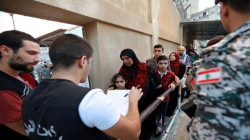
Syria’s unsettled situation compounds the crisis. More than 1.5 million Syrian refugees remain inside Lebanon, a burden that successive governments have failed to resolve. Damascus under al-Sharaa has prioritized the return of Syrian prisoners from Lebanese jails but has avoided substantive discussion of refugee repatriation, despite repeated Lebanese overtures.
Syrian officials—including new Foreign Minister Asaad al-Shibani—have notably avoided visits to Beirut, signaling a frosty approach.
Border Tensions
On the ground, smuggling networks and sporadic armed incursions persist along the Syrian-Lebanese frontier, some reportedly linked to Syrian security elements. Recently, tribal groups in Syria threatened to cross into Lebanon to secure the release of more than 2,000 detainees. This has forced the Lebanese army—already deployed on the southern and northern fronts—to reinforce its border positions.
Lebanese officials fear that tribal involvement could ignite wider clashes, dragging in local clans, the army, and Hezbollah units in border communities. Such escalation would undermine Saudi-brokered understandings reached earlier this year, when Defense Minister Prince Khalid bin Salman mediated to halt cross-border fighting.
Some Lebanese politicians warn that Damascus could exploit the detainee issue as leverage. While claims that Syria is “warming ties with Israel” remain speculative, analysts note that al-Sharaa’s government appears less committed to Hezbollah than Bashar al-Assad was. Christian opposition figures have even suggested that Washington and Tel Aviv may quietly encourage Damascus to increase pressure on Hezbollah through indirect means.
The Hezbollah Question
Against this backdrop, Hezbollah’s weapons remain the most contentious issue. For many Lebanese, the government’s disarmament initiative evokes memories of the 1970s and 1980s, when militias rivaled the state.
Hezbollah reacted sharply. Sheikh Ali Daamoush, head of the party’s Executive Council, denounced the decision as “a grave mistake, lacking national legitimacy and even basic rationality.” He warned it could push Lebanon “to the edge of explosion,” stressing that Hezbollah’s arms will remain as long as Israel occupies Lebanese land and threatens its people.
Daamoush hinted at escalation if the government does not reverse course, saying the party has so far avoided mass protests or street actions but could shift strategy after the cabinet’s September 2 session.
The confrontation comes despite Hezbollah’s heavy losses during the “support war” it fought alongside Hamas between October 2023 and November 2024. While that conflict ended in a ceasefire, Israeli violations of UN Security Council Resolution 1701 continue. Just today, an Israeli drone strike killed a civilian in Aita al-Shaab.
According to Beirut’s Information International Center, Israel committed 85 violations in the week following the government’s disarmament decision, leaving 11 dead, 20 injured, and widespread destruction.
Iran, Iraq, and the Wider Axis
These developments explain the swift arrival of Ali Larijani, Secretary of Iran’s Supreme National Security Council, in Beirut. His trip followed a stop in Baghdad, where he oversaw the signing of a new security agreement as Iraqi politicians debated the future of the Popular Mobilization Forces (PMF).
The PMF debate mirrors Lebanon’s crisis: both revolve around whether Iran-backed armed groups can be absorbed into state structures. Some Sunni and Kurdish parties in Baghdad argue the PMF’s autonomy undermines sovereignty, while Shiite factions warn that disbanding the force would leave Iraq vulnerable to ISIS and US influence. American officials, meanwhile, continue pressing Prime Minister Mohammed Shia al-Sudani to enforce tighter controls.
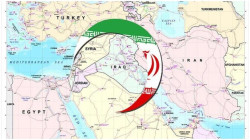
Larijani’s presence underscored Tehran’s red line: Iran will not allow Hezbollah—or the PMF—to be isolated, even if Lebanon’s government and Syria’s transitional leadership signal willingness to accommodate Western or Israeli demands. For Tehran, these battles are inseparable from the regional balance of power.
Israel, emboldened by the Gaza ceasefire, appears determined to reset the “rules of engagement.” Analysts in Tel Aviv openly discuss widening operations against Hezbollah and Iranian assets in Syria. This raises the specter of a broader confrontation, reminiscent of the 12-day war fought directly between Iran and Israel in 2024.
Domino Risks Ahead
The Lebanese government has tasked its army with drafting a plan to implement weapons restrictions. Yet senior officers, according to Shafaq News sources, have privately told politicians and Hezbollah leaders they will not execute any plan that risks plunging the country into civil conflict.
This delicate balancing act underscores Lebanon’s fragility. Historical memory looms large: in 1975, a single spark—the Ain al-Rummaneh bus shooting—ignited 15 years of war. Today, many fear Lebanon could once again become the flashpoint for regional escalation—a single domino whose fall would send shockwaves from Beirut to Baghdad, Damascus, Tel Aviv, and Tehran.
Written and edited by Shafaq News staff.