Iran halts traffic in Strait of Hormuz after US-Israel strikes


Shafaq News- Tehran
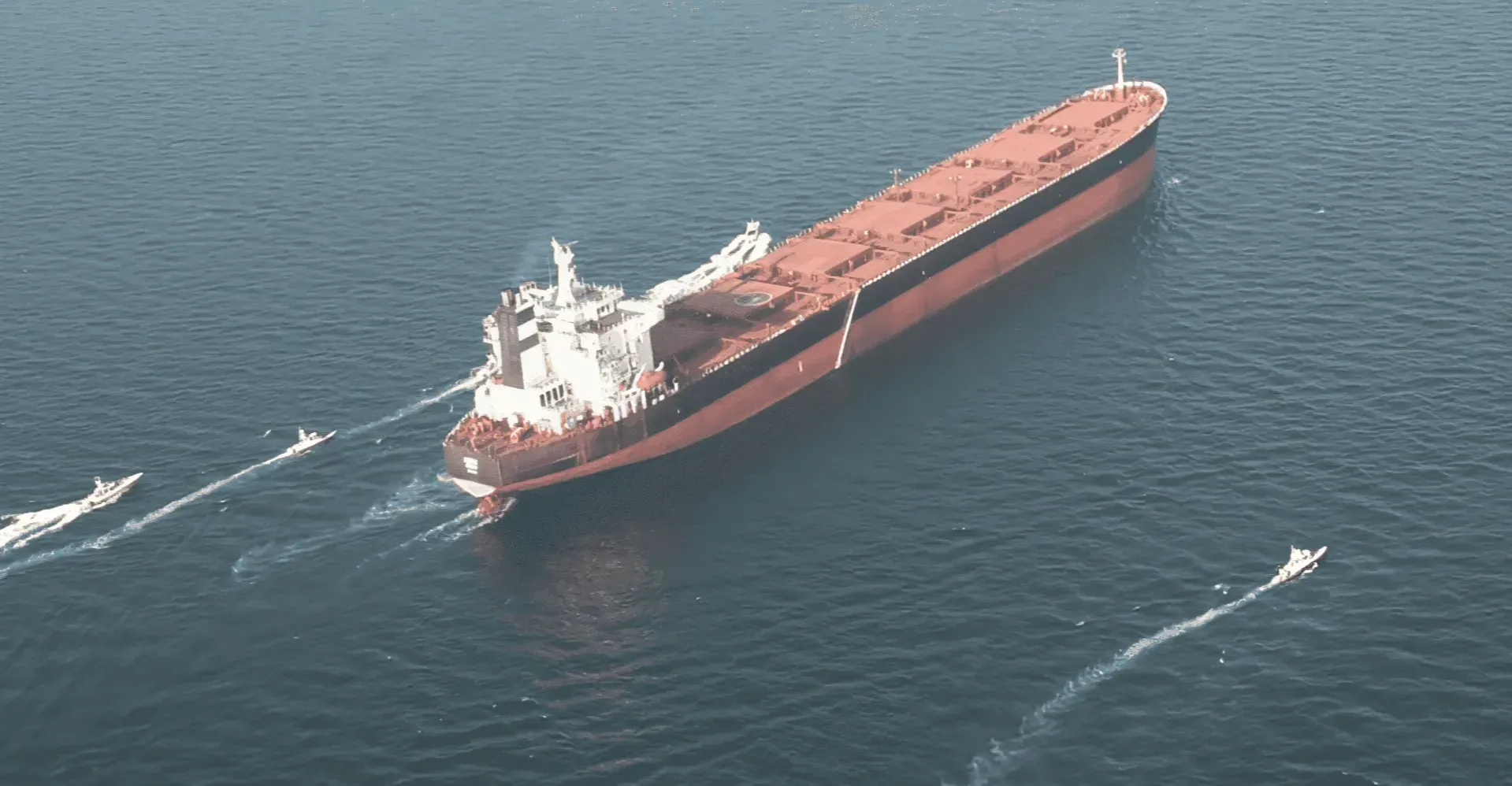
Tehran has “effectively” shut down the Strait of Hormuz, Iran’s semi-official Tasnim News Agency reported on Saturday, amid escalating military confrontation with the United States and Israel.
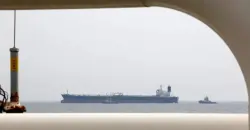
The outlet said ships and oil tankers have halted transit through the strategic waterway, while the Islamic Revolutionary Guard Corps (IRGC) warned vessels that passage is “unsafe.”
Trading sources told Reuters that several tanker owners, oil majors, and commodity traders have suspended shipments of crude oil, refined fuel, and liquefied natural gas via the strait. An official with the European Union naval mission “Aspides” said multiple ships received VHF transmissions from Iran’s Revolutionary Guards stating that “no ship is allowed to pass the Strait of Hormuz.” Satellite tracking data showed vessels clustering near major ports, including Fujairah in the United Arab Emirates, without proceeding through Hormuz.
The UK Navy responded that the Iranian messages were not legally binding but advised commercial vessels to transit with caution. INTERTANKO, the international tanker owners’ association, said the US Navy had warned against navigation across the Gulf, the Gulf of Oman, the North Arabian Sea, and the Strait of Hormuz, noting it could not guarantee the safety of shipping in the area. Greece’s shipping ministry also advised vessels to avoid those waters, according to an advisory cited by Reuters.
The closure follows coordinated US and Israeli strikes on sites inside Iran, which Washington described as action against “imminent threats from the Iranian regime.” Tehran responded with missile and drone attacks targeting Israel and US military facilities in Kuwait, Bahrain, Qatar, and the United Arab Emirates. Regional media also reported strikes on sites in Saudi Arabia and Iraq’s Kurdistan Region.
In Iraq, economic expert Mohammed al-Hassani warned that the escalation could push oil prices above $80 per barrel if the conflict widens. Speaking with Shafaq News, he cautioned that Iraq would be among the most exposed countries, as the bulk of its crude exports move through the Gulf.
“If Iran closes the Strait of Hormuz as a military response, Iraqi exports would be severely disrupted,” al-Hassani said, describing the Turkish Ceyhan pipeline as Iraq’s only alternative route, with a capacity of around 190,000 barrels per day —a fraction of total export volumes.
About The Strait
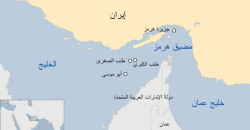
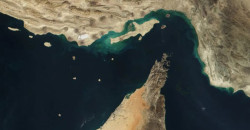
The Strait of Hormuz lies in the eastern part of the Arabian Gulf and the northwestern part of the Gulf of Oman, two connected waterways leading to the Indian Ocean. Iran borders the Strait to the north and east, while Oman borders it to the south and oversees maritime traffic, as shipping lanes fall within its territorial waters.
Its northwestern boundary begins at the line connecting Ras Sheikh Masoud on Oman’s Musandam Peninsula to Hengam Island, passing through Qeshm Island to the Iranian coast. This line separates the Strait of Hormuz from the Arabian Gulf.
The southeastern boundary extends from Ras Dibba on the UAE coast to Damagheh on the Iranian coast, separating the strait from the Gulf of Oman.
Due to its geographical location, the strait’s climatic conditions allow year-round navigation. It stretches approximately 167 kilometers in length and ranges between 33 and 95 kilometers in width, with depths between 60 and 100 meters.
Four islands control the northern entrance of the strait: Greater Tunb, Lesser Tunb, Abu Mussa (three islands disputed between the UAE and Iran and controlled by Iran since 1971), and the Iranian island of Farur.
According to a study by the Center for Strategic and International Studies at Georgetown University, 86% of Middle Eastern oil exports pass near these three islands, representing nearly half of the energy upon which global industry, economies, and daily life depend.
Experts, therefore, consider that the party controlling these islands can influence oil supply routes, which explains Iran’s ability to obstruct or disrupt navigation in the strait.
The strait constitutes the only maritime passage connecting countries such as Qatar, Bahrain, Iraq, and Kuwait to international trade routes, while also serving as a primary gateway for the United Arab Emirates, Saudi Arabia, Oman, and Iran.
Globally, its strategic importance is reflected in trade volumes: about 11% of global trade passes through it, including 34% of seaborne oil exports and 30% of liquefied natural gas exports, according to the 2025 report of the United Nations Conference on Trade and Development (UNCTAD).
By mid-June 2025, average vessel traffic through the strait reached about 144 ships per day, including 37% oil tankers, 17% container ships, and 13% bulk carriers, according to the same data.
Read more: Iraq braces for financial meltdown amid Hormuz closing threats