Iran, Turkiye carpets flood Iraq's market


Shafaq News – Baghdad / Kirkuk
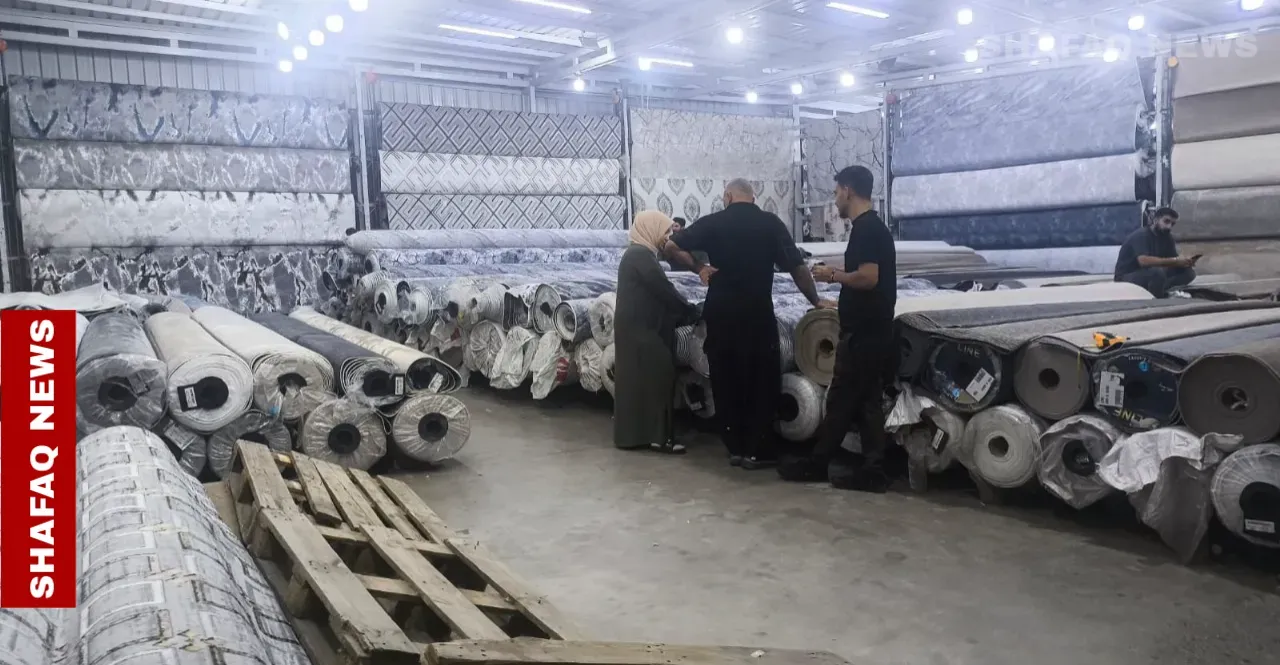
Iraq’s furniture and carpet market has witnessed notable growth in imports from neighboring countries, particularly Iran and Turkiye, in recent years. This surge is driven by rising consumer demand and an increasing focus on home aesthetics in areas where purchasing power is improving.
However, this expansion exists alongside growing concern
over the decline of local production and the near disappearance of a
once-thriving domestic industry in provinces such as Hilla, Najaf, and
al-Sulaymaniyah.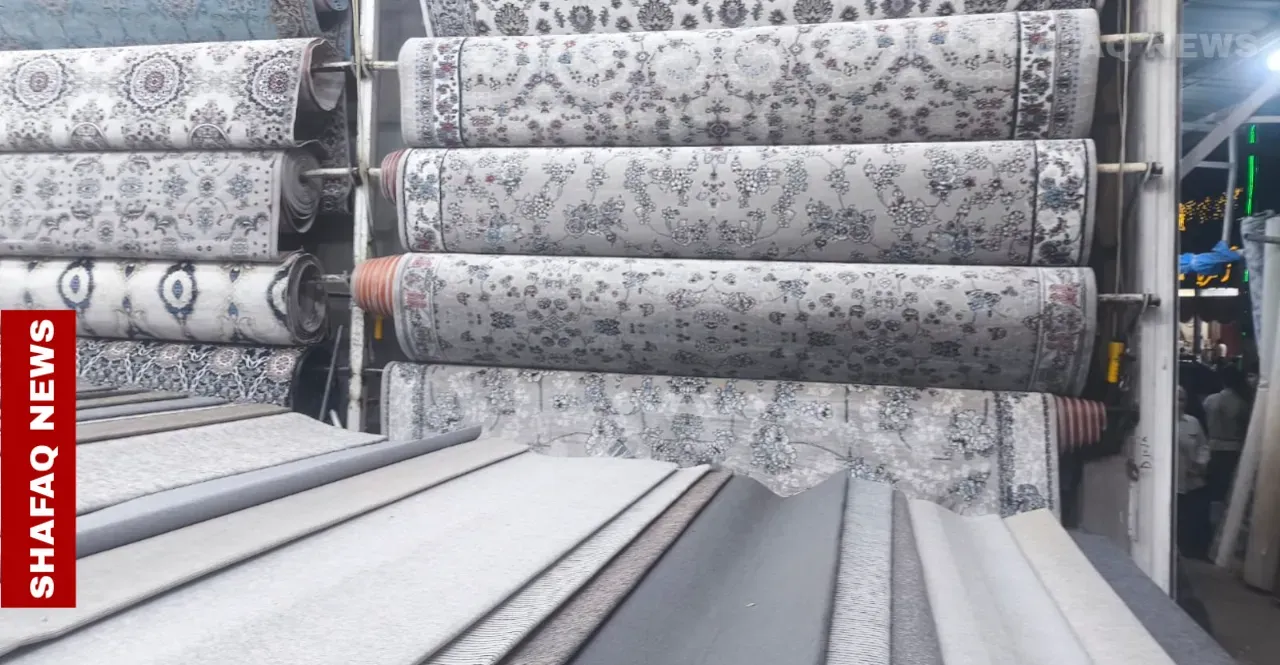
Imports Skyrocket
Preliminary data from Iraq’s Ministry of Trade reveal that last year the country imported more than 400,000 pieces of carpets and furniture from Iran and Turkiye alone, valued at over $180 million—a 30% increase compared with 2022.
Mohammed Al-Jubouri, a member of the Iraqi Chambers of Commerce, explained to Shafaq News that Iraq has become one of the largest markets for carpets and furniture in the Middle East due to high demand for imported products, especially Iranian and Turkish goods, known for their quality and variety.
He pointed out that Iran dominates about 60% of Iraq’s carpet market, while Turkiye accounts for roughly 35%, with the remainder coming from China and Southeast Asian countries.
“Iranian carpets hold a long-standing reputation,
particularly handmade varieties from Kashan, Tabriz, and Qom, considered among
the most luxurious in the world,” he remarked.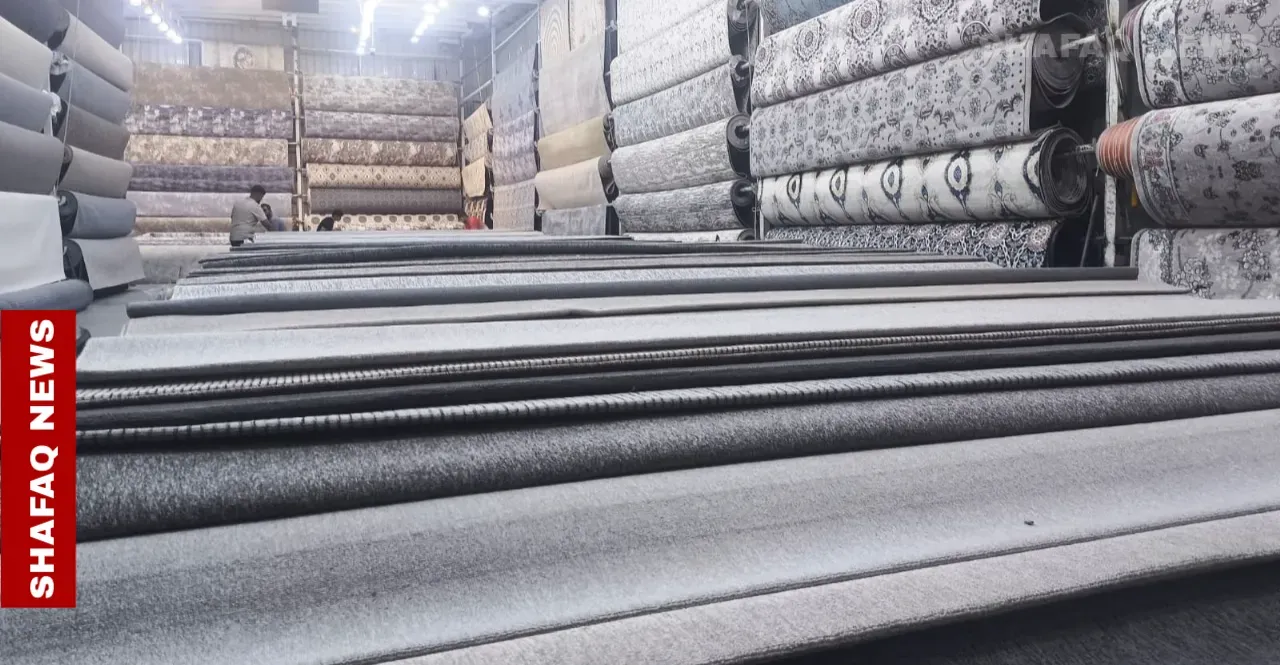
Modern Appeal
In Baghdad’s old markets, colorful carpets hang on walls like works of art, showcasing intricate designs and vivid hues.
Hussein Al-Rubaie, a Baghdad trader of Iranian and Turkish furniture, described Iranian carpets, particularly those from Kashan, as the most expensive and sought-after among affluent buyers.
He explained that the price per meter for handmade pieces ranges between $400 and $700, with full carpets sometimes exceeding $10,000 depending on the type of thread, pattern, and knots per inch.
Al-Rubaie underlined that Kashan carpets typically attract
owners of luxury homes or major hotels, who view them as both aesthetic and
financial investments. He also noted that religious seasons and social
occasions further boost demand, particularly in Najaf and Karbala, where
intricately patterned carpets featuring Islamic symbols are highly sought
after.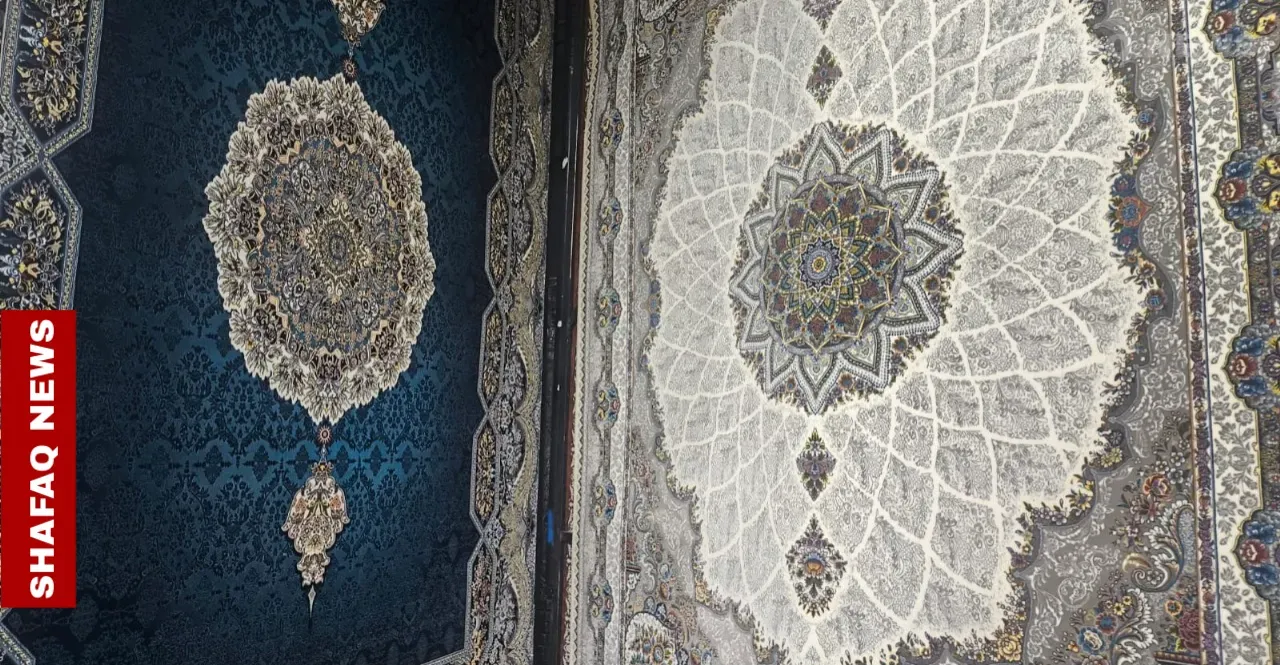
Turkish Competition
Turkish furniture and carpets maintain a strong presence in Iraq, with prominent brands like Hereke, Ipek, and Merinos offering a combination of elegance and high-quality industrial production.
A trader, Khalid, observed that Turkish carpets feature modern weaving techniques and attractive colors appealing to younger consumers, with prices ranging from $100 to $500 per piece depending on size and type.
“Hereke is the most expensive brand in the Iraqi market and the closest competitor to premium Iranian carpets,” he noted, adding that Turkish products dominate markets in Erbil, al-Sulaymaniyah, and Duhok due to geographic proximity and trade ties with the Kurdistan Region, while southern markets tend to favor Iranian goods via border crossings in Diyala, Wasit, and Maysan.
In Kirkuk, trader Ali Ahmed conveyed to Shafaq News that customers have become more discerning regarding carpet quality, whether handmade or machine-made, and tend to favor Turkish or Iranian products for their craftsmanship and aesthetic appeal rather than price alone.
He observed that while Iranian handmade carpets remain prestigious and in demand, many customers view Turkish options as offering a modern look at a more affordable price, particularly Hereke pieces. However, the competition diminishes when a high-quality handmade Iranian carpet appears, despite its higher cost.