From father to son: "Abu Al-Bajat" serves history in every bowl
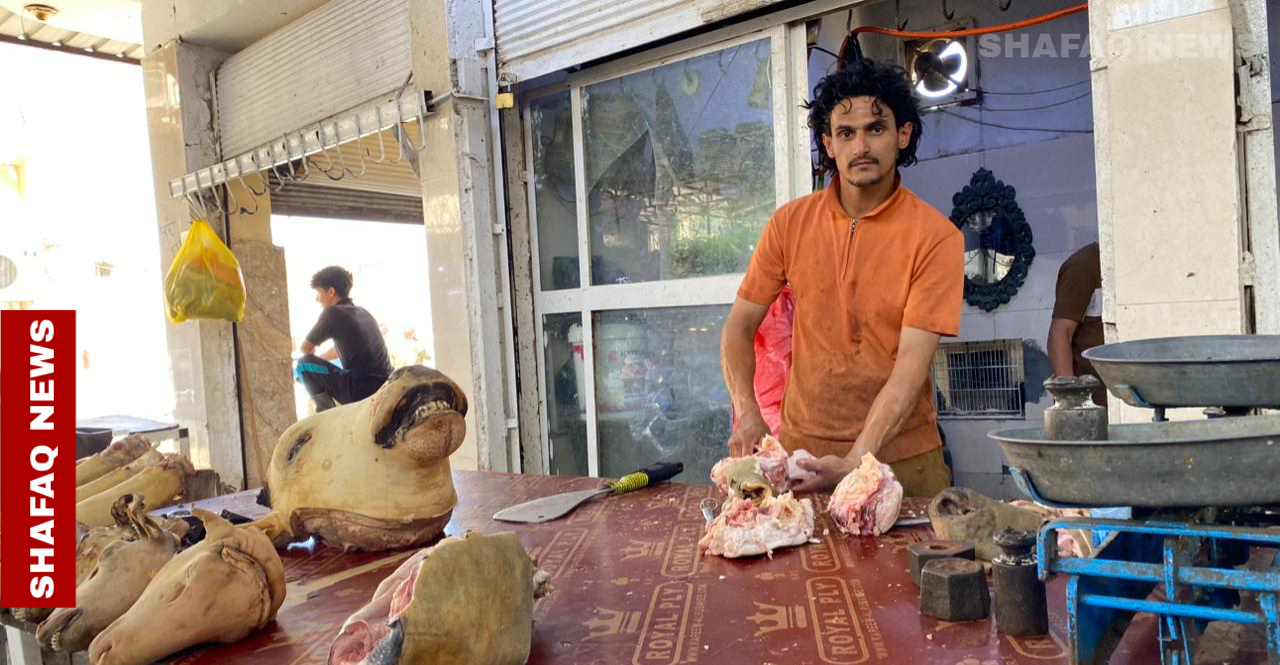


Shafaq News/ In a crowded alley of Ramadi’s market in al-Anbar, where the scent of spices mixes with steam from large cooking pots, Ahmed Awad Salman begins his day at 7:00 a.m. He opens his modest shop, known locally as "Abu Al-Bajat," where customers gather to enjoy the traditional dish of Bajeh. For Ahmed, this has been his routine for years.
A member of a long line of cooks, Ahmed has been preparing Bajeh since 2017, following in the footsteps of his father and grandfather, who began cooking and selling the dish in the 1970s. For him, Bajeh is more than a business; it is part of his family’s heritage.
Behind a metal counter separating him from his customers, Ahmed explains the difference between lamb and beef Bajeh. "Locals prefer lamb Bajeh for its tenderness and traditional flavor. Others opt for beef, especially when it is imported from Brazil through Basra. It offers more meat at a reasonable price."
He adds, "People have different tastes. I prepare both lamb and beef, depending on what the customer prefers."
While there is no fixed pricing in this market, Ahmed has set his own rates. Lamb Bajeh, after cleaning, costs 5,000 IQD (about $3.5) per kilo. If customers want to buy it whole, the price is 15,000 IQD (about $10.5).
The shop’s hours are also flexible, depending on demand. "We may close at noon or later in the afternoon. The latest is after Maghrib, when the stock runs out and the pots are cleaned."
Despite the simplicity of his business, Ahmed does not consider himself alone in the Bajeh trade. Larger restaurants, such as "Al-Baghdadi," are also well-known for serving Bajeh and attract customers from across the region. However, Ahmed believes the key to flavor is not the size of the establishment but the intention behind it. "Flavor comes from the heart, and sustenance is in God’s hands," he reflects.
When asked about his commitment to Bajeh despite challenges, Ahmed smiles and says, "This is more than a job; it is part of our identity. The smell of Bajeh in the morning reminds me of my father and grandfather, and of the kind people who used to visit from all directions."
In an era of fast food and app-based delivery, "Abu Al-Bajat" remains a reminder of traditional food and the memories it carries. As long as the pots continue to simmer, Bajeh will continue to tell its story, with flavors of cardamom, chickpeas, and onions.