US signals conditional talks, Iran rejects zero-enrichment demand


Shafaq News – New York / Tehran
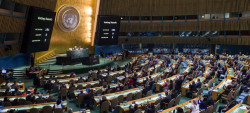
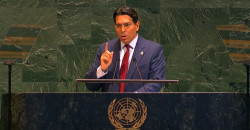
The Counselor of the US Mission to the Middle East, Morgan Ortagus, and Iran’s UN Ambassador, Amir Saeed Iravani, exchanged positions at the UN Security Council on Tuesday over Iran’s nuclear program and the conditions for renewed negotiations.
Speaking at the session, Ortagus said Washington remains open to formal negotiations, “but only if Tehran is prepared for direct and meaningful dialogue,” adding that enrichment inside Iran “cannot continue.”
Meanwhile, Iravani rejected the US position, saying that “Iran will not bow down to pressure or intimidation,” pointing out that a zero-enrichment policy contradicts Iran’s legal obligations and rights as an NPT member.
He attributed the current situation to the United States’ withdrawal from the 2015 nuclear agreement in 2018, as well as what he described as subsequent actions by Washington and its allies, including military strikes on Iranian nuclear sites.
The remarks came as Security Council members remain divided over the snapback mechanism under Resolution 2231, which was adopted in July 2015 as part of the JCPOA and set a ten-year framework to monitor and restrict Iran’s nuclear program. Tehran maintains that the resolution expired on October 18, ending all related restrictions, and rejects attempts by Britain, France, and Germany to revive UN sanctions, a position backed by China and Russia.
Britain, France, and Germany maintain that Iran’s nuclear non-compliance has triggered the automatic return of sanctions, while China and Russia reject that interpretation, arguing that the mechanism cannot be activated following the US withdrawal from the agreement.
Read more: Iran’s post-war strategy: Dual voices, unified deterrence