JD Vance: New Iran deal can transform Middle East


Shafaq News- Burgenstock
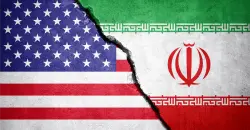
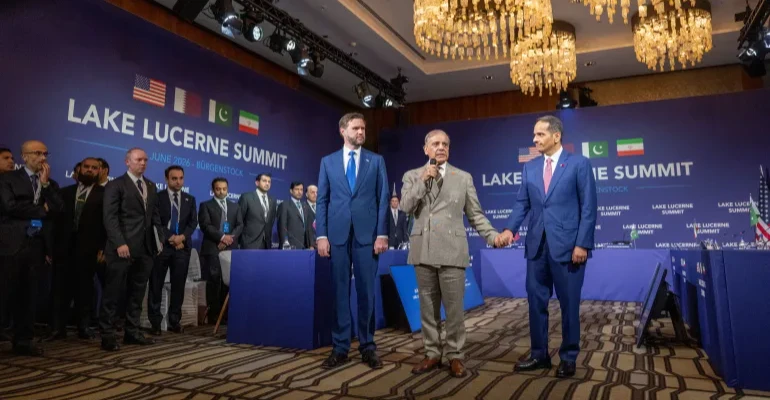
US Vice President JD Vance said on Sunday that Washington is prepared to "fundamentally transform" its relationship with Tehran, as US-Iran negotiations opened in Switzerland with Lebanon's ceasefire and Iran's nuclear program among the top items on the agenda.
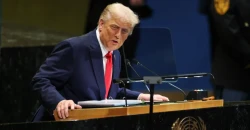
During his remarks, Vance noted technical discussions would not resolve all disagreements but could pave the way for a better future. He added that Washington had made progress in Lebanon in recent days with the assistance of Pakistan, Qatar, and Israel, pointing out that US President Donald Trump remains committed to achieving regional peace, "not only with Iran."
Vice President JD Vance Participates in Quadrilateral Meeting with Pakistan, Qatar, and Iran https://t.co/o9r9tOxrX5
— The White House (@WhiteHouse) June 21, 2026
Negotiations began in Switzerland today, with Vance leading the US delegation and Iranian Parliament Speaker Mohammad Bagher Ghalibaf heading Tehran's team, while Pakistan and Qatar serve as mediators.
According to Iran's state television, Tehran opened the talks by refusing a planned handshake and joint photograph with the US delegation. A source close to the Iranian negotiating team stated that organizers had arranged the gesture at the start of the meeting, but the Iranian side declined. The source also indicated Tehran reaffirmed its position on the Strait of Hormuz, maintaining that any reopening of the strategic waterway remains linked to an end to Israeli military operations in Lebanon.
The negotiations are focused on implementing key provisions of the memorandum of understanding (MoU), including a comprehensive ceasefire in Lebanon and the release of frozen Iranian assets. Tehran maintains that the agreement's first clause, which calls for ending hostilities on all fronts, including Lebanon, was violated in recent days and said ensuring the implementation of the five core provisions of the agreement is the primary objective of its participation in the talks. Israel, however, insists it will continue acting against what it considers security threats.