Trader protests reshape Iran’s crisis while US signals grow sharper


Shafaq News (Updated at 20:15)
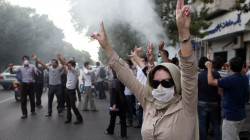
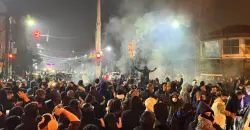
Political pressure in Iran has traditionally emerged from street demonstrations, but the current protest wave began at Tehran’s Grand Bazaar, the country’s main commercial center, where traders, shop owners, and business figures took to the streets over a collapsing currency and rapidly shifting prices.
The protests, in more than 20 provinces, began in the heart of the economy, rather than on university campuses, driven by frustration over the sharp decline of the Iranian rial and rising living costs that consumers can no longer keep pace with. While the movement remains largely focused on economic grievances, with some political slogans emerging, it has seen localized clashes and limited violence, with reports so far of six casualties in several areas, including Ali Azizi, a member of the security forces. However, it has not developed into a broader confrontation with the authorities, unlike the 2022 Mahsa Amini protests, during which human rights groups reported more than 500 deaths.
The crisis also took on an international dimension after US President Donald Trump warned of possible intervention if peaceful protesters were killed, shifting the debate from bread and exchange rates to questions of power, legitimacy, and deterrence.
Iran’s economy has played a central role rather than serving as a backdrop. The country of about 92 million people has seen its currency lose nearly half its value in 2025. Inflation reached around 42.5 percent in December, reducing salaries to figures that lag far behind market reality.
The rial slid to successive record levels and subsequent reports indicated deeper declines, with panic-driven trading pushing the rate to around 145,000 per dollar, the weakest level in modern Iranian history.
The impact has extended beyond poorer households. Importers, wholesalers, retailers, and business owners require exchange rates they can anticipate, even for a short period. In a system where economic continuity depends on access to dollars, the bazaar has become an immediate reflection of politics, sanctions, and conflict.
Read more: Iran’s post-war strategy: Dual voices, unified deterrence
Sanctions and Prolonged Pressure
Many Iranians connect the current moment to decisions taken years earlier. The currency traded around 55,000 per US dollar in 2018, the year the United States reinstated wide-ranging sanctions following its withdrawal from the nuclear agreement, limiting oil exports and access to foreign currency.
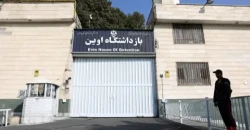
Tensions later intensified following military escalation between Iran and Israel, often referred to as the 12-day war. Since June 2025, international reports have pointed to tighter internal security measures, including arrests and heightened controls in border regions, particularly Kurdish areas.
The consequences went beyond security. Prices rose, trade activity slowed, and local investors grew increasingly concerned that renewed conflict could disrupt supply chains or close additional financial channels.
Washington Catalyzes the Crisis
Against this backdrop, Washington became a prominent external voice. Trump warned, and Iranian officials firmly rejected his remarks.
Supreme Leader Ayatollah Ali Khamenei said protesters’ economic demands were legitimate, but added that violent elements should be stopped. He accused “agitators and mercenaries linked to hostile forces of operating behind traders and chanting slogans hostile to Islam and Iran.”
We will bring the enemy to its knees.
— Khamenei.ir (@khamenei_ir) January 3, 2026
Ali Larijani, secretary of Iran’s Supreme National Security Council, warned that any US intervention would destabilize the region.
Iranian police said protests were expanding and becoming more violent, warning of the risk of an armed uprising, according to the Fars News Agency.
Inside the leadership, two tones emerged. President Masoud Pezeshkian acknowledged government failures and called for dialogue on the economic crisis. Other officials focused on threats, warnings, and claims of foreign interference.
Mark Kimmitt, a former assistant secretary at the US Departments of Defense and State, told Shafaq News that President Donald Trump’s remarks should be read “as an expression of moral support rather than a signal of readiness to use force.”
From a partisan perspective, Republican figure Rob Arlett, who previously managed Trump’s campaign in Delaware, described the statements as rooted in values, “presenting freedom of expression in contrast to state repression.”
At the academic level, Todd Belt of George Washington University warned that the comments could instead justify Iranian authorities to depict protesters as aligned with Western interests, noting that demonstrators have historically placed little trust in US backing.
Focusing on the internal dynamics of power, the Dean of the College of Public Affairs at the University of Baltimore, Ivan Sascha Sheehan, said the message was directed more toward Iran’s ruling elite than toward protesters themselves, suggesting that Washington no longer treats the survival of the religious system as inevitable or open to reform.
He emphasized that the unrest remains domestically driven, shaped by deprivation, repression, and unfulfilled promises, and cautioned that foreign agendas risk distorting its core message.
From a strategic policy standpoint, Paolo von Schirach, president of the Global Policy Institute, questioned the logic of intervention without defined goals, arguing that “military force offers no clear answer to a crisis rooted in prices, livelihoods, and daily economic pressures rather than military infrastructure.”
Inside Iran, analyst Saeed Shawardi described Trump’s remarks as overt interference and hollow threats. He said Trump is widely unpopular among Iranians due to the US withdrawal from the nuclear deal and the sanctions that followed, warning that “acting on such threats could trigger broad regional escalation and attacks on US interests.”
Regional Signals and Uncertain Path
During the unrest, reports emerged about the detention of Venezuelan President Nicolas Maduro, a close ally of Iran in Latin America, by US forces. The move was widely interpreted as a message to Washington’s adversaries, including Iran, and was viewed similarly in Israel.
Posting on X, Israeli opposition leader Yair Lapid warned Iran’s leadership “to pay close attention to developments in Venezuela.”
The regime in Iran should pay close attention to what is happening in Venezuela
— יאיר לפיד - Yair Lapid (@yairlapid) January 3, 2026
Amichai Chikli, the Diaspora Minister, said that the deposing and indicting of Maduro delivered a blow to the “global axis of evil” and sent a “clear message” to Iranian Supreme Leader Ali Khamenei.
These statements came after reports from late December 2025 and early January 2026 indicated that Prime Minister Netanyahu discussed a "round two" of strikes on Iran with Trump to prevent Tehran from rebuilding nuclear and missile capabilities destroyed in previous conflicts.
Iran now faces a protest wave unfolding under exceptional conditions, following five major protest movements since 2009. Whether the convergence of events is viewed as chance or design, the country now moves into a new trajectory marked by difficulties comparable to its past crises.
Read more: Zero-sum game: Can the Iran-Israel conflict push Iraq toward frontline?
Written and edited by Shafaq News staff.