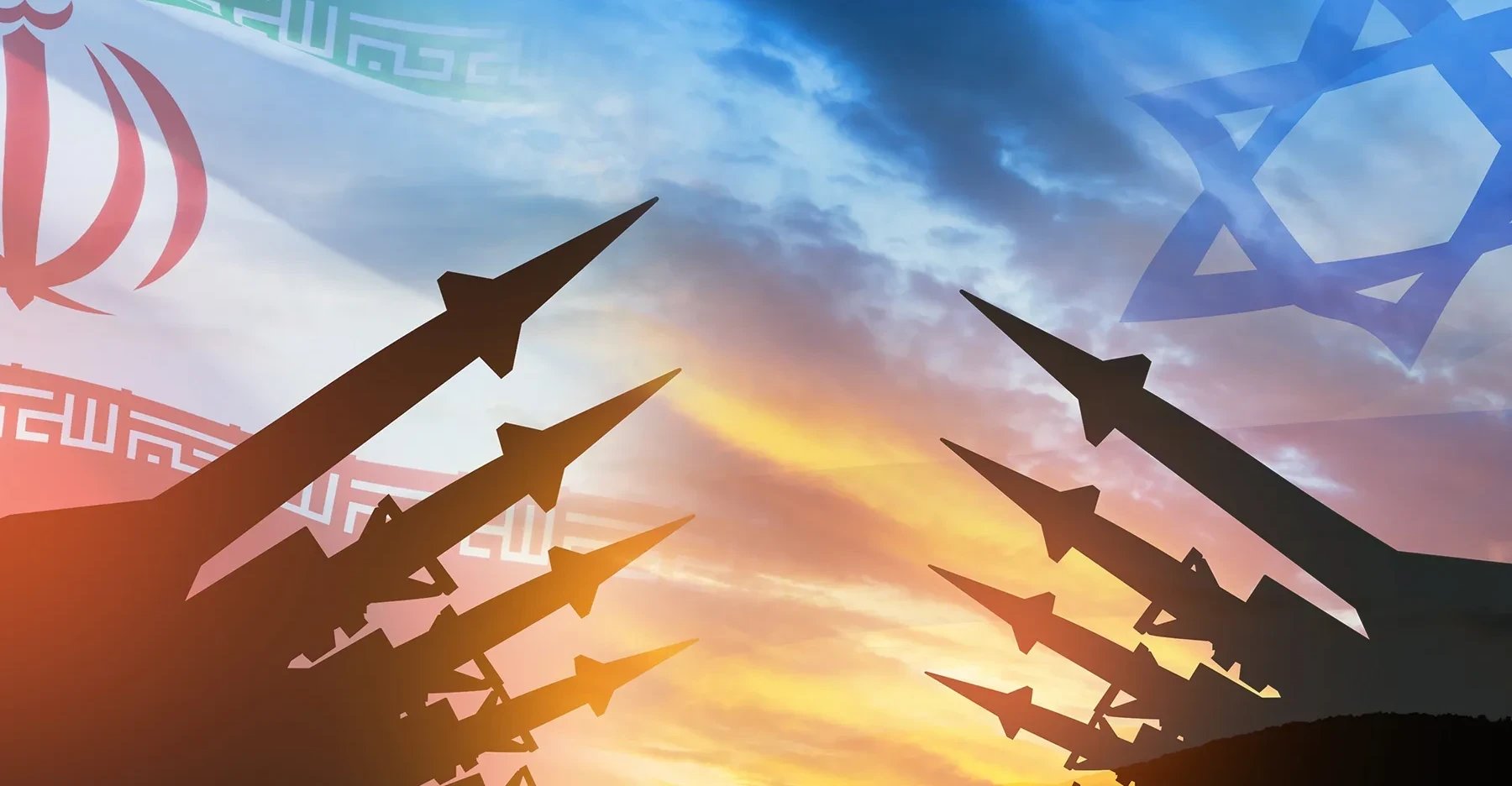
Iran and Israel exchange of missiles: What was achieved in the latest confrontation?


Shafaq News
Any sense of calm following the latest exchange of strikes between Iran and Israel quickly dissipated as tensions shifted to a new front involving Tehran and Washington.
The United States launched airstrikes on several Iranian targets after an American Apache helicopter was downed over the Strait of Hormuz, an incident Washington blamed on Iran. Tehran, in turn, pledged a response, casting doubt over the durability of the fragile de-escalation and raising questions about whether the confrontation will remain limited or jeopardize the negotiations currently taking place between the two sides under Pakistani mediation.
A brief but intense round of direct military confrontation between Iran and Israel ended with a mutual halt to air and missile attacks less than 24 hours after the escalation began, returning the region to the fragile calm that has largely held since the April 8 agreement.
The rapid de-escalation followed a night of cross-border strikes that underscored both the risks of a wider regional war and the constraints facing the main actors involved. While military operations stopped almost as quickly as they started, analysts interviewed by Shafaq News suggest the confrontation reflected broader struggles over deterrence, regional influence, and the future of ongoing US-Iran negotiations.
Escalation Followed by Swift Restraint
The latest exchange began after Iran’s Islamic Revolutionary Guard Corps launched around 30 ballistic missiles and drones targeting areas in northern and central Israel, including the Ramat David Airbase. Tehran described the operation as retaliation for an Israeli strike on Beirut’s southern suburbs that killed two people and wounded 11 others.
Israel responded with airstrikes against 20 targets in Tehran, Isfahan, and Tabriz, as well as the Bandar Mahshahr petrochemical complex in southern Iran. The strikes also targeted strategic air defense systems that Iranian authorities had deployed to rebuild capabilities damaged during previous operations.
The confrontation ended after Iran’s Khatam al-Anbiya Central Headquarters announced the conclusion of military operations following what it called a “painful response.” Israeli Prime Minister Benjamin Netanyahu subsequently confirmed a temporary halt to Israeli strikes while warning that any renewed Iranian attack would trigger a forceful response.
At the same time, Israel’s Defense Ministry emphasized that military operations in Lebanon would continue independently of any understanding reached with Tehran, highlighting the compartmentalized nature of regional conflicts.
Many observers view the latest escalation through the lens of negotiations that have been underway for two months between Washington and Tehran in an effort to end the conflict that began on February 28.
According to Egyptian military strategist Samir Farag, the talks had already made significant progress on two major disputes before the latest exchange of fire.
The first concerns Iran’s nuclear program, particularly the fate of approximately 450 kilograms of uranium enriched to 60 percent. Farag told Shafaq News that negotiators had moved close to an arrangement that would reduce enrichment levels within Iranian facilities to 3.67 percent, the threshold generally associated with civilian uses such as electricity generation and water desalination.
The second major issue involves frozen Iranian assets. According to Farag, Tehran has insisted that the release of those funds remains a top priority, reflecting mounting economic pressures at home.
Negotiators, he said, appeared to have reached a framework allowing the funds to be directed toward humanitarian needs, including medicine, essential goods, and social assistance, while ensuring they would not be diverted to the Islamic Revolutionary Guard Corps or to Hezbollah.
Farag indicated that most aspects of the proposed arrangement had already received preliminary approval and that momentum was building toward a possible formal announcement as early as next Thursday, coinciding with the opening of the 2026 FIFA World Cup.
Nevertheless, Farag believes both Washington and Tehran remain committed to a diplomatic solution, while Israel continues to display greater willingness to sustain military pressure.
New Deterrence Rules
From Tehran’s perspective, the confrontation served a broader strategic objective than simple retaliation.
Iranian affairs specialist Mahdi Azizi argued that the operation was designed to establish new rules of engagement by signaling that future attacks on Beirut’s southern suburbs would provoke a direct Iranian response.
Azizi told Shafaq News that Iran remains committed to supporting its regional allies in Lebanon, Yemen, Iraq, and Palestine and sees the protection of those partners as part of its wider deterrence strategy.
The US administration faces multiple constraints, including preparations for midterm elections, the approaching World Cup, and growing concerns that Yemen could expand the confrontation by threatening shipping routes through the Bab al-Mandab Strait and the Red Sea, Azizi explained.
Netanyahu has political incentives to prolong confrontation, linking the prime minister’s calculations to efforts to remain in power and avoid legal challenges stemming from corruption cases that have repeatedly delayed his trial.
Azizi attributed the rapid de-escalation to three main factors: US pressure on Israel to avoid a wider regional war, Washington’s efforts to limit the scope of military operations despite approving a limited response, and Netanyahu’s decision to reject calls from hardline ministers Bezalel Smotrich and Itamar Ben-Gvir to strike Iranian energy facilities, citing the potential international fallout of such a move.
Yemen’s Role: A Broader Regional Strategy
The latest crisis also marked the return of Yemen’s Houthi movement to direct military action since the April ceasefire.
Yahya Saree, the group’s military spokesman, announced a complete ban on Israeli-linked maritime traffic in the Red Sea and revealed that two missiles had been launched toward the Tel Aviv area. Israeli air defenses intercepted one projectile, while the second landed in an open area.
For Yemeni politician Salah Al-Sayyadi, the latest developments place the next move squarely in Washington’s hands.
In an interview with Shafaq News, he said the United States must now decide whether to accept the current balance of deterrence and preserve opportunities for diplomacy or pursue further escalation that could undermine ongoing negotiations.
He stressed that Yemen remains in a state of ceasefire with Washington but warned that any direct US military intervention alongside Israel would carry consequences.
More broadly, Al-Sayyadi indicated that the so-called “Axis of Resistance” has succeeded in reversing a long-standing strategic challenge. Rather than allowing the United States and Israel to isolate and confront individual fronts separately, he said, the alliance has increasingly fragmented American and Israeli priorities, forcing them to manage multiple arenas simultaneously.
Read more: Israel reshapes southern Lebanon: Displacementand settlement fears
Fragile Calm, Unresolved Questions
The speed with which the latest confrontation ended suggests that neither Iran nor Israel currently seeks a full-scale regional war. Yet the episode also demonstrated how quickly localized incidents can escalate into direct interstate conflict.
Behind the temporary calm lies a larger contest involving nuclear diplomacy, regional deterrence, domestic political calculations, and the role of allied non-state actors across the Middle East.
For now, the ceasefire has restored a measure of stability. Whether that stability endures depend on battlefield developments more than on the outcome of negotiations between Washington and Tehran, and on the willingness of regional actors to accept emerging rules of engagement that remain far from settled.
Written and edited by Shafaq News staff.