How the US pushed Iraq's armed factions toward disarmament, and who is still pushing back


Shafaq News
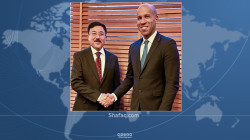
The American approach to Iraq's Iran-aligned armed factions has undergone a quiet but consequential transformation. The appointment of Tom Barrack as special envoy for Iraq and Syria, replacing Mark Savaya, signals a shift not in objectives but in the method of pursuing them. The US still wants Iran's military footprint in Iraq reduced, but it is now trying to achieve that through structural pressure rather than visible interference.
Read more: Trump's new Iraq-Syria envoy faces an Iran test Syria never posed
The distinction matters because Savaya was perceived across Baghdad's political class as a figure who reached too deeply into Iraqi internal arrangements. Barrack, according to analysts interviewed by Shafaq news, represents a different profile: a businessman with direct ties to President Donald Trump, a preference for strong central states over consociational power-sharing, and a mandate that deliberately bundles Iraq with Syria under a single envoy.
Dilshad Othman, a researcher in international relations at the University of Tennessee, told Shafaq News that the United States no longer treats Iraq as a file with its own internal logic; it treats it as a node in a broader regional security order aimed at reconfiguring the balance of power and curtailing Iranian influence.
The apparatus Barrack inherits is already substantially built. Since early 2025, the Trump administration has operated on multiple simultaneous tracks: diplomatic pressure on Baghdad to restrict weapons to state authority; congressional conditions tying security cooperation funding to verifiable reductions in Iran-aligned factions' capacity; sanctions on banks and businessmen, direct warnings that Washington would not recognize a government that handed ministries to armed factions linked to Tehran; and, beneath all of this, a military option kept deliberately visible.
Read more: Is Iraq closer to restricting weapons to the state?
The Coordination Framework Moves
The Shiite Coordination Framework's authorization of Prime Minister Ali al-Zaidi to take all necessary measures to restrict weapons to state control was presented by the alliance as a sovereign national position. Malik Francis, a Republican politician and political analyst, told Shafaq News that Washington views these steps positively, stating that "Iraq's long-term stability requires the state to be the sole entity authorized to carry and use weapons within legal frameworks." The welcome was not merely rhetorical: Francis situated US support within a broader effort to strengthen Iraqi state institutions and the rule of law, and added that consolidating the state's monopoly on force would improve the investment climate and enhance foreign business confidence in the Iraqi market, an economic framing that signals Washington is offering something beyond diplomatic approval.
The US Chargé d'Affaires Joshua Harris's welcome of the CF's authorization, described as a "qualitative shift" toward Iraqi sovereignty, arrived within a diplomatic framework designed to make that shift the only viable path. Patrick Clawson, the Morningstar senior fellow at the Washington Institute for Near East Policy, assessed the CF's authorization as consolidating an existing reality rather than representing a sudden rupture. The political groundwork, he argued, had been laid over many months.
Asaib Ahl al-Haq's announcement —forming a central committee to inventory weapons, personnel, and equipment and transfer them to state authority— was the first concrete institutional step any major Iran-aligned faction had taken. AAH operates Brigades 41, 42, and 43 within the Popular Mobilization Forces and maintains a parliamentary wing through the Sadiqoon bloc. Kataib Imam Ali (Brigade 40 of the PMF), which also holds five parliamentary seats through its Khadamat bloc, followed with a parallel decision. That two factions moved in close succession, each with named institutional mandates, signals something beyond individual calculation.
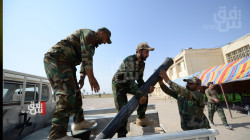
The process has since moved from political authorization to physical implementation. Major General Saad Maan, head of the Security Media Cell, announced the first practical steps in the merger process: the handover of Saraya al-Salam headquarters and weapons in Samarra, following Muqtada al-Sadr's decision to place the force under state authority. Al-Sadr's move —primarily a domestic political maneuver by a figure who has long maintained distance from Iran's direct orbit— added momentum and removed one argument for hesitation from CF-aligned factions.
Read more: Iraq after the regional ceasefire: US bases and unresolved political questions
Petraeus in Baghdad
The visit by retired General David Petraeus to Baghdad in mid-May 2026, formally as a private citizen providing independent advisory services to the White House, added a further dimension to the US pressure arrangement. After five days of meetings with senior Iraqi officials, Petraeus wrote that his interlocutors "recognized the importance of ensuring that the Iraqi Security Services have a monopoly on the use of force in Iraq." The visit was not publicly acknowledged as official; its significance lay precisely in the fact that a channel allowed frank exchange without the formality of a diplomatic confrontation.
What Petraeus found reflected a factional landscape in transition. Several groups, including Kataib Sayyid al-Shuhada, Ansar Allah al-Awfiya, had signaled varying degrees of readiness to support weapons restriction. The direction of travel among the pragmatic wing of the resistance ecosystem was, for the first time in years, discernibly toward accommodation. The choice to route that assessment through a retired general operating outside official channels was not incidental; it reflects a deliberate American preference for pressure that is felt without being formally applied, credible precisely because it carries no diplomatic obligation to follow through.
Read more: Najaf’s religious authority: A centuries-old voice for stability in Iraq
The Holdouts
That direction of travel does not extend to all factions, as Kataib Hezbollah, Harakat al-Nujaba, and Ashab al-Kahf have rejected disarmament without preconditions, specifically, the complete withdrawal of US and Turkish forces from Iraqi territory.
Kataib Hezbollah remains one of the most operationally capable factions within the PMF; its Secretary-General Abu Hussein al-Hamidawi survived a US strike in Baghdad's Karrada district in March 2026 that killed three associates. The faction has publicly stated readiness to respond to the United States across all fronts if PMF leaders are targeted.
The divergence within what was presented as a unified resistance framework now exposes a structural fracture: CF-aligned factions that contested the November 2025 elections and are seeking roles in the next government have different incentive structures from Islamic Resistance in Iraq groups that define their weapons as existential and their strategic alignment with Tehran as non-negotiable. The former calculate that accommodation buys political survival and economic legitimacy; the latter calculate that disarmament eliminates their deterrence and exposes their leadership to legal or physical targeting. Both calculations are rational within their own framework.
Read more: Iraq’s armed factions and the disarmament debate: Why unity masks deep divisions
The Transaction Behind the Pressure
Sources within the CF told Shafaq News of an internal split over an American proposal that sharpens the transactional character of the disarmament process: the US would facilitate service and investment projects inside Iraq, implemented by American companies, in exchange for progress on weapons restriction and factional handovers. The proposal has divided CF member parties, with some viewing it as a legitimate economic incentive and others resistant to what they read as a conditioned bargain.
The pattern fits a broader American operating mode. In May 2025, Trump announced a ceasefire with the Houthis in Yemen, mediated by Oman, under which the US halted its bombing campaign in exchange for the group ceasing attacks on American ships. The deal bypassed Israel and left the Houthis free to continue strikes on Israeli targets, exposing the transactional rather than principled character of the arrangement. Trump's subsequent public claim of engagement with Hezbollah in Lebanon this June, occurring in the same window as Washington's welcome of the CF stance, follows the same logic: bilateral deals on narrow US interests, coercive pressure maintained on the broader Iranian influence design.
Ali al-Baydar, a Baghdad-based political analyst, told Shafaq News that Barrack's mandate reflects a US desire to manage Iraq, Syria, Turkiye, and Iran as a single interconnected file, and that "the weapons question is one instrument within that larger arrangement, not an end in itself."
Iraqi politician Mithal al-Alusi argued that Iraq and the region need the "institutional United States" more than they need a presidential envoy, warning that handling Iraq through the same lens as Syria “risks misreading the country's political complexity and undermining the strategic partnership between Baghdad and Washington.”
Haitham Numan, professor of political science at the University of Exeter, assessed Barrack as oriented toward strong central states rather than consociational arrangements. This preference aligns with al-Zaidi's government program but sits uneasily with the federal and pluralist structure Iraq has operated under since 2003.
Read more: Multiple actors, one battlefield: Iraq since the US-Israel-Iran war began
Washington Cannot Answer This
Iraq's weapons restriction process has reached a threshold it has approached and retreated from before. The difference this time is the accumulation of external pressurث —legislative, diplomatic, financial, and military— that has raised the cost of inaction to a level that several CF-aligned factions now judge unsustainable. The Samarra handover, the CF's authorization, the Harris-al-Araji meeting, the Petraeus visit, and the economic incentive framework: these are the visible outputs of a sustained pressure campaign Washington has been constructing for over a year.
Despite these developments, the campaign cannot resolve the internal fracture it has helped produce. Kataib Hezbollah and Harakat al-Nujaba's refusal is strategic and rooted in a calculation that their weapons are the only guarantee of their survival in any post-accommodation environment. The CF split over the American investment proposal signals that even among compliant factions, the terms of compliance remain contested. If al-Zaidi's government formation proceeds without resolving that fracture, Iraq enters the final phase of the US withdrawal agreement with a bifurcated security landscape: factions nominally integrated and others openly defiant, and no unified position capable of holding both.
Read more: Ali Al-Zaidi's incomplete cabinet faces Iraqi armed factions test
Written and edited by Shafaq News staff.