After Al-Sadr’s Saraya al-Salam decision, is Iraq closer to restricting weapons to the state?


Shafaq News
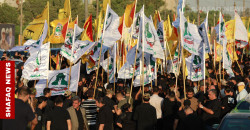
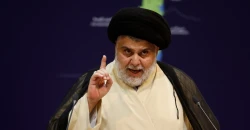
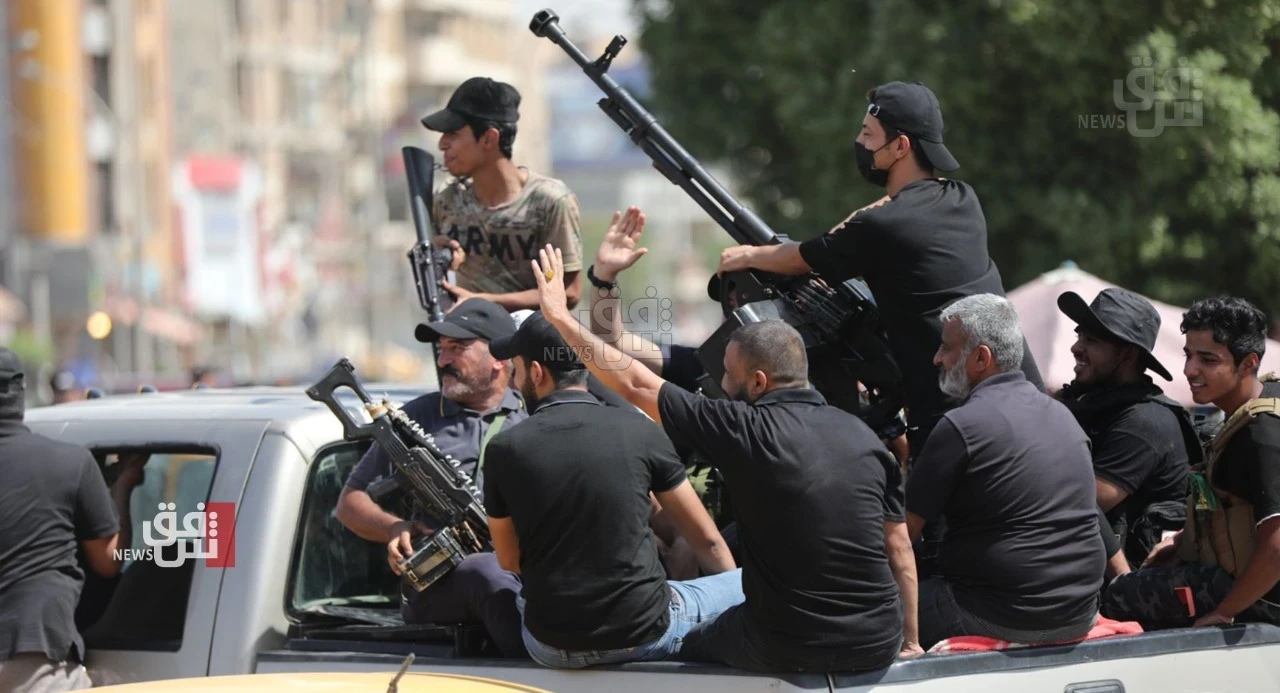
Debate over armed factions in Iraq has resurfaced after Iraq’s Patriotic Shiite Movement (PSM – formerly Sadrist) leader Muqtada al-Sadr announced the separation of Saraya al-Salam from his movement and its integration into the state, reviving questions over uncontrolled weapons and their relationship with state institutions.
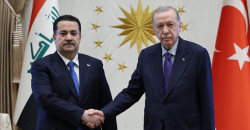
Welcomed by Iraq’s newly formed government headed by Ali al-Zaidi, the move comes amid broader international pressure, particularly from the United States, which has tied its support for Baghdad to efforts aimed at controlling armed factions and limiting their military and political influence within state institutions.
Origins of the Factions
Most of Iraq’s current armed factions emerged in the aftermath of the US 2003 invasion that toppled Saddam Hussein’s regime. Their influence expanded significantly after ISIS seized large Iraqi cities in 2014.
At that stage, Saraya al-Salam was formed as a military force following al-Sadr’s call to protect Shiite holy sites, while other factions were incorporated into the Popular Mobilization Forces (PMF), which later evolved into an official umbrella organization for numerous armed groups.
Rather than ending competing centers of power, that integration produced a complex structure involving the state, armed factions, political authorities, and parties, making the issue of restricting weapons to state control one of Iraq’s most difficult challenges.
Al-Sadr and Weapons
Considered one of the central figures in this issue, al-Sadr previously established the al-Mahdi Army after 2003 before dissolving it and later reconstituting Saraya al-Salam in 2014.
In his latest announcement, al-Sadr said the separation of Saraya al-Salam “comes in the public interest and to avoid dangers surrounding the country,” while calling for all civilian bodies affiliated with the group to become unarmed civilian institutions and for all military matters to be transferred entirely to the state.
For observers interviewed by Shafaq News, the move signals a shift from rhetoric advocating state control of weapons toward practical implementation within al-Sadr’s own movement, placing other factions under direct political pressure.
Read more: Iraq’s armed factions and the disarmament debate: Why unity masks deep divisions
State Priority
Prime Minister Ali al-Zaidi described the initiative as “an important step to strengthen stability and consolidate the principle of the state’s monopoly on weapons,” calling on all factions to operate under state authority. “The state is the only entity authorized to carry weapons and enforce the law.”
Researcher and academic Alaa Najah told Shafaq News that the government’s position was longstanding, noting that the prime minister had repeatedly emphasized the importance of restricting weapons to the state to strengthen institutions, preserve internal stability, and reassure the Iraqi public.
According to Najah, building a strong state begins with consolidating the monopoly of weapons in the hands of official institutions, “as a fundamental step to protect sovereignty and enhance security and stability, away from escalation or division.”
Divisions Among Factions
Despite the official welcome, positions among armed factions remain divided. Circulating reports and statements indicate that some factions have shown preliminary willingness to engage in a process of “regulating weapons,” while others, most notably Harakat al-Nujaba and Kataib Hezbollah, reject any path leading to disarmament.
Political writer and researcher Mohammed al-Yasiri said the issue is not about surrendering weapons, but regulating and restricting them. Speaking to Shafaq News, he added that while some factions support the project of restricting weapons, “others are seeking guarantees related to responding to any potential external threat.”
Al-Yasiri also pointed to a difference between the Iraqi and American visions, noting that Washington focuses on stopping the use of drones and missiles, whereas Iraq is discussing the regulation of medium and heavy weapons.
Multiple Centers of Decision-Making
Political analyst Ramadan al-Badran noted that al-Sadr’s latest move “reflects a national orientation that supports the state,” but other factions “differ like their affiliations, as some are influenced by external powers and do not possess full independence in decision-making.”
Al-Badran told Shafaq News that factions closely linked to Iran’s Islamic Revolutionary Guard Corps (IRGC) require “solutions that go beyond Iraq” and involve broader regional coordination, stressing, “the Iraqi political system itself contributed to producing this structure during previous stages.”
Read more: Multiple actors, one battlefield: Iraq since the US-Israel-Iran war began
US Pressure
International pressure from the United States has also intensified, with Washington linking support for the Iraqi government to distancing armed factions from state institutions.
Earlier, the United States opposed the participation of armed factions in government unless they are disarmed, while also demanding an end to state funding for some groups, further complicating Iraq’s internal political landscape.
Observers concluded that Iraq now faces two options. Continuing the policy of “containment” adopted by previous governments, or moving toward a genuine restructuring of the relationship between the state and armed factions.
Written and edited by Shafaq News staff.