A weapons-free Srifa: Southern Lebanese return home without feeling safe


Shafaq News
In one of three southern Lebanese villages chosen to test expanded state control, residents share a respect for the Army, and little else about what security should now mean.
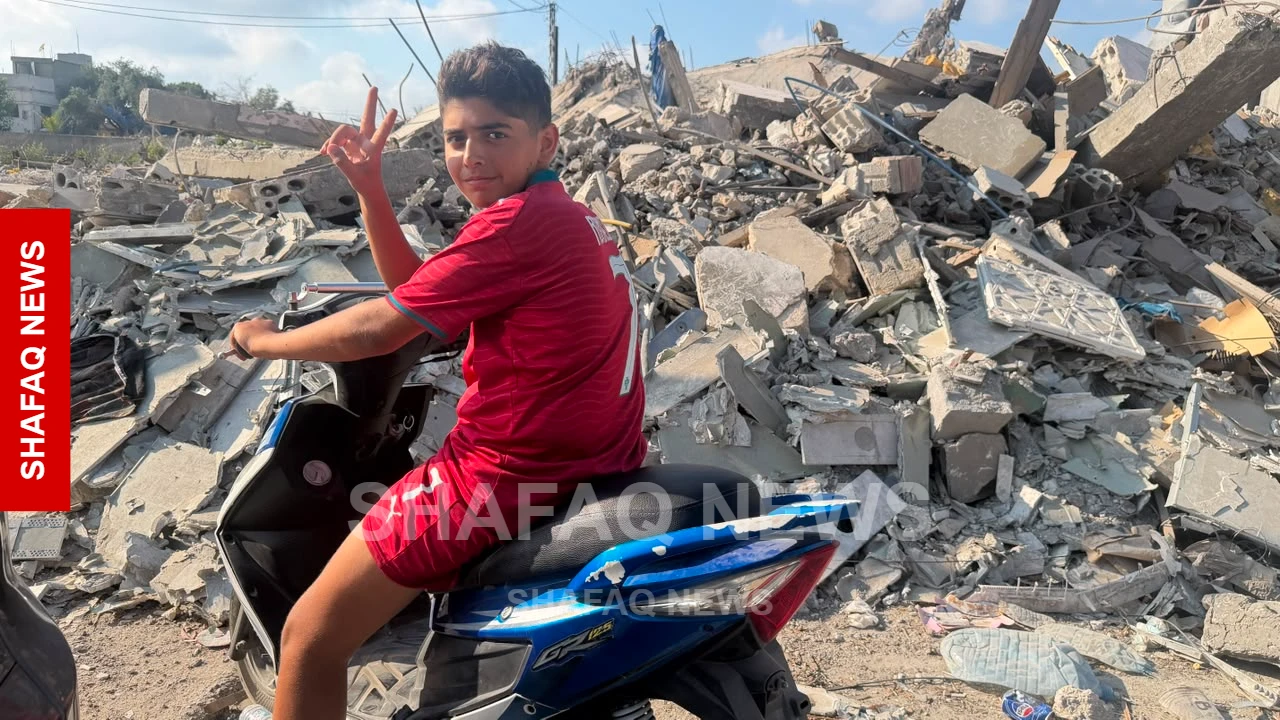
Ibrahim came home to Srifa after the latest ceasefire in a car weighed down with everything his family had carried into displacement. The southern Lebanese village was not the one they had left. His two-story house had been leveled during the war. "I came back with my family and everything we owned, but there was no home to come back to," Ibrahim told Shafaq News.
He cleared what he could from the rubble and began looking for somewhere else for his family to live. It was not easy. Thousands of residents were returning at once, and the wartime destruction had sharply cut the village's housing stock. Compensation had reached no one, he said, and he saw little sign that help was near. "Now, all I am thinking about is how I can get my home back. Who will pay me?"
His uncertainty runs through everything unfolding in Srifa, a village in the Tyre district that has become one of three pilot zones in southern Lebanon, alongside Froun in the Bint Jbeil district and Zawtar al-Gharbiyeh in the Nabatieh district. The arrangement is meant to strengthen the authority of the Lebanese state and to ensure the designated areas are free of weapons held by Hezbollah, the Lebanese Shiite movement that operates both as a political party and an armed force.
On Srifa's streets, where a municipal official says roughly 90 percent of an estimated 8,000 residents have come back, the experiment has opened a harder debate than the one it was designed to settle. Residents respect the Lebanese Army without exception. What they cannot agree on is what the Army is there to do.
Read more: Lebanon's Hezbollah shifts from battlefield to political fight over weapons
A Pilot Zone Where Little Has Changed
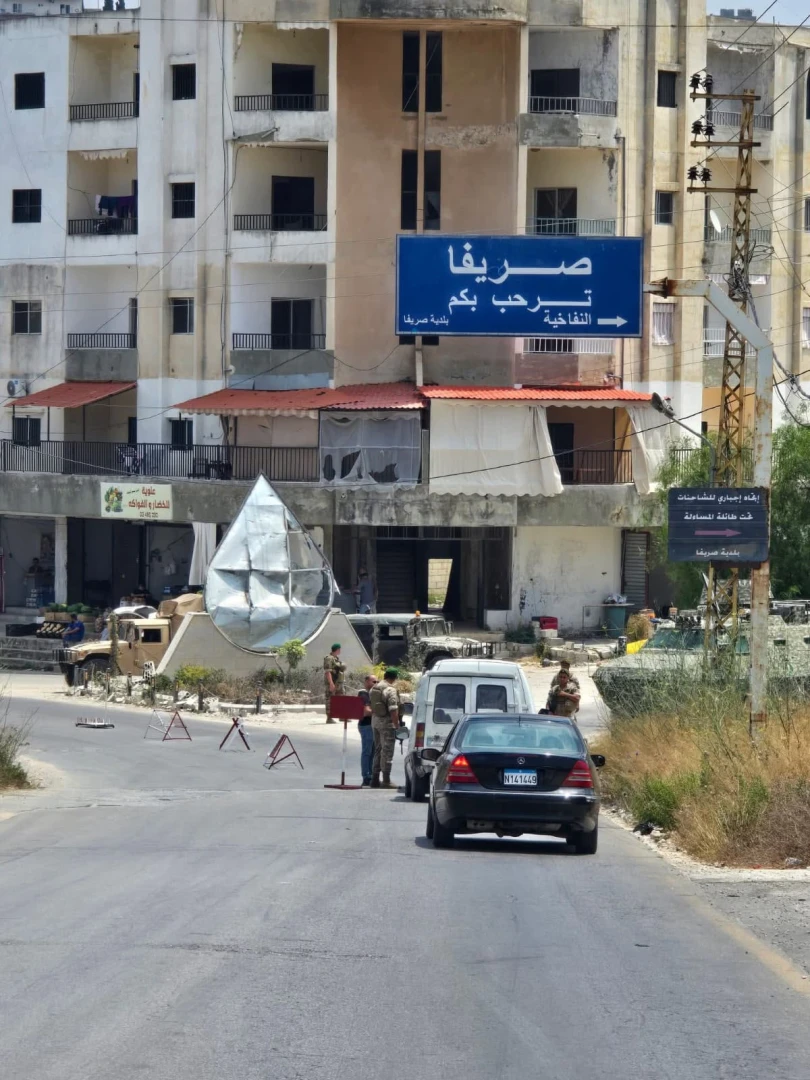
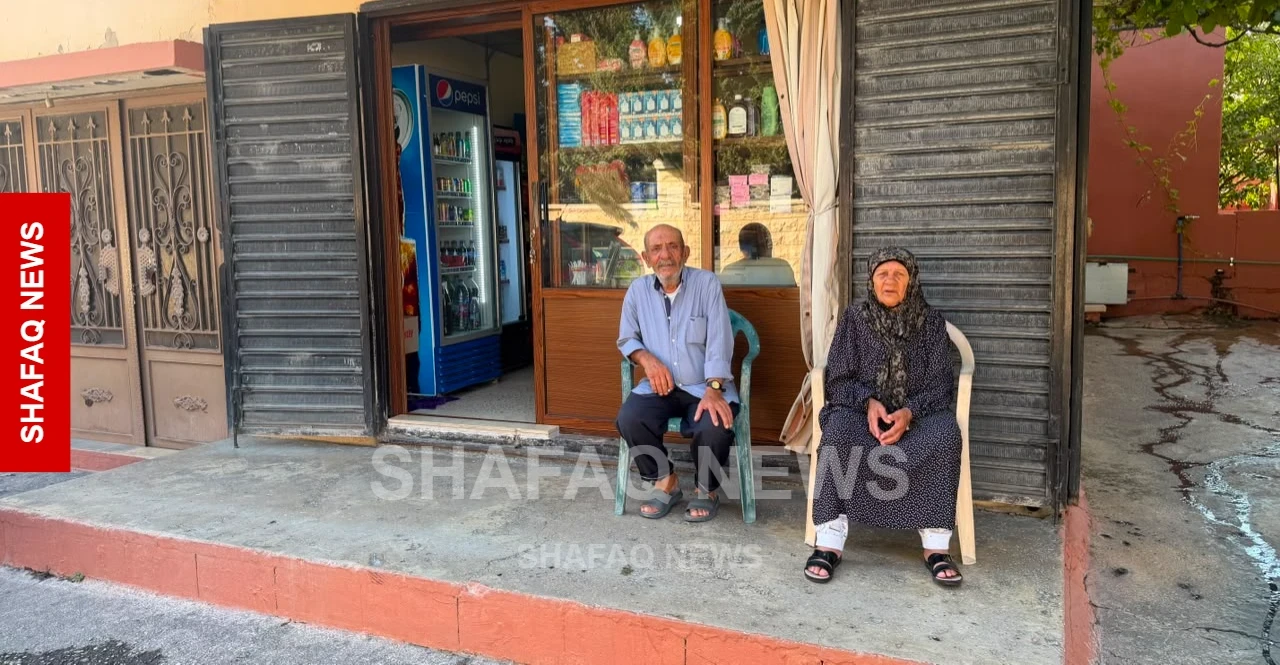
Srifa was never occupied by Israeli forces, and the Army did not arrive for the first time under the new arrangement. Soldiers were in the village before it was designated a pilot zone, and little has changed since, a municipal official told Shafaq News.
At least two Army checkpoints operate in Srifa now, and patrols move through the streets. Soldiers sometimes stop vehicles and ask for identification, but residents interviewed by Shafaq News said no private homes had been searched.
Hassan, 18, displaced to Mount Lebanon during the war, sees the Army's presence as protection. "I hate war. We got nothing from it. I want the Army here because I want the village to be safe," he said. His friend Jawad measures security differently. "It is our duty to stay here and defend our land. Instead of guarding Israel, the Army should cooperate with the resistance so Israel withdraws from our villages."
Asked whether they would let soldiers into their homes if a search became necessary, the two friends answered without hesitation and in opposite directions. "Yes. I have no problem with that," Hassan said. Jawad: "Absolutely not. I would never accept anyone entering my house to search it."
Read more: South Lebanon framework: What we know so far

Respect Army, Disagree Over Mission
That divide cuts across generations. Ali, around 21 and displaced to northern Lebanon during the fighting, welcomed the Army's expanded presence when he returned, saying it made him feel safer and drew him closer to the Lebanese state.
Hanaa, 44, sees it almost inversely. "The Army should be defending Lebanon, not guarding Israel's interests," she said. Hanaa lost her son during the war, after he stayed in Srifa rather than leaving with other displaced residents.
For Abu Hussein, state authority and Hezbollah are not necessarily at odds. "We respect the Lebanese Army, but there must be cooperation between the Army and the resistance so Israel leaves our land," he said.
The split runs even between siblings. "The Army should not just stay here," said Zainab. "Either it acts, or it should leave." Her sister Khadija answered her directly: "No, the Army should stay. Others should leave." She praised how the soldiers treat residents and respect their privacy.
Taken together, the interviews resist any tidy reading of Srifa as a village that simply accepts or rejects the pilot-zone model. Among those who spoke to Shafaq News, respect for the Army was close to universal. The disagreement lay in the harder questions beneath it: who should provide deterrence, what the Army should be expected to do, and how far state authority should extend in the drive to make the village weapons-free.
Shafaq News asked Hezbollah for its position on the pilot-zone arrangements in Srifa; the group declined to comment. Residents seen as sympathetic to Hezbollah nonetheless spoke of respecting the Army and cooperating with soldiers. There is no visible armed Hezbollah presence on Srifa's streets.
Read more: Israel reshapes southern Lebanon: Displacement and settlement fears
Weapons-Free, But Safe?
Strip weapons from the village, and a further problem remains, one that may decide whether residents judge the experiment a success. What does a weapons-free village get in return?
Those interviewed doubted that the arrangement, on its own, could keep future Israeli attacks away. The doubt matters more in Srifa precisely because the village was never occupied. In places where an Israeli withdrawal offers an immediate, visible measure of progress, residents have something concrete to point to. Srifa has no such marker, and it is testing whether expanded Lebanese state control can, by itself, become long-term security.
The stakes extend beyond the village. Israeli officials have tied wider pullbacks from positions in southern Lebanon to progress on disarming Hezbollah, while the United States has backed both the pilot-zone mechanism and the expansion of Lebanese military authority. For Srifa's residents, the diplomacy comes down to a plainer worry about whether they can rebuild without losing everything a second time.
Read more: Beirut’s southern suburb empties overnight: Stories of displacement under fire

Home, But Not Rebuilt
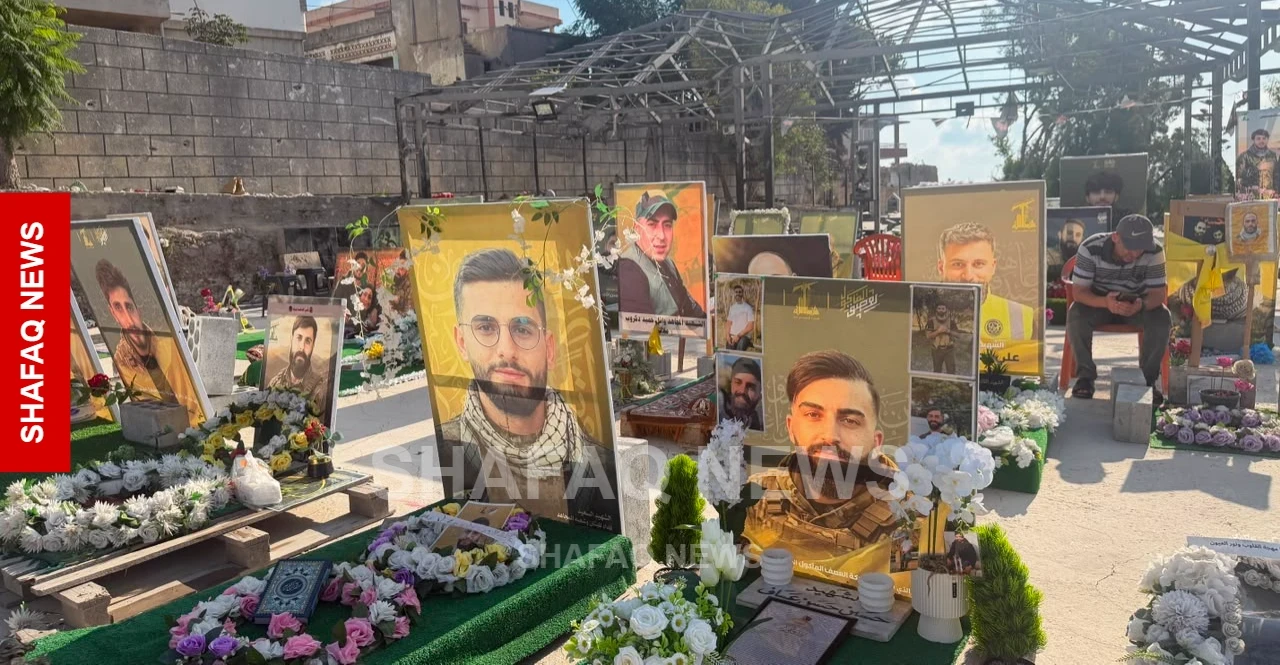
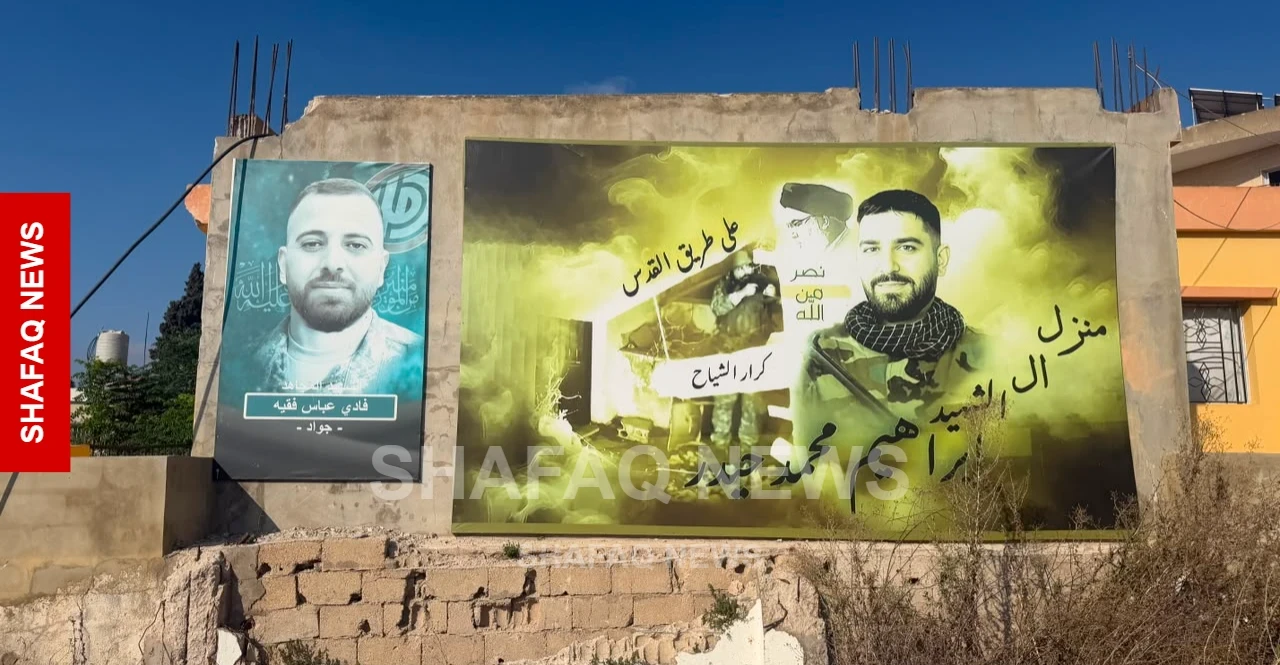
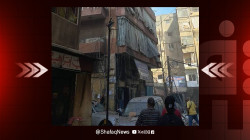
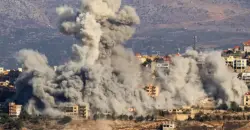
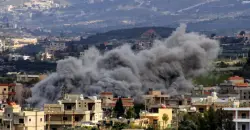
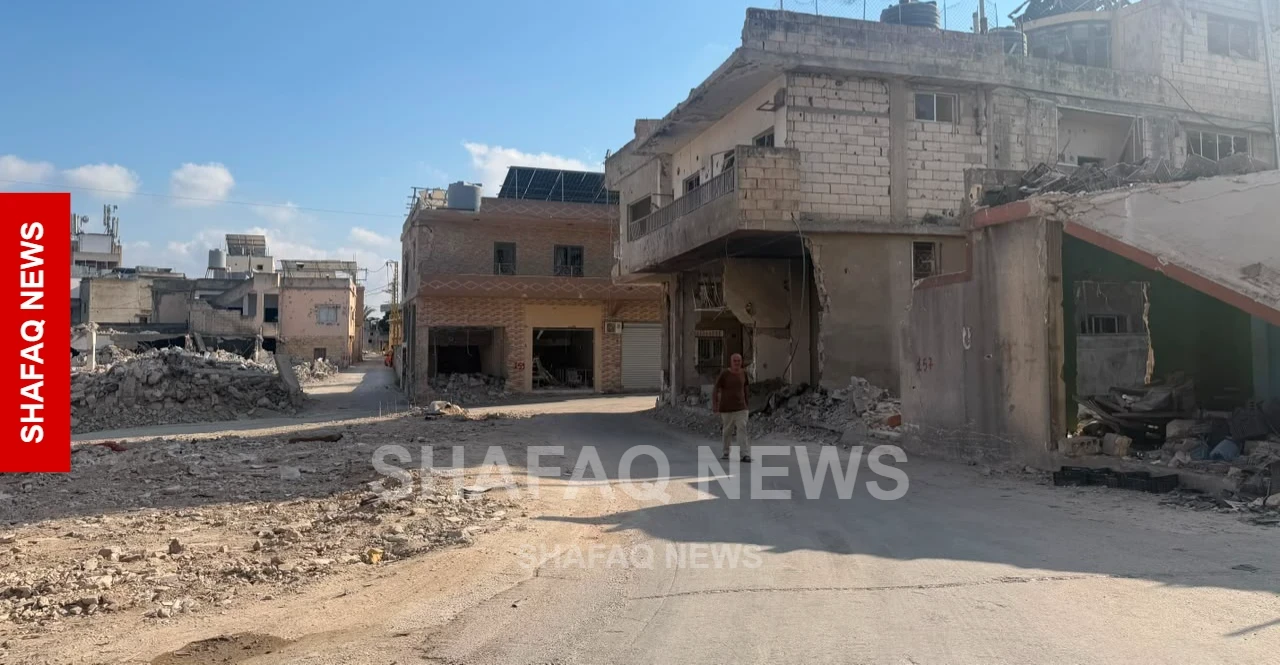
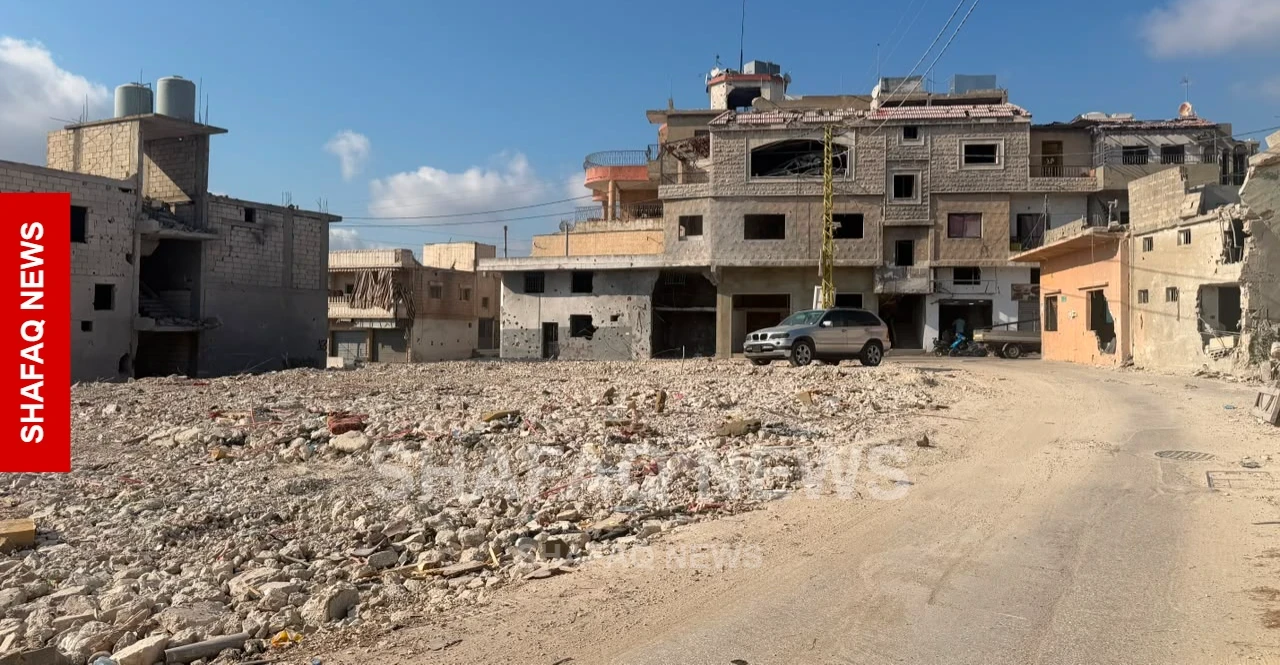
The war is hard to leave behind when its wreckage is still the view from the window. A municipal official told Shafaq News that the war damaged around 550 buildings in Srifa, with 350 destroyed and another 200 partially damaged.
Some families whose houses were destroyed are sheltering in schools. Others remain displaced elsewhere in Lebanon or abroad. In some cases, several families share a single home because they have nowhere else to go. Electricity and water, according to the official, run only part of the time. Much of the debris has been cleared, but damaged buildings are still part of the landscape.
The economic ground is no steadier. Mustafa,54, once ran a shop in the village; it was destroyed. For now, he will not reopen it. "Why would I rebuild if another war could come and destroy everything again?" he said. Reconstruction takes money, and confidence that what is rebuilt will still be standing next year. Residents say compensation has yet to reach those who lost homes, and few expect it soon. Families are physically back in Srifa, but without the homes and businesses they left with, and without much certainty about what comes next.
Read more: Israel's war fell on Christians and Shiites in Southern Lebanon with no distinction
Whether They Can Stay
The residents disagreed about Hezbollah's weapons, the Army's mission, the prospect of searches, and what a real defense of southern Lebanon would look like. On one point, their answers converged. "I don't believe this was the last time," one resident said of the possibility of another war, a fear that every resident interviewed by Shafaq News expressed, whatever their political differences.
That shared doubt may be the most consequential test the pilot-zone experiment faces. The state can set up checkpoints, widen patrols, and push weapons out of public view, and still not answer the thing residents actually use to measure security, which is whether they can stay.
For Ibrahim, that begins in the ruins of his house. For Mustafa, it decides whether a shop is worth reopening. Hassan and Jawad have already turned it into rival ideas of how their village should be defended.
Srifa may be one of three villages chosen to test a new security order for southern Lebanon. For the people who have come back to it, the concern is more immediate: whether coming home this time can finally mean staying.
*Lebanon and Israel signed the “Framework Agreement” on June 26, establishing pilot zones where the Lebanese Army would assume control after armed groups are disarmed and their infrastructure dismantled.
Read more: Ceasefire without sovereignty: Lebanon's fragmented power blocks peace with Israel
Written and edited by Shafaq News staff.