Iran’s Khamenei, Pezeshkian cite currency instability and foreign interference in protests


Shafaq News– Tehran
Ayatollah Ali Khamenei and President Masoud Pezeshkian said on Saturday that the wave of protests spreading across Iran is rooted in economic pressure, most notably currency instability, while accusing foreign actors of exploiting the unrest for political ends.
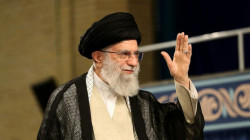
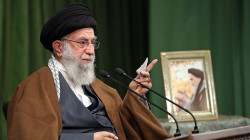
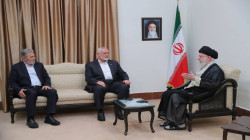
Speaking at a public gathering, Khamenei said demonstrations involving bazaar merchants reflected “real and correct” grievances driven by the sharp devaluation of the national currency and ongoing volatility in foreign exchange markets. He described bazaar traders as among “the most loyal segments of society,” arguing that their protests stemmed from economic distress rather than opposition to the Islamic Republic. “Officials were aware of the problem and were working to stabilize the market,” he said, attributing the recent surge in foreign currency prices to “the enemy’s work” and calling the fluctuations “unnatural” and the result of external interference.
Khamenei distinguished between peaceful protest and violence, saying demonstrations should be addressed through dialogue, while warning that unrest fueled by “incited individuals and enemy agents” would not be tolerated. “We must be aware of the soft war,” he added.
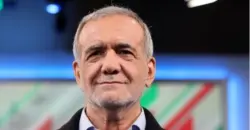
President Pezeshkian, focusing on economic grievances as the main reason for the protests, pledged direct outreach to professional groups affected by inflation and currency depreciation. He said the government would make “maximum efforts” to limit harm to traders and workers, and confirmed plans to establish a special operations room to address sector-specific complaints, alongside continuous engagement with producers and business owners.
Pezeshkian also warned against attempts by “hostile external parties” to provoke unrest, saying authorities would not allow foreign-backed agendas to gain traction.
According to Iranian police, protests entered their sixth day on Saturday and had spread to at least 25 cities, particularly in western and southwestern provinces. Iranian media reported that a Basij member, Ali Azizi, was killed during clashes in western Iran on Friday after being stabbed and shot.
Since shopkeepers in Tehran first shuttered their businesses on Sunday, at least seven people have been killed and 44 arrested, according to official figures.
Iran’s previous responses to public unrest have often involved lethal force. This time, despite isolated clashes between protesters and security forces, Pezeshkian’s government has so far refrained from a sweeping crackdown and has signaled readiness to hear what it calls the “legitimate demands” of demonstrators. As part of efforts to calm markets, the government appointed a new central bank governor on Wednesday. Abdolnaser Hemmati said he would prioritize restoring economic stability after the rial’s dramatic collapse. Separately, the Ministry of Higher Education on Tuesday removed campus security managers from the University of Tehran and two other major universities, with local media citing “misconduct and failure to properly handle recent student protests.”
لقاء عائلات شهداء الاقتدار مع الإمام الخامنئي |بمناسبة 13 رجب، الذكرى المباركة لميلاد الإمام علي (ع)، وبالتزامن مع ذكرى استشهاد قادة النصر، عُقد صباح اليوم، في حسينية الإمام الخميني (قده)، لقاء عائلات الشهيد سليماني ورفاقه، وجمع من عائلات شهداء الاقتدار، مع الإمام الخامنئي. pic.twitter.com/v1tPNxabQL
— موقع الإمام الخامنئي (@site_khamenei) January 3, 2026
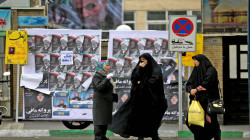
The demonstrations initially erupted over rising living costs and currency depreciation before expanding to political demands. Inflation remains elevated, with official data placing annual inflation at about 52 percent in December, while prices of basic goods have climbed even faster. Despite public-sector closures attributed to cold weather and energy conservation, protests continued in several areas, including parts of Tehran, where videos circulating online showed chants blending economic and political grievances. International reactions have added to the pressure.
Iranian protesters in Kazeroun, Fars province, took to the streets on Saturday, chanting anti-government and pro-Pahlavi slogans, according to videos sent to Iran International.pic.twitter.com/eCQYnJZHOq
— Iran International English (@IranIntl_En) January 3, 2026
US President Donald Trump warned that Washington would intervene if live fire were used against demonstrators, comments Tehran described as “unacceptable and inflammatory.” Israeli figures, including former prime minister Naftali Bennett, publicly encouraged the protesters. This week, Axios reported that Trump and Israeli Prime Minister Benjamin Netanyahu discussed further strikes on Iran, including the possibility of targeting Tehran’s Lebanese ally Hezbollah.
Israel’s Ministry of Foreign Affairs also posted pre-revolutionary Iranian imagery on its Farsi social media account, showing a lion and sun emblem with the lion’s paw resting on an hourglass bearing Iran’s current flag. The caption read: “The rise of Iranian lions and lionesses to fight against darkness… Light triumphs over darkness.”
Reza Pahlavi, son of Iran’s last shah overthrown in the 1979 revolution, called for escalation, urging “protests in the capital,” a “massive presence of people in Tehran,” and the establishment of barricades on major roads.
President Trump, thank you for your strong leadership and support of my compatriots. This warning you have issued to the criminal leaders of the Islamic Republic gives my people greater strength and hope—hope that, at last, a President of the United States is standing firmly by… https://t.co/1H12Z77uCE pic.twitter.com/G3TyrkJTy6
— Reza Pahlavi (@PahlaviReza) January 2, 2026
The scale of the current unrest has revived memories of the 2022 protests following the death in custody of 22-year-old Mahsa Amini, who was arrested for allegedly violating dress codes. Those demonstrations, among the largest in the Islamic Republic’s history, began after her funeral in Saqqez and spread nationwide. According to rights groups, at least 500 people were killed as security forces used mass arrests, tear gas, and live ammunition. A 2024 investigation by United Nations experts concluded that the government’s response amounted to “crimes against humanity,” a finding Iranian authorities rejected as “false” and “biased.”
The morality police were briefly suspended in December 2022 before being reinstated the following year, though enforcement has since been looser, even as many women continue to fear a renewed crackdown.