Smoky saj bread, a symbol of generosity in Feyli Kurdish Ilam’s food culture


Shafaq News- Ilam
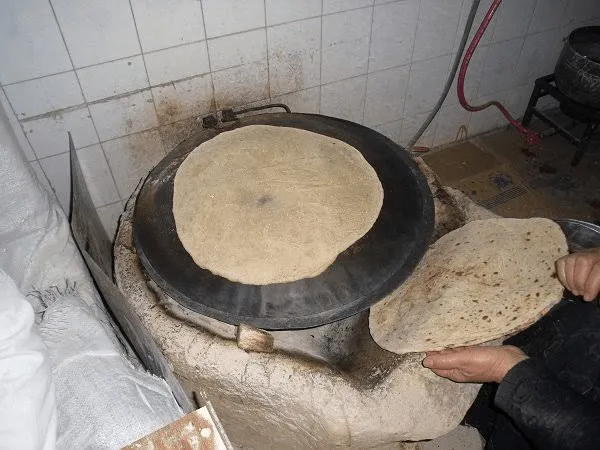
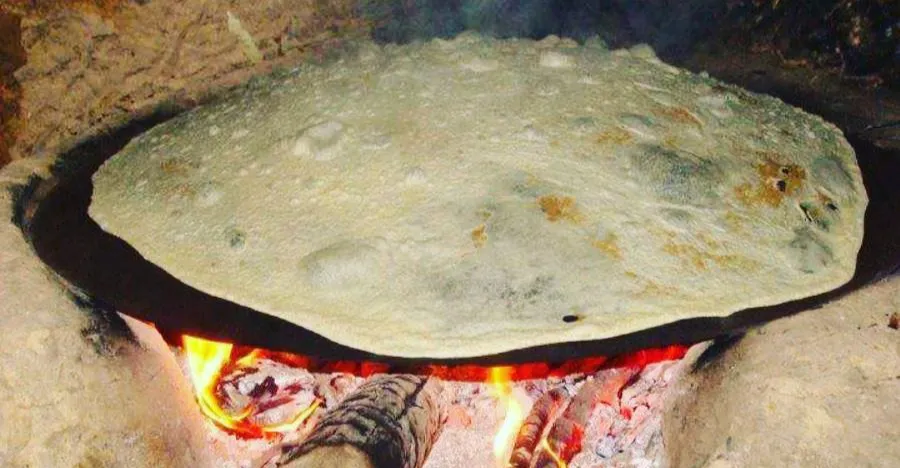
Saj bread is more than a daily staple; it is a living thread in the cultural fabric of Ilam province in western Iran, thin and delicate with a subtle smoky flavor that recalls the warmth of generations past. Baked over an open flame on a curved metal plate, it moves straight from fire to table, carrying the scent of wood smoke and the quiet stories of family kitchens where tradition is shaped by hand and shared with every bite.
Unlike industrial loaves, saj bread is defined by its
natural smoky aroma and delicate texture, shaped by the slow rhythm of
traditional baking over open flame. Mechanized bread, by contrast, is produced
by large machines and often contains additives that can alter both flavor and
nutritional value, distancing it from the simplicity and character that define
saj.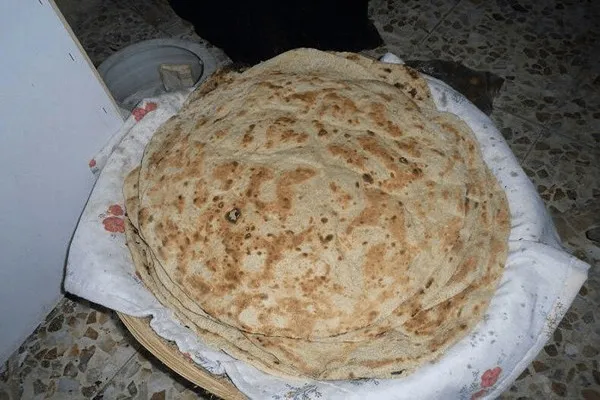
Though simple in ingredients, the baking process requires practiced hands: flour, water, and salt are mixed into a soft dough, left to rest, then divided into small portions that are rolled thin and laid gently onto the heated saj. Within minutes, the bread turns golden over the flame.
According to Fars News, nutritionist Elaheh Ranjbar said saj bread retains high nutritional value due to its simple ingredients and traditional preparation, making it easier to digest than industrial loaves. Food culture researcher Fatemeh Norouzi described it as a symbol of generosity and communal life in Ilam, while baker Nourtanj Nazari said its freshly baked taste and handmade preparation continue to draw families to the tradition despite the convenience of mechanized bread.
In Ilam, saj remains more than food, it is a daily ritual
that binds households to their history, carrying forward a craft shaped by
fire, patience, and memory.