Iraq ships 49M barrels, advances Basra-Fishkhabur pipeline


Shafaq News- Basra
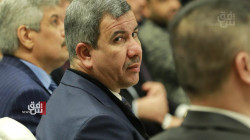
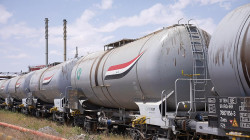
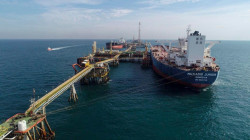
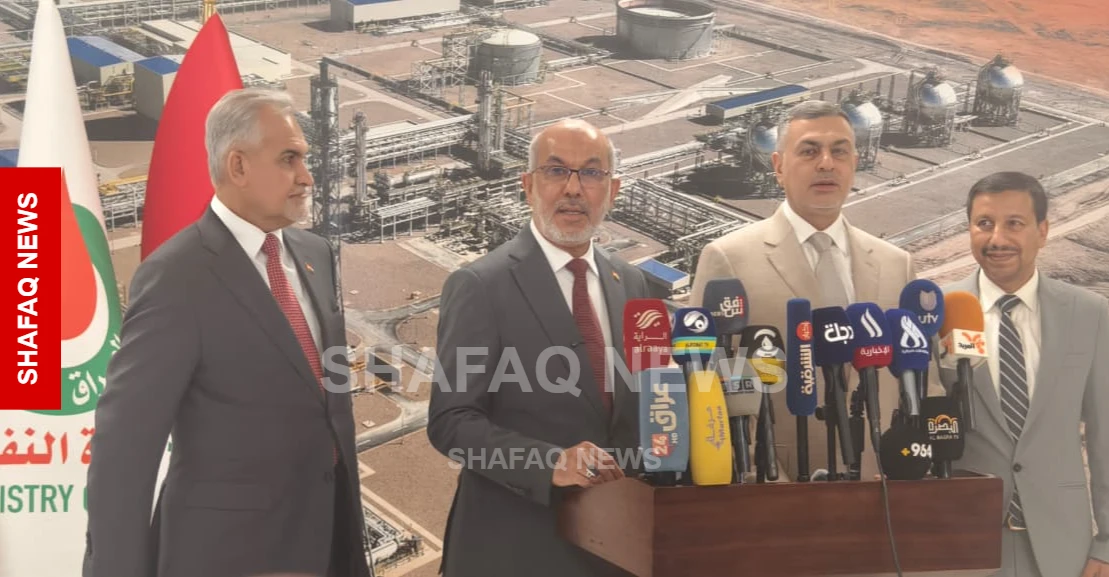
Iraq exported about 49 million barrels of crude oil in July, while talks with Iran and the United States continue over the passage of Iraqi shipments through the Strait of Hormuz, Oil Minister Basim Mohammed Khudair Al-Abadi announced on Friday.
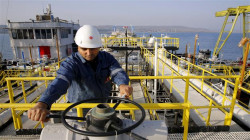
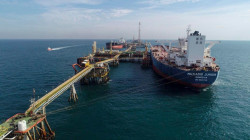
Speaking at a joint press conference with Basra Governor Asaad Al-Eidani, Al-Abadi said four tankers were loaded with crude today and are preparing to sail. Daily exports have averaged two million barrels since the beginning of August, "the first time Iraq has reached that level since the regional crisis began."
The Oil Ministry, through the State Organization for Marketing of Oil (SOMO), Basra Oil Company, and other companies, is also pursuing exceptional contracts to increase exports. Al-Abadi reaffirmed plans for a strategic pipeline linking Basra to Fishkhabur near the Turkish border to diversify Iraq’s oil export outlets and avoid potential disruptions to energy shipments through Hormuz.
The project will be implemented by a consortium comprising Chevron, IT Capital, and Qatar’s UCC under an agreement signed in Washington during the Iraqi government delegation’s visit to the United States in July. Running from Basra to Fishkhabur, with a branch extending to Baniyas on Syria’s Mediterranean coast, the pipeline was previously delayed by financial constraints but would connect crude supplies to refineries across Iraq for the first time, increase exports through the Turkish port of Ceyhan, modernize oil infrastructure, boost state revenues, and create jobs.
Hormuz will remain an important export route alongside Ceyhan and other outlets under the government’s strategy, he added.
Read more: No exit but Hormuz: Iraq’s economic vulnerability exposed
Iraq, OPEC’s second-largest oil producer, ships about 90% of its crude exports through the Strait of Hormuz, leaving the country particularly exposed to disruptions in the waterway, which normally carries roughly one-fifth of global oil supplies. Parliamentary Oil Committee member Zainab Al-Khazraji previously told Shafaq News that Jordan is also being considered as a potential outlet for Iraqi crude.
Read more: Iraq's oil revenues under US financial guard 23 years after invasion
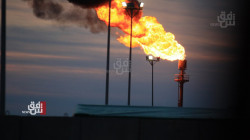
Al-Eidani, in turn, pointed to plans to develop the Faihaa field and other oil fields in Basra, establish an extensive pipeline network, and increase the use of associated gas to fully supply power stations, with any future surplus intended for export through Iraqi ports.