Red palm weevil threatens Iraq’s date groves


Shafaq News- Najaf
Hidden inside the trunks of Iraq’s date palms, a destructive pest can hollow out a tree before clear signs of infestation appear.
The red palm weevil, an invasive insect now reported in more than seven Iraqi provinces, is posing a growing threat to orchards and a date industry deeply tied to the country’s agricultural heritage.
In Najaf, where date palms cover about 31,000 dunams* (7,750 hectares), agricultural teams are surveying orchards, installing pheromone traps and treating infected trees in an effort to prevent isolated infestations from developing into wider outbreaks.
From Safwan To Central Iraq
“The red palm weevil is one of the most dangerous pests affecting palm trees,” Amir Sahib Al-Haddad, head of the Plant Protection Department at the Najaf Agriculture Directorate, told Shafaq News.
Native to South and Southeast Asia, the insect has spread across many date-growing countries in the Middle East.
Iraq’s first officially documented infestation was recorded in Safwan, Basra province, in October 2015. Agricultural authorities subsequently introduced monitoring, quarantine and control measures aimed at containing the pest.
Al-Haddad said new infestations began appearing in several provinces in 2025, including Najaf, where the pest was detected in July in the Al-Munaythir area of Al-Haydariya.
Since then, plant-protection teams have carried out field surveys, inspections and control operations, he said.
Infestations have now been recorded in more than seven provinces at varying levels, particularly in areas close to existing outbreaks, according to Al-Haddad.
Al-Munaythir lies near the borders of Najaf, Babil and Karbala, requiring agricultural authorities in the three provinces to coordinate monitoring and treatment.
Infected Offshoots Drive Spread
The weevil can spread naturally, but Al-Haddad said movement of infected palm offshoots between areas presents a greater threat.
Agricultural authorities therefore require offshoots from affected areas to undergo treatment and inspection before they can be transported.
Al-Haddad said treated offshoots receive a phytosanitary certificate authorizing their movement within a specified period.
Restricting the movement of infected planting material has long been a central part of Iraq’s strategy against the pest. Scientific monitoring in Basra has also relied heavily on pheromone traps and quarantine measures.
A Palm Can Look Healthy
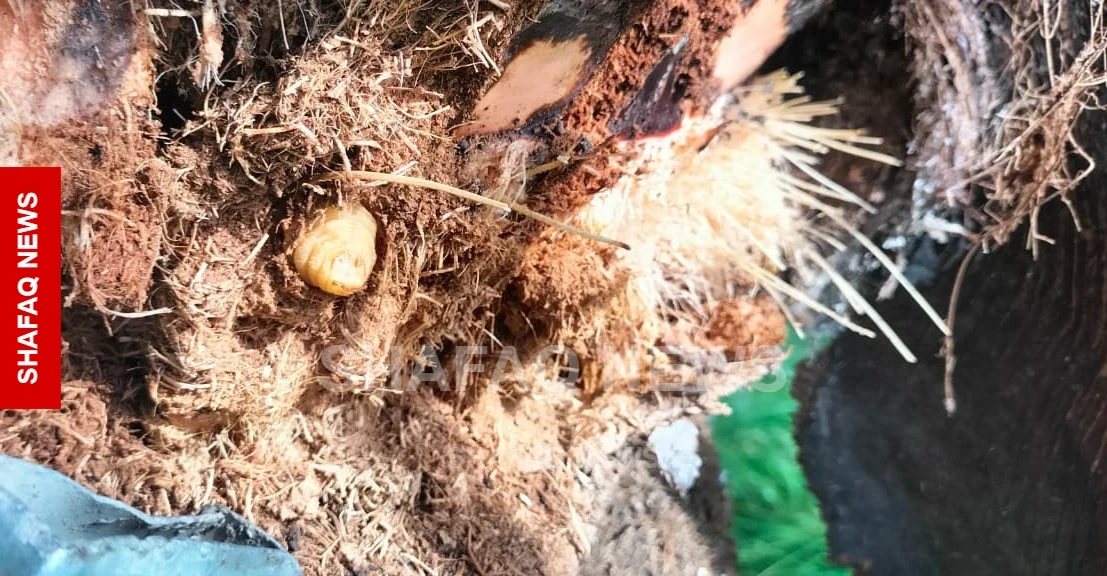
One of the greatest difficulties is that an infested palm may appear healthy while larvae are already feeding inside its trunk.
Al-Haddad said adult weevils tend to enter through vulnerable or damaged areas, including wounds created around offshoots or during excessive pruning.
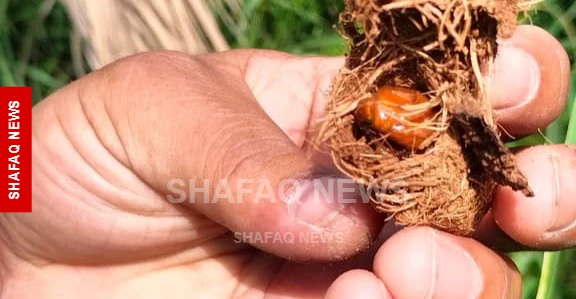
Once eggs hatch, the larvae bore into soft tissue and feed inside the trunk, creating galleries that can gradually hollow out the palm.
In advanced cases, the tree can weaken, collapse or die before the infestation is recognized.
In one outbreak in the Albu Munaytham area, 28 palms were found to be infested, Al-Haddad said.
Agricultural teams successfully treated 25 of them, while three severely damaged palms later fell during strong winds after infestation had left their trunks largely hollow.
Traps Provide An Early Warning
Control efforts do not begin only after a tree becomes visibly sick.
The Plant Protection Directorate has long distributed pheromone traps designed to attract adult red palm weevils, allowing agricultural teams to detect their presence and track populations.
FAO guidelines identify pheromone trapping, regular orchard surveys, sanitation and treatment of infested palms as key components of integrated red palm weevil management.
Al-Haddad said traps are monitored even in areas where no infestation has been confirmed, while teams respond to reports from farmers when suspicious symptoms emerge.
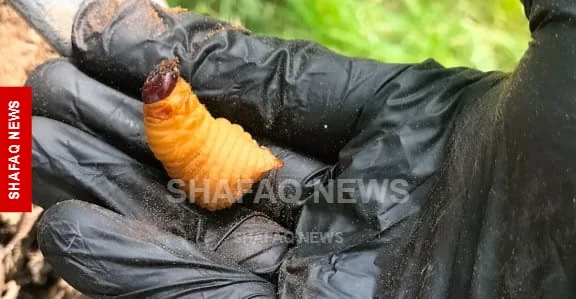
Accurate diagnosis is important because Iraq also has several species of palm borers whose damage can resemble red palm weevil infestation.
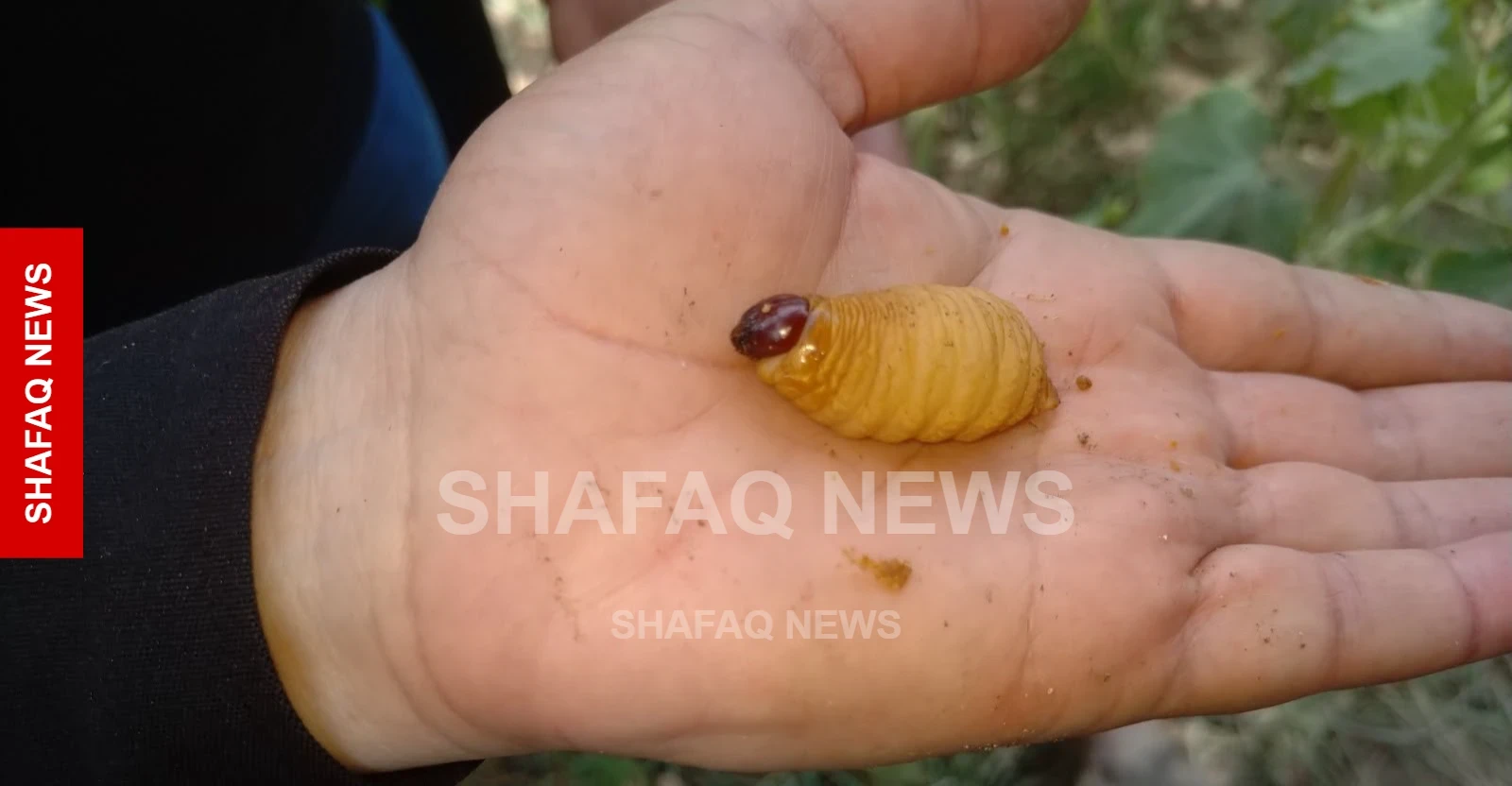
The larvae of the red palm weevil are typically pale or yellowish-white with a dark head and spend most of their development concealed inside the palm, making early detection difficult.
Al-Haddad said most natural movement occurs over relatively short distances, although weather conditions can aid dispersal. Scientific studies likewise indicate that many adult weevils are short-distance flyers, while movement of infested palms or offshoots can accelerate their spread over much greater distances.
Under favorable conditions, the insect can produce multiple generations, allowing populations to build up inside an infected palm before adults emerge and spread to nearby trees.
Read more: The Black Land: Four decades оf land reclamation threatens Iraqi agriculture
*In Iraq, 1 dunam = 2,500 m² = 0.25 hectares.