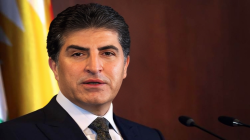
President Barzani at MSC2026: Kurdistan backing political settlement in Syria
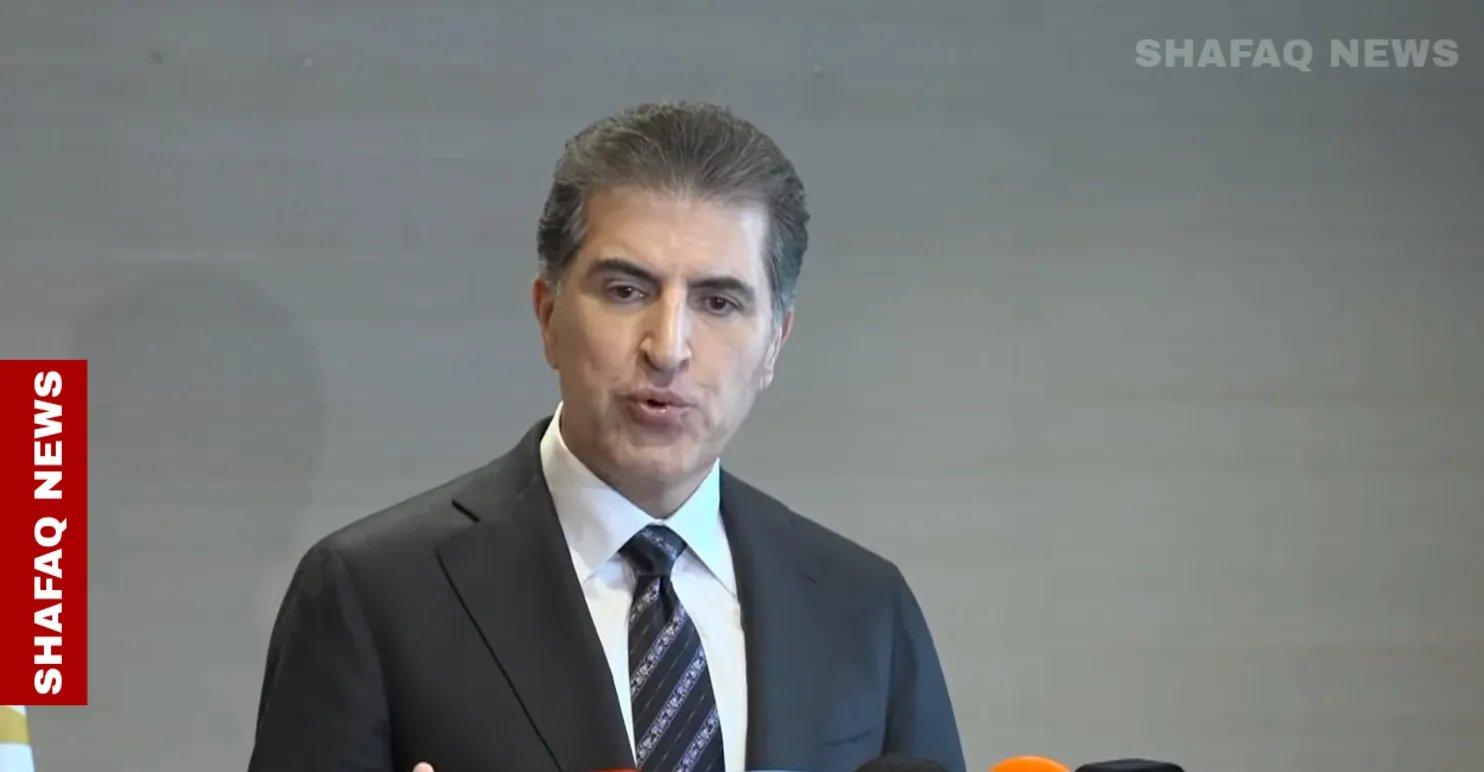


Shafaq News- Munich
President Nechirvan Barzani on Sunday reaffirmed that the Kurdistan Region will continue to play a supportive role in the Kurdish file in Syria, while indicating that Kurdish parties in Iraq will work constructively to help break the deadlock in Baghdad.
Speaking on the sidelines of the Munich Security Conference, Barzani explained that his participation focused on two priorities: developments in Syria and efforts to form Iraq’s next government. He stressed that “the Kurdistan Region aims to remain a stabilizing actor, contributing to government formation in Baghdad and encouraging political progress in Syria.”
Barzani noted that several countries support the presence of a strong Kurdistan Region within a federal Iraq. Meetings in Munich addressed unresolved political issues in both Baghdad and Erbil, and Kurdish parties, he added, intend to help ease the impasse and back steps that advance stability.
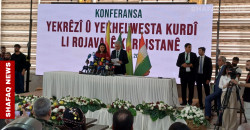
On Syria, Barzani welcomed the ongoing political process and the agreement between Damascus and the Kurdish-led Syrian Democratic Forces (SDF), noting that other Kurdish factions also support the arrangement and describing it as a “positive step under current conditions.”
“The Region’s position has been coordinated with Turkiye and other regional actors, while Kurdish leader Masoud Barzani has worked to encourage dialogue,” he explained. “The objective is to restore stability while ensuring constitutional guarantees for Kurds and all Syrian communities within a unified state framework.”
Barzani pointed to an opening for a political settlement in Syria, emphasizing that its form must be determined by Syrian parties, including the SDF, the Kurdish National Council, and the government in Damascus. He also cautioned against attempting to replicate the Kurdistan Region’s model in Syria, citing differences in geography and political realities.
He described the recent appointment of a governor for Hasakah by Syrian transitional President Ahmad Al-Sharaa as “a constructive step,” noting the need for inclusive representation in a province with a mixed Kurdish and Arab population. He also indicated that discussions with Syrian officials, including Foreign Minister Asaad Al-Shaibani and Al-Sharaa, reflected “a willingness to pursue political solutions.”
Addressing residents of Rojava*, Barzani expressed hope that implementing the agreement will pave the way for development in cities such as Qamishli and Afrin. He highlighted the solidarity shown by Kurds elsewhere during difficult periods and called the next phase “an opportunity to focus on economic recovery and public services.” Support, he clarified, centers on political backing rather than military involvement, a stance he noted is shared by European partners.
Barzani also cited the involvement of the United States and French President Emmanuel Macron in supporting the political track, stressing that all sides must ensure the agreement is carried out effectively.
Drawing a comparison to Iraq’s 2005 constitutional process, he acknowledged that while not all Kurdish aspirations were realized at the time, meaningful gains were secured. “Under current circumstances in Syria, the agreement represents tangible progress and a basis for constitutional and legal recognition of Kurdish rights.”
The remarks follow nearly two weeks of heightened military tensions between the SDF and Damascus, which concluded with a comprehensive agreement on January 30 to halt the fighting. President Barzani has repeatedly encouraged all parties to protect and consolidate the rights of the Kurdish people in Syria. The Kurdistan Region has also hosted a series of high-level engagements aimed at preventing escalation, including meetings with SDF leader Mazloum Abdi and US Envoy Tom Barrack.
Read more: Syria’s calm: An end to threat or a start of a complex phase for Iraq?
* Rojava refers to the Autonomous Administration of North and East Syria (AANES), a self-governing region in northern and northeastern Syria that emerged during the civil war after 2012 and is secured mainly by the SDF.