Erased stones: War’s toll on Gaza’s cultural heritage


Shafaq News
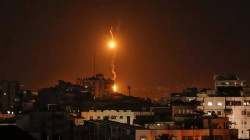
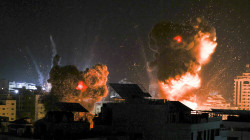
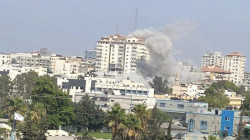
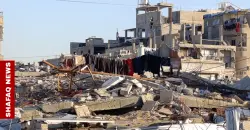
Beneath Gaza’s modern streets and rubble lie fragments of civilizations that shaped the region for millennia. Yet the ongoing Israeli war since October 7, 2023, has shattered much of this heritage, threatening to erase irreplaceable cultural landmarks that reflect Gaza’s complex history.
Among the most significant sites affected is the Saint Hilarion Monastery near Deir al-Balah. This complex, dating back to the 4th century CE, once served as a major Christian monastic center in the Levant.
Archaeologists have documented its basilica, cloister, baptistery, and burial crypts, all of which have sustained considerable structural damage amid the fighting.
Previously placed on UNESCO’s World Heritage Tentative List, the monastery was officially designated as endangered in early 2024.
Northwest of Gaza City, the remnants of Anthedon Harbour—a vital ancient port spanning eras from the Iron Age to Hellenistic times—now bear the marks of bombardment. Multiple airstrikes between late 2023 and early 2024 left craters and scattered debris, as confirmed by satellite images analyzed by UNOSAT. These blows risk obliterating the layers of history embedded in the site’s stones.
Jabaliya, a town in northern Gaza, was home to a recently discovered Roman-era necropolis called Ard al-Moharbeen. Revealed in 2022 and 2023 during construction activities, the site contained more than 125 tombs, including rare lead sarcophagi—finds of considerable archaeological value. Reports indicate that the necropolis was nearly completely destroyed during a ground incursion in late 2023.
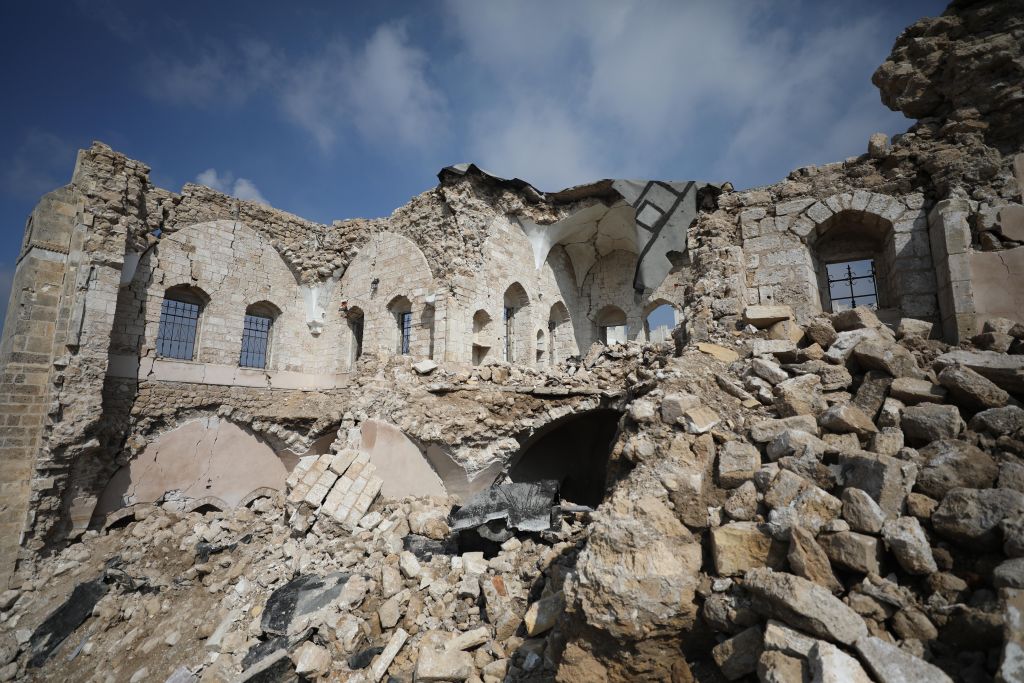
The historic core of Gaza City has also suffered. The Pasha Palace, an Ottoman-era administrative building turned museum, lies in ruins after repeated strikes in early 2024. The palace’s intricately tiled halls and arches, once admired for their craftsmanship, are buried beneath collapsed walls.
Similarly, Hamam al-Sammara—the last functioning traditional bathhouse in Gaza and a structure with over 700 years of continuous use—was destroyed by an airstrike. Nearby, the Qissariya Market, with its vaulted stone corridors dating back to the Mamluk period, partially collapsed under bombardment.
Among Gaza’s religious landmarks, the Great Omari Mosque sustained heavy damage in December 2023. Built atop a Byzantine church and reconstructed during the Mamluk and Ottoman eras, the mosque’s northern wall, dome, and main prayer hall were reduced to rubble, signaling a profound loss for both worshippers and heritage conservationists.
The Greek Orthodox Church of Saint Porphyrius, located in the Zaytoun district, have also suffered a particularly tragic blow on October 19, 2023. While sheltering displaced families during the fighting, the adjacent monastery buildings were struck by a blast that killed at least 18 civilians, including women and children, and injured many others. Although the church’s bell tower remained intact, much of the surrounding complex was severely damaged.
Saving what’s Left
International law provides protections for cultural heritage sites regardless of their use, a point UNESCO has emphasized throughout the conflict. The agency cites the 1954 Hague Convention for the Protection of Cultural Property and Protocol I of the Geneva Conventions, both of which prohibit targeting cultural property unless absolutely necessary for military operations.
This widespread damage has drawn concern from global heritage organizations. ICOMOS, which advises UNESCO, has placed Gaza’s historical fabric on its emergency watch list. Likewise, the World Monuments Fund included Gaza’s Old City on its 2025 list of the world’s most endangered cultural heritage sites, underlining the vulnerability of the enclave’s historic urban environment.
The financial toll is also substantial. In a report released in January 2024, the World Bank estimated losses to Gaza’s cultural sector at over $319 million. This encompasses destruction of museums, archaeological sites, historic neighborhoods, and religious monuments.
According to Gaza’s Ministry of Culture, at least 247 cultural institutions, including libraries, theaters, and heritage centers, have been destroyed or damaged. Independent assessments by ALIPH and ICOMOS also suggest that over 1,000 historical artifacts may be irretrievably lost.
Local officials further estimate that upwards of 60% of Gaza’s cultural assets have been directly affected since hostilities began, while heritage-related livelihoods—craftspeople, tour guides, and preservation workers—have seen a 90% drop in activity and income.
Amid this devastation, efforts to protect what remains have begun. The ALIPH Foundation has supported salvage operations aimed at recovering artifacts from collapsed buildings, including museum collections from the Pasha Palace. Archaeologists based in Gaza, led remotely by researcher Fadel al-Utol, are also employing mobile technology and digital tools to document damage and preserve records of threatened sites.
Moreover, UNESCO has committed to backing comprehensive assessment and restoration once conditions permit safe access. However, experts caution that rebuilding Gaza’s cultural heritage will be a long-term, costly endeavor, with estimates suggesting several hundred million dollars and years of dedicated work will be required to restore what has been lost.
Written and edited by Shafaq News staff.