In Kirkuk’s bustling market, Iraq’s basturma makers keep a century-old craft alive


Shafaq News – Kirkuk
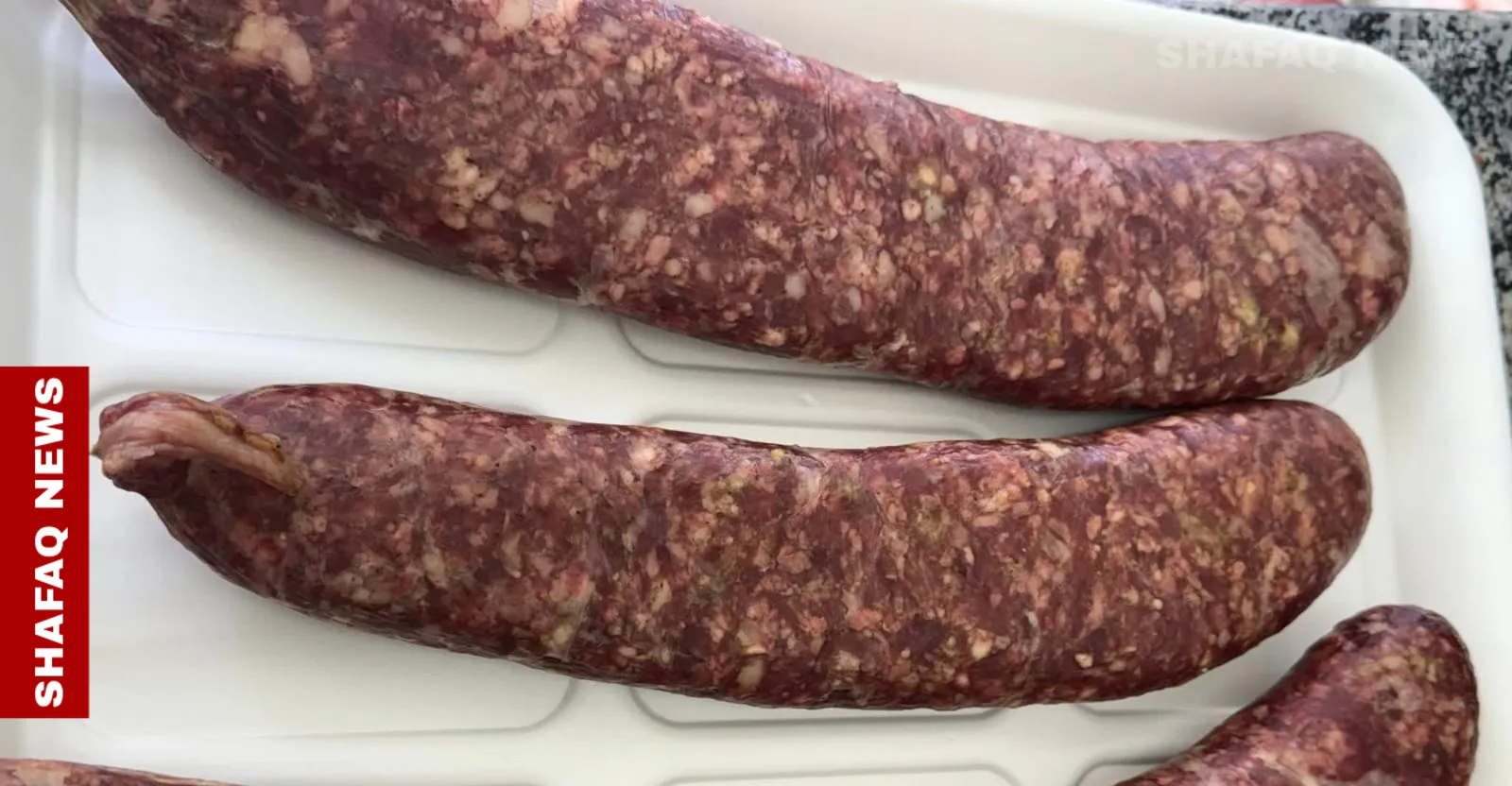
Amid the spice-laden air of Kirkuk’s main market—where the scent of smoked meat mingles with the calls of vendors—one tradition continues to anchor the city’s identity: the meticulous, time-honored craft of Iraqi basturma.
On a tour inside the market, Shafaq News Correspondent spoke with butchers, seasoned artisans, and loyal customers about a food heritage that has shaped Kirkuk’s culinary landscape for generations.
Living Heritage
“Saying basturma is just salted or dried meat is a mistake,” says Saadoun al-Qassab, one of the oldest craftsmen in the market. “It is a heritage. A craft with secrets. We make it exactly as our fathers and grandfathers did more than seventy years ago. No ingredients change, no techniques change. That’s how the authentic Kirkuk flavor survives.”
He explains that winter remains the peak season. The cold air naturally dries the meat—a necessity in past decades when people lacked refrigeration. “Back then, this wasn’t just food,” he adds. “It was how families preserved meat for months. Basturma became part of the city’s history.”
Kirkuk’s cultural diversity—Arab, Turkmen, and Kurdish—also shaped the recipe. “Each community added something of its own,” Saadoun notes. “That’s why Kirkuk’s basturma has a flavor you won’t find anywhere else.”
Five-Stage Craft
At another stall, veteran butcher Jumaa Saleh breaks down the process step by step.
“People think it’s simple—but it takes precision,” he says. “First, we choose lean veal or beef. Too much fat ruins the texture. Then we cover the meat in coarse salt for two to four days depending on size. The salt pulls out the moisture.”
After rinsing, the meat is pressed between wooden boards. “This step is crucial,” Saleh explains. “If excess water stays inside, the flavor changes.”
Then comes the defining phase: the spice paste known locally as al-Ketma, a closely guarded Kirkuk blend. “Garlic, red pepper, cumin, fenugreek, local spices,” he lists. “We coat the meat, hang it for weeks, and let the cold air do the rest. That’s what gives basturma its strong taste.”
Saleh smiles: “People know the real thing from the first bite. If one step goes wrong, it shows immediately.”
Product That Moves the Market
Inside a nearby grocery stall, employee Asmaa Abdul-Jabbar says basturma is a key driver of the market’s winter economy.
“People don’t buy it as a simple product,” she says. “Many travel from other districts just to get Kirkuk basturma. They say its flavor doesn’t exist anywhere else.”
Families, young shoppers, and travelers purchase large quantities to take home—or to send as gifts. “It has become a heritage gift from Kirkuk,” she adds.
Taste That Holds Memory
For Yousef Ali, a retired teacher and lifelong visitor to the market, basturma is deeply personal.
“My mother used to cook eggs with basturma,” he recalls. “It’s a taste you never forget. I’ve tried it in other provinces—nothing matches Kirkuk’s version.”
The difference, he says, is unmistakable. “Turkish and Armenian basturma are good, but the Iraqi one—especially Kirkuk’s—is stronger, bolder, and fits our palate.”