Damascus’ Suwayda Roadmap: Fragile peace or prelude to autonomy?


Shafaq News
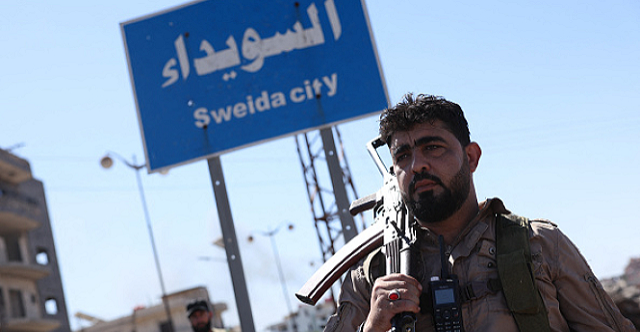
The Syrian government’s newly unveiled seven-step roadmap for Suwayda is being sold in Damascus as a bold push for stability. Yet inside the Druze-majority province, where mistrust of central authority runs deep, the initiative has reignited long-standing debates over autonomy, accountability, and the very legitimacy of the state.
Cycles of Violence and Shattered Truces
Suwayda’s latest turmoil cannot be understood without its recent wounds. The province has already endured two major rounds of bloodshed in 2025.
The first came in late April, when a leaked audio recording inflamed tensions between Druze locals and neighboring Sunni Bedouin tribes. Skirmishes quickly spilled from Damascus’ outskirts into Suwayda’s villages. By early May, a ceasefire was declared, but the killings had already scarred dozens of families, and gunfire still echoed despite the truce.
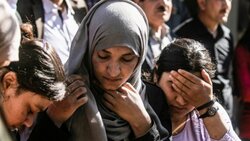
The second eruption, in July, was bloodier still. It began with the kidnapping of a Druze businessman on the Damascus–Suwayda highway. Within days, the abduction spiraled into widespread clashes between Druze factions, Bedouin tribes, and security units tied to the Syrian government. Casualty figures vary, but observatories speak of thousands of dead. Displacement emptied entire neighborhoods. A ceasefire in mid-July calmed the frontlines, yet few believe the crisis is truly behind them.
Damascus floated four ceasefire deals during these months. Three collapsed almost as soon as they were signed. Only one offered a temporary reprieve. For many in Suwayda, these failures confirmed what they had long suspected: promises from the capital rarely endure.
Damascus Unveils a Roadmap
On Tuesday, Foreign Minister Asaad al-Shibani presented what he described as a new beginning. Flanked by Jordan’s Ayman al-Safadi and US Envoy Tom Barrack, he outlined a seven-point plan that includes humanitarian, political, and security parts.
It promises accountability for attacks on civilians, unhindered humanitarian access, compensation for victims, restoration of services, secure roads, the release of abductees, and an “inclusive dialogue” involving all communities in the province.
On paper, the roadmap blends lofty goals with practical measures. But in Suwayda, where funerals still outnumber weddings, few take official words at face value.
بيان صادر عن وزارة الخارجية والمغتربين في الجمهورية العربية السورية pic.twitter.com/uuhzhJbQVe
— وزارة الخارجية والمغتربين السورية (@syrianmofaex) September 16, 2025
Regional Support
Regionally, the plan drew swift endorsements. Amman, mindful of instability spilling across its northern border, called it vital for Jordan’s own security. Washington hailed it as “historic,” though with the caveat that rebuilding trust in Syria will be measured in years, not months.
Qatar described the initiative as “a collective will to build a new Syria,” while Turkiye welcomed it as a step to prevent renewed conflict. Even Riyadh and Kuwait, once deeply skeptical of Damascus, voiced cautious support. The Arab League called the plan “a cornerstone of regional security.”
The breadth of backing underscores a common fear: that southern Syria could once again unravel, sending refugees and unrest toward already fragile neighbors.
Suwayda Pushes Back
Inside the province, however, the reception was starkly different. The Higher Legal Committee — aligned with Sheikh Hikmat al-Hijri, the most influential Druze spiritual leader — rejected the plan outright.
In a sharply worded statement, it accused Damascus of trying to “whitewash crimes” while entrusting accountability to a judiciary seen as politicized and complicit. Security agencies, it charged, were not neutral guarantors but perpetrators of killings and disappearances.
Most strikingly, the committee declared that the Druze of Suwayda have the “legal and moral right to self-determination — whether through local self-administration or even secession.” For many here, that is no longer taboo language but a lifeline.
The Weight of History
Talk of autonomy is not new in Jabal al-Druze. The community has long preserved its distinct identity. Sultan al-Atrash, the Druze military commander, led the 1925 revolt against French rule from these very hills, carving out a legacy of defiance and self-reliance.
During the Al-Assad era, Suwayda was folded into state structures, with Druze elites given positions in the Baath Party and the military. Yet the province often resisted deeper conscription and held Damascus at arm’s length. Since 2011, Suwayda has largely avoided the worst of Syria’s war, but it has been far from untouched. Armed groups, some loyal, some local, and others purely criminal, have filled the vacuum — often clashing with both the state and each other.
The violence of 2025, then, is less an aberration than the boiling over of old tensions.
Fragile Trust, Uncertain Future
For Damascus, success will depend on more than announcements in press conferences. Without genuine dialogue and credible accountability, even the most polished roadmap will be dismissed as another attempt to reassert control by force of decree.
For Suwayda’s Druze, the past year has deepened the sense that survival may require new political arrangements — whether in the form of stronger local self-rule or something more drastic.
What is clear is that the province now stands at a crossroads. One path leads toward fragile peace under the state’s watchful eye. The other edges toward autonomy — a precedent that could reverberate across Syria, from Kurdish regions in the northeast to other marginalized communities watching closely.
Written and edited by Shafaq News staff.