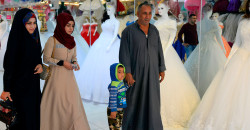
Soaring wedding costs push Iraqi youth away from marriage



Shafaq News- Baghdad
Rising marriage costs in Iraq in 2026 are placing growing financial pressure on young people seeking to start families, amid increasing prices for wedding halls, dowries, gold, and other ceremony-related expenses.
Costs vary between provinces and between modest and lavish weddings, but marriage has increasingly become an economic burden for Iraqi families. Specialists interviewed by Shafaq News linked soaring wedding expenses to inflation, rising service prices, and mounting social expectations.
Heavy Financial Burden
The marriage process in Iraq typically begins with the dowry, which varies depending on social customs and regions, ranging in some cases between 10 million and 30 million Iraqi dinars (about $7,600 to $22,900), and sometimes higher depending on the financial status and demands of both families.
Gold remains one of the most expensive aspects of marriage, with costs ranging between 3 million and 10 million dinars (about $2,300 to $7,600) or more, depending on weight, jewelry type, and fluctuating global and local gold prices.
Wedding celebrations have also shifted in recent years from simple gatherings held in neighborhoods and homes to events hosted in specialized halls, adding new financial burdens on families.
The owner of a wedding hall in Baghdad’s Zayouna district told our agency that booking costs currently range between 1 million and 2 million dinars (about $760 to $1,500) and can exceed that in luxury venues across Baghdad and other provinces, depending on the services offered.
He added that expenses are not limited to renting the venue but also include photography, decorations, music bands, and hospitality services, which can add between 1 million and 3 million dinars (about $760 to $2,300) to the final bill.
Marriage Beyond Financial Reach
According to the Iraqi Supreme Judicial Council, Iraqis registered 31,499 marriage contracts and 6,628 divorces in April 2026, up from 18,565 marriages and 5,075 divorces registered in March.
Mohammed Aref, a recently married Iraqi man, said marriage has become significantly more expensive compared to previous years due to the continuous rise in the prices of most wedding requirements.
He explained that the total cost of his marriage ranged between 25 million and 30 million dinars (about $19,000 to $22,900), covering bedroom furniture, gold, clothing, wedding party expenses, hall reservations, and other preparation costs.
Many young people, Aref added, now struggle to get married because of these high expenses, forcing some to delay marriage or reduce wedding requirements as much as possible.
Marriage Costs Spiral Higher
Mudhar Mohammed Saleh, financial adviser to the Iraqi prime minister, told Shafaq News that rising marriage costs are linked to two interconnected factors: inflation and rising prices for housing, furniture, gold, and services on one hand, and expanding social expectations and excessive luxury demands on the other.
He noted that the problem is not solely tied to inflation but also to social culture, which has raised expectations associated with marriage. “Under current income levels and the sharp disparities they reflect, marriage costs have become exaggerated in many cases compared to the purchasing power of low-income groups,” Saleh clarified, warning that the trend would increase economic pressure on young people and families while contributing to delayed marriage.
He also stressed that balancing realistic requirements with financial capability has become a social and economic necessity to preserve family stability and encourage sustainable marriage based on strong foundations.
Read more: Budgeting for baby: Financial strain cools Iraq’s birth rate
Declining Marriage Rates
Economic expert and political science professor at Dhi Qar University Najm Abdul Tarish said rising marriage costs are directly linked to Iraq’s difficult economic conditions, particularly poverty and unemployment, which have clearly affected marriage rates.
According to Abdul Tarish, the high costs of marriage are among the main reasons behind declining marriage rates in recent years.
“The lower marriage rates have also affected birth rates because the two indicators are directly connected,” he added, noting that “exaggerated” marriage demands and rising expenses have reached levels that sometimes exceed those in many Middle Eastern countries, increasing pressure on young people and delaying family formation.
Escalating Dowries
Economic expert Dirgham Mohammed Ali attributed rising costs to overlapping factors, including global increases in gold prices, while social behavior and expectations remain unchanged despite the economic conditions facing most young people.
“The variable today is prices, not demands.”
He added that population growth and the concentration of most state services and educational institutions in Baghdad’s old city center, without sufficient horizontal expansion in housing projects outside urban centers, have also contributed to higher costs.
Ali said the increase in marriage expenses now reflects rising prices of basic marriage requirements as well as exaggerated dowries used for social competition and prestige rather than for building a stable family life.
Demographic indicators show Iraq has witnessed a gradual decline in population growth rates over recent decades, falling from around 3.5% in previous periods to nearly 2.3% currently, alongside a drop in fertility rates from more than five children per woman to around three.
Specialists also link the transformation to changing lifestyles, higher education levels, and shifting priorities among younger generations regarding family formation, all of which have gradually affected Iraq’s demographic indicators.
Read more: Vanishing vows: Why Iraqi marriages now fail in months, not years