Prague praises Iraqi progress on water management


Shafaq News- Baghdad
Iraq is making better progress in tackling water shortages and drought than some European countries, Czech Deputy Environment Minister Ivo Marcin said on Wednesday, as Baghdad and Prague seek closer cooperation on water management, treatment, and pollution control.
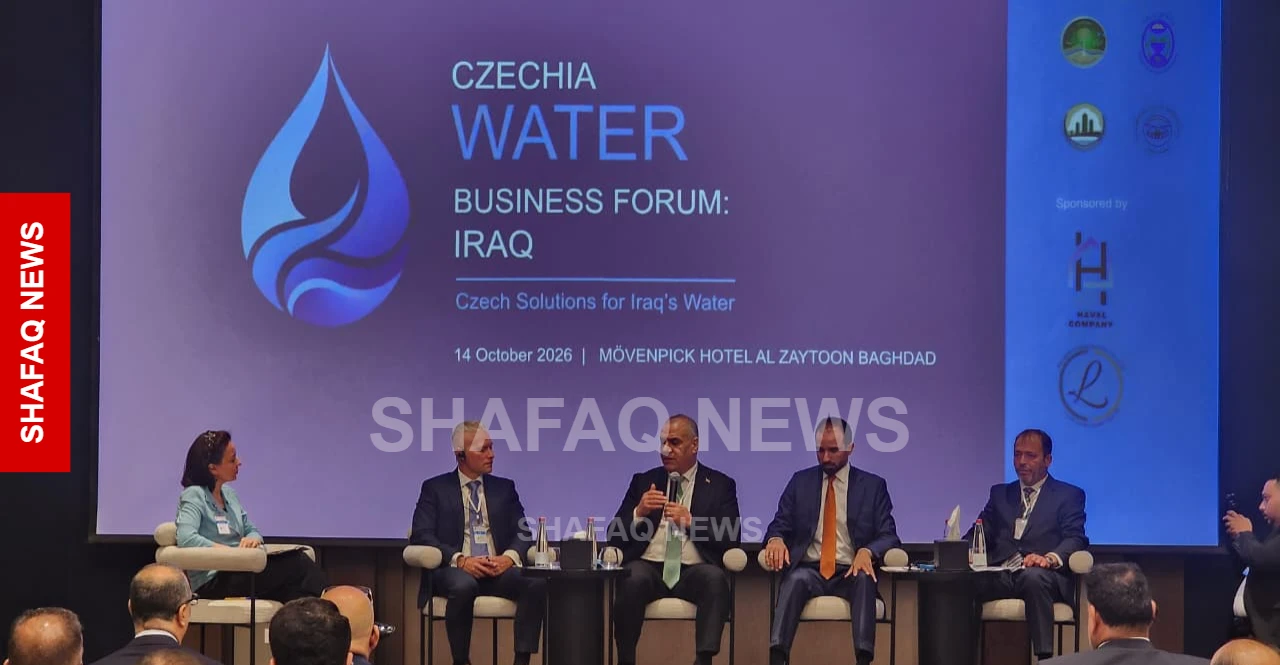
Speaking at the Czechia Water Business Forum, Marcin noted that Europe also faced water shortages and called for improved water quality through modern treatment technologies.
"Czech expertise could help Iraq address drought and other climate-related challenges," he added, pointing to Prague's advanced technologies for desalinating water and making it safe to drink.
At the same event, Iraqi Deputy Water Resources Minister Raed al-Jashami credited Czech companies with contributing to irrigation projects in Iraq in recent years, warning that climate change, drought, and flooding were adding to the country's water management challenges.
More than 65% of Iraq's water supplies originate beyond its borders, al-Jashami said, leaving the country with limited control over the volumes entering through the Tigris and Euphrates rivers.
Al-Jashami also estimated that six million cubic meters of waste were discharged into the two rivers and reported that 67 stations along them needed repairs and maintenance. "Successive Iraqi governments had sought to reach water-sharing arrangements, but those efforts had yet to produce an agreement in force."
Pointing to overlapping responsibilities among government ministries as an obstacle to effective water management, he cited the use of rivers as dumping grounds for waste and identified the Diyala River as a particular concern.
The ministry plans to build 36 dams, but only three have been completed, with the remaining projects awaiting funding. Al-Jashami added that the ministry had developed a strategic study and a comprehensive plan for its projects, but limited state budget allocations continued to hinder their implementation.
The United Nations estimated that above-average rainfall in 2025-2026 had brought Iraq its strongest water recovery in years. However, live water storage stood at 20 billion cubic meters, below 20% of capacity. UN agencies also reported that 31,001 families, or 186,006 people, remained displaced by climate-related factors as of September 2025, with 63% having moved from rural to urban areas.
Read more: Floods vs. deficit: Did rain solve Iraq’s water problem?