Honoring earth’s beginning: Iraq's Mandaeans prepare harissa


Shafaq News – Baghdad
On Friday, the aroma of “harissa” filled homes across Iraq as the Mandaean community cooked the traditional dish, a ritual commemorating the preparation of the earth for humanity.
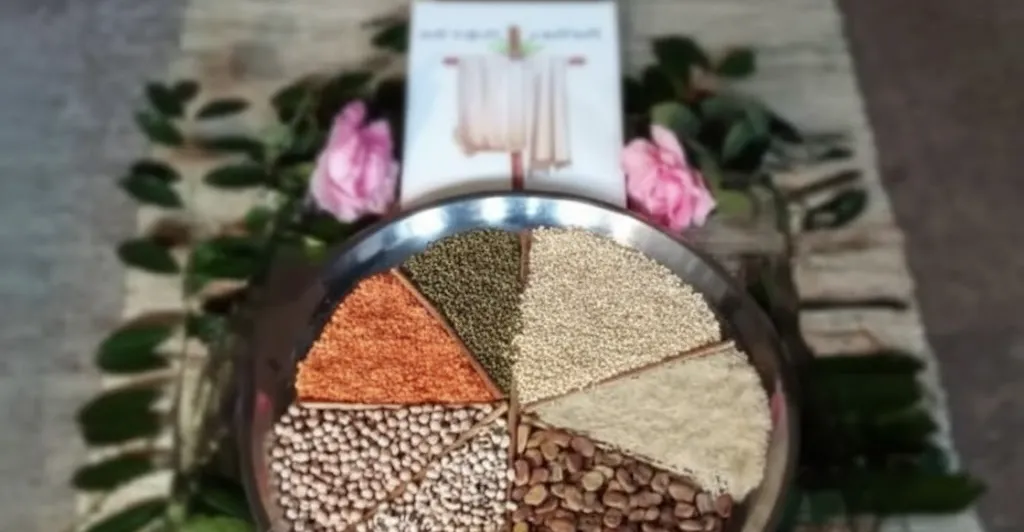
Harissa is made from seven types of legumes: the main ingredient Habiya (small white beans), broad beans, chickpeas, black-eyed peas, beans, lentils, and mung beans. The Habiya is blended with smaller amounts of the other grains and cooked slowly in a large pot until ready.
Speaking to Shafaq News, Sheikh Sattar Jabar al-Hilu, the worldwide spiritual leader of the Mandaean faith, described the ritual as “a remembrance of creation,” noting that “the Great Living One” commanded the earth to be prepared for Adam and Eve, while the angel Gabriel arranged rivers, fish, seeds, and all elements essential for life.
“Cooking these seven grains honors the first produce of the earth,” Al-Hilu observed, noting that the number seven carries deep religious significance for Mandaeans and many other faiths.
He further pointed out that eating the dish honors those who “have passed from the material world into the eternal realm of light.”
Harissa also appears in other religious traditions. Among Christians, it is prepared during saints’ feasts in villages. Shia Muslims cook it in large quantities in public during Ashura, marking the martyrdom of Imam Hussein bin Ali, the grandson of the Prophet Muhammad, who was killed along with his family and companions in the Battle of Karbala in 680 CE.
About Mandaeans
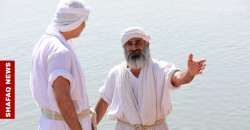
The Mandaeans are among the world’s oldest monotheistic religions, venerating John the Baptist (Yahya ibn Zakariya) as their prophet. Their holy book, the Ginza Rba, contains the writings of Adam and details of creation, the eternal struggle between light and darkness, and the soul’s journey after death toward the world of light.
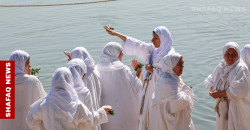
The Mandaean population in Iraq is now estimated to be significantly smaller than its pre-2003 figure of up to 70,000, with current estimates often ranging from 3,000 to 15,000 people. They are primarily located in southern Iraq (especially in Basra, Dhi Qar, and Maysan), as well as in smaller numbers in Baghdad and the Kurdistan Region.
Following migration waves that began in the late 1990s, Mandaean communities have spread to countries such as Sweden, Germany, Australia, and the United States, where they have established mandis (temples) and received official recognition to freely practice their religious rites and traditions.
Read more: Five days to eternity: Inside the Mandaeans' sacred Brunaya