Delayed public salaries push Iraq’s Diyala families into debt


Shafaq News- Diyala
Thousands of government employees and retirees in Iraq’s Diyala province are waiting for delayed salary payments, forcing families to postpone purchases, rely on credit and reduce daily spending as uncertainty over payment schedules spreads across local markets.
The delay is already visible in Baqubah, the provincial capital, where commercial activity rises after salaries are released and slows when payments are postponed. Shop owners closely monitor customer movement, as public-sector wages remain one of the main drivers of local spending.
For government employee Qaisar al-Azzawi, the delay has turned the end of the month into a constant calculation of which obligations can be postponed and which cannot, telling Shafaq News, "Reorganizing family obligations has become a reality after salary delays turned into an additional burden. The salary itself is no longer enough to cover what accumulates during the waiting period amid rising living costs."
The uncertainty surrounding payment dates has become a major concern for employees because families cannot plan their expenses without knowing when their income will arrive. "Every additional day means a new debt or a postponed need, while landlords, banks and service providers continue to demand their payments," he added.
Among retirees, concerns are also growing that repeated delays could leave families with little room to adjust. Retired police officer Hadi al-Abadi noted that many households have already reduced non-essential spending.
"A delay once can be managed, but if it happens repeatedly in the coming months, there will be nothing left to cut."
Read more: 2026 budget: Iraq confronts unprecedented fiscal strain
Across Diyala, families have begun changing how they manage monthly expenses. Instead of buying household supplies in one trip, some are purchasing smaller quantities and delaying purchases that are not considered essential.
Teacher Ali al-Rubaie described how the pressure has changed daily shopping habits for his family and others around him. "My family and many families I know have stopped buying their needs for the entire month and now purchase food in smaller quantities that last only two or three days," al-Rubaie told Shafaq News, cautioning that children do not understand what a liquidity crisis or delayed salary means.
"They only see that their classmates have things their families cannot buy for them," he added.
The slowdown has quickly moved from homes into markets. At a grocery store in central Baqubah, owner Ali al-Qaisi has noticed fewer customers buying larger quantities and more people requesting credit.
He pointed to the difference between periods of delayed payments and salary release days, explaining, "When salaries arrive, customers return to repay debts and buy their household needs. When payments are delayed, sales decline and debt records increase."
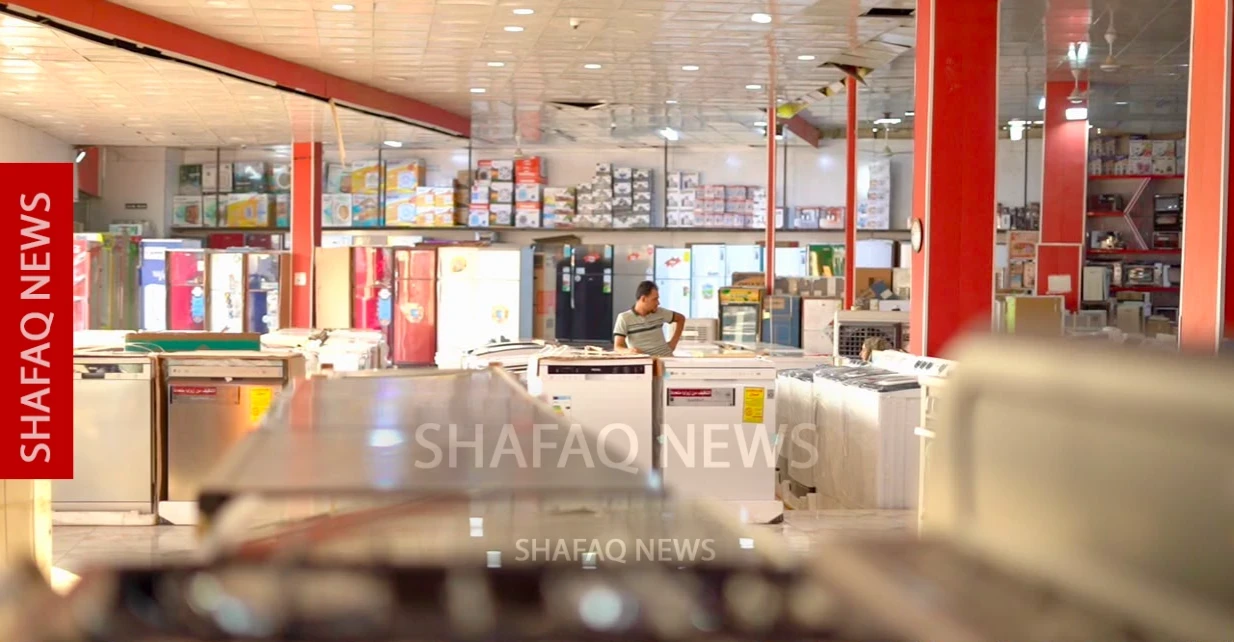
The same pattern is affecting businesses selling goods that families can postpone, including clothing, household appliances and mobile phones. At a home appliance store, employee Mortada Hussein observed that customers are focusing more heavily on essential expenses before considering larger purchases.
"Most people prioritize food, rent and services before thinking about buying appliances or other goods," Hussein told Shafaq News, pointing out that some regular customers who previously bought household items have disappeared for months.
Read more: Liquidity shortage delays Iraqi salaries: Experts warn of prolonged financial strain
The salary delays have also raised concerns about the government’s ability to meet its monthly financial commitments.
Officials, including Finance Minister Faleh Sari and Health Minister Abdul Hussein al-Mousawi, have estimated that securing monthly salaries requires around 8 trillion Iraqi dinars (about $6.15B), while available liquidity had fallen to about 3 trillion Iraqi dinars (about $2.31B), forcing payments to be released in stages based on available funds.
Economic researcher Abdullah al-Jubouri told Shafaq News that the situation reflects a shortage of available cash rather than state bankruptcy.
"A liquidity crisis does not mean the state has lost its resources. It means there is not enough cash available at the required time to meet obligations because of regional pressures," he remarked, adding that because Iraq’s economy depends heavily on government spending, delayed salaries quickly affect businesses and private-sector workers.
The longer-term concern, according to al-Jubouri, is whether delayed payments become a repeated pattern that changes consumer behavior, as employees lose confidence in the timing of salaries and become more cautious even when they have money because they worry about what the next month may bring.
The Iraqi government is considering borrowing options to help finance salary payments, including domestic borrowing, while external borrowing could be considered if financial pressures linked to the Strait of Hormuz crisis continue.
Warning that borrowing could provide temporary relief, al-Jubouri cautioned that this step would create additional obligations for state finances. He maintained that longer-term solutions would require reducing waste, increasing non-oil revenues and improving public finances.
Read more: Iraq’s budget paralysis: How the 1/12 rule reduced state finances to salary payments