Trump's deadline with no deal in sight: Analysts see long war, fractured Iraq, and global economic fallout


Shafaq News
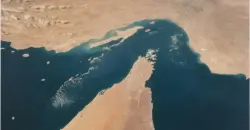
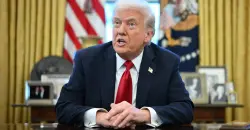
Hours remain before the expiration of the latest deadline set by US President Donald Trump for Iran to agree to terms that would reopen the Strait of Hormuz —the strategic waterway through which roughly a fifth of global oil passes. The deadline, set for 8:00 PM Eastern Time Tuesday, or 3:00 AM Wednesday Baghdad time, marks the end of a pressure campaign that has run parallel to 39 days of active US-Israeli military operations against Iran, launched on February 28, 2026.
Since then, Iraq has been struck daily by drones and missiles targeting military, diplomatic, and vital installations, as armed factions aligned with Iran's so-called Axis of Resistance have claimed operations against American interests inside Iraq and beyond its borders. Ten analysts and officials spoke to Shafaq News. Their assessments converge on one conclusion: the war is not ending soon, and Iraq is paying a compounding price.
No Deal, No Clear Endgame
Firas Ilyas, professor of political science at the University of Mosul, said Washington has entered the conflict without a defined objective. "There is an American orientation toward continuing the war without setting clear ceilings," he said, adding that Trump's repeated deadline extensions reflect "an absence of a clear vision for the war's final objective," Ilyas argued that Tehran has succeeded in managing time and raising the cost of confrontation, steering the conflict away from the swift resolution US planners had anticipated and toward a prolonged war of attrition with growing potential to become an extended regional crisis.
Mujashaa al-Tamimi, a political analyst based in Iraq, said Iran will not capitulate under pressure but will not seek full-scale confrontation either. "Iran will rely on absorbing pressure through multiple tools —diplomatic, economic, and military— while using its regional allies to raise the cost of confrontation without entering an all-out war," he said, adding that Tehran will seek to maintain a delicate balance between avoiding economic collapse and preventing major escalation, while keeping the door to negotiation open.
Suhad al-Shammari, a researcher in political affairs, said the deadline points simultaneously toward two directions. "It may open the door to mediation efforts in the coming days, but it is at the same time an indicator that the United States is moving toward escalation —and possibly targeting infrastructure, particularly power generation facilities." She assessed the gap between the two sides as deep, with Iran insisting on its right to enrich uranium while Washington seeks to impose strict conditions, and described the prospects for an agreement as limited given the current trajectory.
Iran's Position: The Deadline Is Illegitimate
Iranian political analyst Saeed Shawerdi argued that Tehran views the deadline as fundamentally unreasonable. "Iran sees this deadline as illogical, because it is based on imposing conditions by force, in exchange for the threat of destroying sources of life, which Tehran considers war crimes," he said.
Shawerdi added that Iran will not yield to this pressure, that its position will remain one of defense and response, and that the war has demonstrated internal Iranian cohesion contrary to US expectations.
Saleh al-Qazwini, a researcher specializing in Iranian affairs, explained that Washington is seeking to apply increasing pressure to force Tehran to change its regional policies, but cautioned that Iran "will not accept, after all these sacrifices, to be turned into a failed state." Whether the war continues or stops, he said, depends on Iran's capacity to endure and respond —and the energy file will remain directly tied to Tehran's position under that pressure.
Read more: Long war with Iran: A dangerous repetition of history, but with even less preparation
The Strait, the Oil, and the Global Fallout
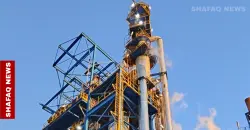
Ramadan al-Badran, a political analyst based in Washington, pointed out that the closure of the Strait of Hormuz represents the single most consequential factor in the current phase of the conflict. "Preventing the movement of exports has led to a significant imbalance in market equilibrium," he said, warning that the impact will not be immediate alone but may extend into the medium and long term —particularly if escalation continues and attacks on oil infrastructure in the region persist.
Al-Badran also cautioned that Iraq faces compounded challenges, with production halted and oil fields and installations damaged, potentially reducing the country's productive capacity well beyond the short term.
Ahmed Fouad Anwar, professor of Modern Hebrew and Zionist Thought at the University of Alexandria, described the repercussions of the current war as unprecedented, coming at a moment when the global economy has not yet recovered from the effects of the COVID-19 pandemic and the war in Ukraine. He said that the closure of Hormuz and strikes on oil installations in Iran and Gulf states have had direct global consequences —including in countries such as Egypt, which has been forced to implement energy rationing measures. “Gulf states have been the hardest hit, due to the destruction of oil infrastructure and the disruption of exports.” Anwar drew a historical parallel to the aftermath of the 1956 Tripartite Aggression —the joint British, French, and Israeli military operation against Egypt— when new powers emerged at the expense of traditional ones, suggesting the current conflict may similarly accelerate shifts in the regional and global balance of power.
Iraq's Fractured Decision-Making
Beyond the regional military calculus, analysts told Shafaq News that the war has exposed a structural failure at the heart of Iraq's political and security decision-making. Politicians and observers describe this as one of the most dangerous periods Iraq has faced since 2003, with warnings that the country risks becoming an arena for the settlement of international accounts.
Imran al-Karkoshi, a member of the State of Law Coalition led by former Prime Minister Nouri al-Maliki, insisted that Iraq's constitutional framework remains intact. "The decision of war and peace rests with the Iraqi parliament, which is the exclusively authorized body for that," he told Shafaq News, adding that the government is working to "consolidate the foundations of peace" and that the international community bears responsibility for preventing Iraq from being turned into a battleground.
But researchers say the constitutional picture and the operational reality diverge significantly. Nawal al-Mousawi, a researcher in political affairs, pointed out that while the government holds the legal authority to deploy security forces and take necessary measures, it is "constrained to a degree" by the nature of a political system built on consensus. "The real knot," she said, "lies in the absence of a unified political decision to confront all parties carrying weapons —particularly those that hold representation within state institutions themselves."
Firas al-Muslimawi, spokesperson for the Reconstruction and Development Bloc led by caretaker Prime Minister Mohammed Shia al-Sudani, added a further dimension by stressing that the government is currently operating in a caretaker capacity under exceptional regional circumstances, functioning with only half its ministerial cabinet, including the absence of a defense minister —a portfolio currently administered on an acting basis. Al-Muslimawi said these conditions make it urgent to form a fully empowered government capable of addressing the escalating challenges, while stressing that al-Sudani "is making every effort to control the security situation and spare Iraq the dangers of war."
The government formation process itself remains stalled. The Coordination Framework —the umbrella body of Shiite political forces— formally nominated Nouri al-Maliki for prime minister on January 24, opening negotiations over the new government. But the process has been held up by disagreements over the election of a president, the constitutional prerequisite for tasking the largest bloc's candidate with forming a government. A political source told Shafaq News earlier that the Coordination Framework had agreed to defer the final decision on the prime ministerial candidate until after the regional war concludes.
A Sharply Different View from Washington
From Washington, a distinctly different assessment of the conflict's trajectory emerged. Tom Harb, head of the American Middle East Coalition for Democracy and a prominent Republican Party figure, said that the Iranian regime now faces an unavoidable confrontation with Trump's fifteen conditions, and that failure to comply will open the door to military operations targeting Iran's strategic depth.
Harb said the US administration is betting on changing the regime's behavior, but warned that if Iranian provocations continue, striking infrastructure will be firmly on the table. "If the regime does not respond to President Trump's conditions, targeting the economic and military joints of the state will become a means of forcing it to submit— and this will serve the stability of Arab states and Israel alike."
Asked about warnings from US legal experts that striking civilian facilities in Iran could constitute war crimes, Harb drew a parallel to the Second World War, when the Allies bombed the infrastructure of major cities to bring down dictatorial regimes, arguing that ideologically entrenched systems cannot be neutralized without dismantling their operational capabilities.
He dismissed Iranian threats of triggering a third world war, "Where is this war? And who will come to support Iran? No one. The prestige of Iranian military power, built over 35 years, has evaporated. All they have left are imprecise rockets, while the West and the United States possess an arsenal capable of sustaining war for months and years."
Harb assessed that any military conflict would not exceed 60 days, with the possibility of a 30-day congressional extension, suggesting that strikes on infrastructure would give the Iranian people "a new spirit" to rise against the regime.