Syria’s Druze flashpoint reawakens Lebanon’s strategic dilemmas


Shafaq News
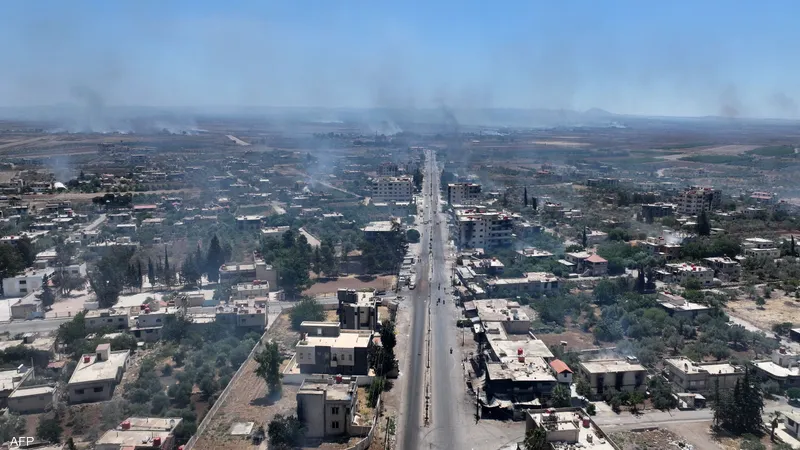
The eruption of violence in Syria’s Druze-majority province of Suwayda has sent political tremors across Lebanon, reigniting long-dormant fears about sectarian volatility, external manipulation, and the fragility of communal identity in a region shaped by unresolved conflicts.
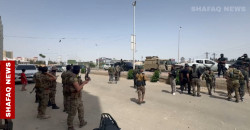
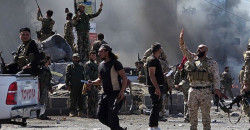
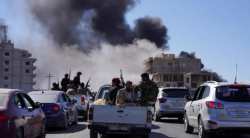
As the clashes involved Druze fighters, Bedouin tribal groups, Syrian government forces, and Israeli forces escalated into a deadly confrontation—leaving over 900 dead and drawing in Syrian security forces and Israeli airstrikes—Lebanon’s Druze community has entered a moment of acute strategic reflection.
Druze Identity Under Pressure
The Druze, a small but historically significant religious minority in the Middle East, have long maintained a delicate equilibrium in Syria, Lebanon, and Israel. In Lebanon, the community—concentrated in the Chouf, Aley, and parts of Mount Lebanon—has played a pivotal role in the country’s political life, most notably through the legacy of Kamal Jumblatt and his son, Walid Jumblatt.
While the Lebanese Druze have traditionally exercised caution in regional entanglements, the crisis in Suwayda is testing that posture. Images of civilian casualties and calls for self-defense have stirred communal solidarity, but also sharpened internal divides, particularly over how to respond to the Israeli military strikes targeting Syrian positions under the pretext of protecting Druze civilians.
Inside Syria, this issue has become a major fault line. Sheikh Hikmat al-Hijri, a leading Druze spiritual figure in Suwayda, has openly called for international protection and appeared to welcome Israeli military pressure on Syrian government forces. This stance, however, has not gone unchallenged.
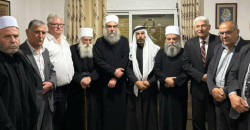
In Lebanon, the response has been far more unified—and uncompromising. All major Druze leaders, including Walid Jumblatt, Talal Arslan, and Sheikh al-Aql Sami Abi Al-Muna, have categorically rejected any Israeli involvement in Syria.
Jumblatt, the most popular Druze leader in the country, while calling for dialogue between Suwayda’s leadership and Damascus, warned that foreign protection schemes are historically proven traps, designed more to divide than to defend.
Abi Al-Muna echoed this position, emphasizing that the protection of Druze lives cannot come at the cost of enabling regional actors to manipulate the crisis for their own ends.
A Familiar Mirror: Lebanon’s Own Fragility
Analysts across Beirut view Suwayda not as an isolated eruption, but as a compressed replay of Lebanon’s own unresolved dilemmas—sectarian fragmentation, parallel armed power centers, and the ever-present risk of foreign patronage displacing national sovereignty. The Lebanese state, already weakened by economic collapse and political paralysis, has no room for spillover violence. Yet its proximity to the crisis—and its deep communal ties to the region—makes disengagement nearly impossible.
Security officials have also expressed concern over unverified reports suggesting cross-border Druze mobilization. Though no formal Lebanese involvement has been confirmed, the specter of transnational militia movements reawakens fears of regional proxy conflict, this time framed through sectarian solidarity.
Internal Fractures, Regional Games
The crisis has also revealed internal fault lines within Lebanon’s Druze community. While Jumblatt and Arslan have maintained a message of restraint and national unity, Wiam Wahhab, leader of the Arab Tawhid Party, has taken a far more provocative stance. In a series of fiery statements, Wahhab called for the arming of Druze factions across the region and even announced the creation of a militia under the name “Army of Tawhid.” He issued direct threats to Syrian President Ahmad al-Sharaa and demanded the withdrawal of pro-government forces from Suwayda, all while appealing to Druze communities in Syria, Lebanon, and beyond to rise in armed resistance.
Wahhab’s rhetoric has drawn sharp criticism from across Lebanon’s political spectrum. His open flirtation with the idea of Israeli air cover and his attempts to direct Suwayda’s internal conflict from his base in Mount Lebanon were seen by many Druze leaders as reckless and dangerous.
Sheikh Abi Al-Muna reiterated that such calls for armed escalation only endanger the broader community and risk aligning the Druze with agendas fundamentally at odds with their national interests.
Talal Arslan welcomed the ceasefire in Suwayda, calling it a necessary first step to prevent further bloodshed and sectarian polarization. In a statement, he urged Syrians—Druze and non-Druze alike—to reject division and pursue dialogue over confrontation, reaffirming Syria’s territorial unity and warning against the ruinous consequences of civil fragmentation.
Proxy Contests and Strategic Depth
At a regional level, Israel’s reported aim to establish a buffer zone in southern Syria—from Suwayda to Quneitra and Daraa—is viewed in Lebanon as a strategic effort to undercut both the Syrian state and Iran’s allies, particularly Hezbollah. By framing its intervention as a humanitarian mission to “protect the Druze,” Israel is attempting to recalibrate its military presence along the Golan Heights, potentially weakening Hezbollah’s logistical depth across the Lebanese-Syrian border.
Hezbollah, denouncing the Israeli intervention in Syria, is widely believed to be reassessing its strategic posture in light of these developments. Any shift in control over Suwayda—and especially the emergence of Israeli-aligned Druze militias—could pose a long-term threat to Hezbollah’s regional corridor.
While the US-brokered ceasefire has momentarily stemmed the violence, the structural conditions that led to the Suwayda crisis remain dangerously intact—fragmented sovereignty, proliferation of militias, and unresolved grievances. For Lebanon, the threat is less about military spillover and more about political contagion: a reactivation of sectarian logic that could unravel what remains of its delicate communal balance.
Written and edited by Shafaq News staff.