From Shalamcheh to Khosravi: Are Iran rail links undermining Iraq’s Grand Faw Port?


Shafaq News
On official maps, the Grand Faw Port looks like Iraq's gateway to the world. The starting point of a trade corridor meant to move goods from the Gulf to Europe roughly 20 days faster than traditional shipping routes. On the ground, however, successive Iraqi governments have been drawing different lines.
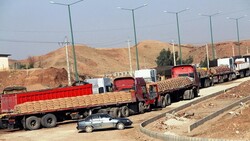
Even as Baghdad pours billions of dollars into building the port and the Development Road stretching toward Turkiye, it has simultaneously pushed forward rail links connecting Iraq to Iranian and Kuwaiti ports, links that would allow goods arriving from neighboring countries to enter Iraqi territory without ever passing through Faw.
The project Baghdad has promoted as the pillar of its ambition to become a global transport hub now finds itself boxed in by competing corridors created by Iraq's own decisions.
A Line Begins with Pilgrims and Ends with Cargo
The Grand Faw Port project dates back to 2006, when the Iraqi government first proposed building a strategic deep-water port in the country's far south, capable of receiving mega-vessels and linked to what later became known as the "Dry Canal", a network of highways and railways running from Basra to Turkiye, with potential branches toward Syria and Europe.
The logic was straightforward: ships arriving from Asia and the Gulf would dock at Faw, then move their cargo overland across Iraq to Turkiye and Europe, bypassing the longer route through the Red Sea, the Suez Canal and the Mediterranean. Through this corridor, Iraq hoped to reclaim its historic role as a crossroads between East and West, generating revenue from handling, storage, transport, insurance, and logistics.
Success depended on one core condition: protecting Faw from rival corridors and avoiding new rail lines that would hand neighboring ports a direct route into Iraqi markets or onto the network feeding Turkiye and Syria. That condition was never met.
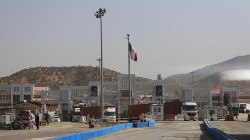
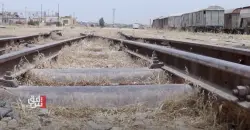
In 2023, then-Prime Minister Mohammed Shia al-Sudani laid the foundation stone for a rail link between Basra and Iran via the Shalamcheh border crossing. The government presented it at the time as a line dedicated to pilgrims and travelers rather than freight, in an apparent effort to ease concerns about its impact on Faw and Iraq's other ports.
But the engineering specifications later raised questions about its true purpose. The line's load-bearing capacity, known technically as "axle load", reaches 25 tons, a specification typically used for heavy freight lines, compared with roughly 14 tons for standard passenger lines. For critics of the project, these were not simply engineering figures but evidence that a line launched under the banner of pilgrim transport was designed from the outset to carry freight trains as well.
Weeks ago, a similar scenario unfolded through a different gateway. During a visit by current Prime Minister Ali al-Zaidi to Tehran, the two sides signed an agreement to build a new rail line through the Khosravi crossing opposite Diyala province. Officials and lawmakers quickly began discussing using the line to move both pilgrims and goods. Iraq now faces two potential rail links tying its domestic network directly to Iran, one in the far south near Faw, the other in the center via Diyala.
A Twenty-Year Delay
In an interview with Shafaq News, retired Major General Jamal al-Halbousi, an expert in borders and international transport, argues that the Shalamcheh rail project was less a purely Iraqi necessity than the product of political pressure, adding that the project was introduced as a pilgrim line before evolving into one capable of moving freight.
According to al-Halbousi, the Shalamcheh and Khosravi lines could eventually allow goods arriving at Iranian ports such as Bandar Abbas and Imam Khomeini Port, and possibly Pakistan's Gwadar port, to reach Iraqi territory and continue toward Syria and the Levant “without ships ever needing to call at Faw.
He warned this route could become a "mercy bullet" for Faw if the port project is not completed quickly and if the government fails to adopt policies making Iraqi ports more competitive. “Ports do not compete on geography alone, but on handling and storage fees, customs speed, logistics quality and inland transport costs; if Iraqi ports remain costlier than their neighbors, international shippers will simply choose the cheaper route.”
Al-Halbousi views Faw and the Development Road together as the real foundation for turning Iraq into a regional transport and trade hub. The Development Road envisions a modern rail line and highway stretching roughly 1,200 kilometers from Faw to the Turkish border, passing through Basra, Dhi Qar, al-Muthanna, al-Diwaniyah, Najaf, Karbala, Baghdad, Saladin and Nineveh before reaching Turkiye and, from there, European markets.
First proposed some twenty years ago, the project remains stalled amid administrative problems, corruption allegations and delays in contracting and execution. Specialists talked to our agency say the core problem is not merely the pace of building berths or dredging the shipping channel, but the absence of an integrated system linking the port to rail lines, roads, industrial zones, warehouses, and border crossings, without which a port becomes little more than a container drop-off point.
Read more: Rebuilding Basra’s maritime power: Is Al-Faw Port the game changer for Iraq?
An Old Iranian Ambition through Iraq
The idea of rail links with Iran did not begin under al-Sudani. It surfaced clearly in 2014, under Prime Minister Haider al-Abadi's government, when Tehran pushed for a line connecting Basra to Iran's Imam Khomeini Port and extending across Iraq to Syria's Latakia port, a part of a broader vision of a land-and-rail corridor linking Iranian ports to the Mediterranean, using Iraqi territory as the middle link. If completed, such a route would let cargo arriving at Iranian ports cross into Syria via Iraq without ever passing through an Iraqi port, meaning Iraq would supply the land, rails, security and infrastructure while handling revenue flows to another country's ports.
To the south, Kuwait is pursuing a similar link between Iraq's rail network and Mubarak al-Kabeer Port, raising comparable concerns: if Basra becomes directly connected to the Kuwaiti port, goods could be unloaded in Kuwait and enter Iraq by rail instead of via Faw or Umm Qasr.
International transport expert Ziyad al-Hashimi told Shafaq News that any rail link with neighboring states could hurt Faw if it is not embedded in a comprehensive Iraqi strategy. Shipping companies, he said, will gravitate toward whichever ports offer the best service at the lowest cost, and direct lines moving goods from Iranian or Kuwaiti ports into Iraq could reduce the need to unload ships at Iraqi ports at all, weakening handling volumes and the broader trade activity tied to storage, transport, insurance and maritime services.
“The priority should be establishing direct shipping lines to Iraqi ports and linking Faw and Umm Qasr to the domestic transport network by rail and road,” he argued. At the same time, al-Hashimi cautioned that turning the Iran-Iraq lines into a full international trade corridor is not a foregone conclusion, since some Iranian ports still lack strong, integrated rail connections to the Iraqi border, “a weakness that buys Iraq time but does not remove the long-term risk, particularly if Iran completes its domestic projects and links its ports to the Shalamcheh and Khosravi crossings.”
As for the Kuwaiti link, he said it could pull part of the maritime cargo flow toward Mubarak port, especially if Kuwaiti ports become a redistribution hub for goods into Iraq and the wider region. Any new line, he stressed, should be assessed not only for its construction cost or bilateral benefits but for its impact on the strategic position of Faw and Iraq's other ports.
Read more: Iraq's Al-Faw Port: A $4.9B dream set to revive trade and open doors to opportunities
A Port before the Rails
Former Iraqi Transport Minister Salam al-Maliki summed up the dilemma bluntly: no rail line or highway has strategic value unless it is anchored to a major global port. In remarks to Shafaq News, he described Faw as a national entitlement that should be the starting point of any Iraqi vision for regional transport networks, not the last item on the project list, warning that delays in completing the port will pile more pressure on Umm Qasr, which lacks the capacity to absorb Iraq's economic ambitions, or the trade volume expected through the Development Road.
“Continued reliance on Umm Qasr, combined with direct lines to neighboring ports, could reduce Iraq to a mere transit corridor for goods,” he said, without capturing the real economic value generated by shipping, unloading, storage and manufacturing. “The difference is significant between a country where trains simply pass through and one that controls the entire transport chain,” he added, explaining that the first collects limited transit fees, while the second runs the ports, warehouses, industrial zones, shipping firms, insurance and financial services. Al-Maliki said the goal should be turning Iraq into an integrated "commercial and logistics hub," not a passage for other countries' goods.
Zahra al-Bajari, head of the parliamentary Transport and Communications Committee, offers a different account of the Shalamcheh line. She told Shafaq News the project was designed primarily to support land transport and ease passenger movement, with Iraq's share funded through the Transport Ministry's budget while Iran built the bridge and cleared war remnants on its side.
Attributing implementation delays to the Spanish contractor handling the project, she noted that the contract with the firm has not been terminated.
Those details, however, raise a larger question about who stands to benefit economically once the line is complete. Iraq is financing and preparing the portion of track on its territory to handle heavy freight trains, while Iran already possesses operational ports that could feed cargo directly onto this route.
Iraqi governments continue to insist that rail links with neighboring states will boost trade and regional integration. Critics counter that integration is not balanced when one side owns the port, and the other merely provides the land the cargo crosses. For two decades, successive Iraqi prime ministers have described Faw as a project that would redraw the country's place on the global trade map. Yet those same governments have signed agreements that could hand neighboring ports the ability to use Iraq as a corridor for their own goods, turning the paradox into a defining feature of Iraq's largest infrastructure ambition.
Written and edited by Shafaq News staff.