Deadly dog attacks: Who protects Iraq’s neighborhoods?


Shafaq News– Baghdad
The death of a child in Babil and a young man in Baghdad has reopened a painful and familiar issue in Iraq: how a growing population of stray dogs continues to threaten public safety, while authorities struggle to agree on how to confront the problem.
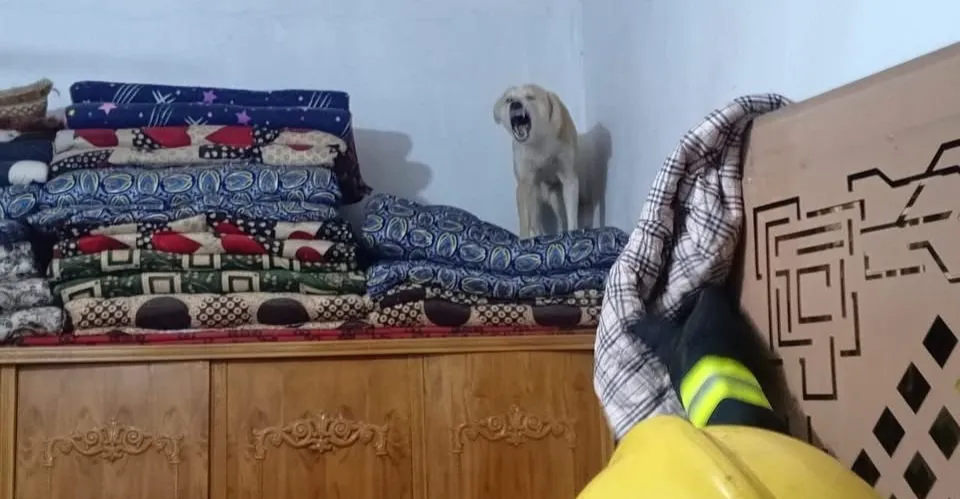
In Babil, the provincial Health Directorate confirmed that a child died after developing rabies weeks after being attacked by a group of stray dogs. In Baghdad, the family of a young man told Shafaq News that he began showing rabies symptoms more than a month after a stray dog bite and later died as his condition deteriorated. In both cases, the attacks themselves passed quickly, but the consequences unfolded slowly —and fatally— exposing how easily a single bite can turn into a medical emergency.
Such cases are no longer isolated as health officials across Iraq say dog-bite incidents have become increasingly common, stretching from major cities to smaller districts. In Diyala, the Health Directorate recorded 1,055 dog-bite cases between January and May 2025 alone, an average of around 200 incidents per month. Similar reports have come from Baghdad, Al-Anbar, Dhi Qar, Nineveh, Kirkuk, Maysan, and parts of the Kurdistan Region, pointing to a problem that cuts across geography and local administration.
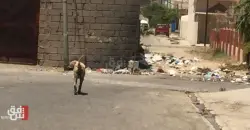
In Al-Anbar, repeated attacks in Ramadi and the surrounding areas have heightened public anxiety. Residents and local councils have appealed for urgent action after several children were critically injured in residential neighborhoods, where packs of dogs are often seen roaming near schools, markets, and unfinished buildings. Parents, interviewed by Shafaq News, say fear has become part of daily life, particularly in areas where street lighting is poor and municipal services are limited.
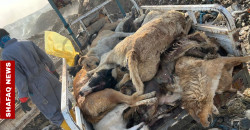
Behind the rising number of attacks lies a rapidly expanding stray dog population. Monitoring groups cited by local authorities estimate that Iraq has more than one million stray dogs nationwide. In Duhok alone, animal welfare organizations estimate the number exceeds 20,000. That figure became central to a recent legal and public controversy after a court ruling allowed culling, triggering backlash from animal rights groups and reopening long-standing arguments over whether killing dogs actually reduces their numbers.
Health officials insist that prevention falls outside their mandate. Provincial health directorates repeatedly emphasize that their responsibility begins only after a bite occurs. In Al-Anbar, officials confirmed that hospitals provide rabies vaccines and medical treatment to victims, but do not intervene in population control. In Dhi Qar, hospitals administered rabies vaccinations to children bitten by stray dogs, while veterinary authorities warned of growing public complaints tied to the spread of strays.
This division of roles has left responsibility scattered among multiple institutions, often slowing responses and creating confusion on the ground. Qais Najah, Director of the Al-Anbar Environment Directorate, told Shafaq News that the Veterinary Department is the only authority legally empowered to handle stray dogs, as it is responsible for procuring materials used in culling campaigns. Municipalities and district administrations, he said, carry out field operations in coordination with veterinary officials, while the Environment Directorate supervises the burial of culled animals.
From the health sector, Mohammed Al-Qaisi, Head of Media at the Al-Anbar Health Directorate, told our agency that the directorate’s role is strictly limited to providing rabies vaccines and medical care following bite incidents, reinforcing the gap between treatment and prevention.
That gap has become the focus of criticism from animal welfare advocates, particularly in the Kurdistan Region. Sulaiman Tameer, head of the Kurdistan Organization for Animal Rights Protection (KOARP), publicly opposed the court decision permitting the shooting of stray dogs in Duhok. “Culling could disrupt the natural balance and risk worsening the problem, citing Law No. 14 of 2022, passed by the Kurdistan Parliament,” which prohibits killing stray animals and sets standards for humane care.
In Baghdad, animal welfare groups argue that killing dogs does not address unchecked breeding or disease transmission. Zainab Al-Mousawi, an activist with the NGO Animal Rights Iraq, told Shafaq News that mass killing “fails to solve the issue at its source and called for sustained sterilization programs as a long-term solution.”
Some efforts in that direction have begun, albeit on a limited scale. In Erbil, local authorities and volunteer groups have launched sterilization and vaccination initiatives, according to publicly documented campaigns. Yet these remain fragmented, with no comprehensive, province-wide strategy announced, leaving many neighborhoods beyond their reach.
Now, with public concern growing, the stray dog issue continues to sit at the intersection of public health, municipal capacity, legal authority, and ethical debate. What remains missing, residents and experts say, is a coordinated national approach, one that reduces risk to communities while addressing the root causes of the problem, rather than responding only after lives have already been changed.
Written and edited by Shafaq News staff.