$1.2B traffic fix fails: Iraq seeks radical solution


Shafaq News
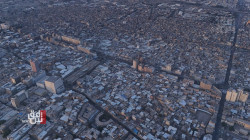
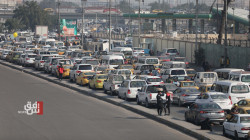
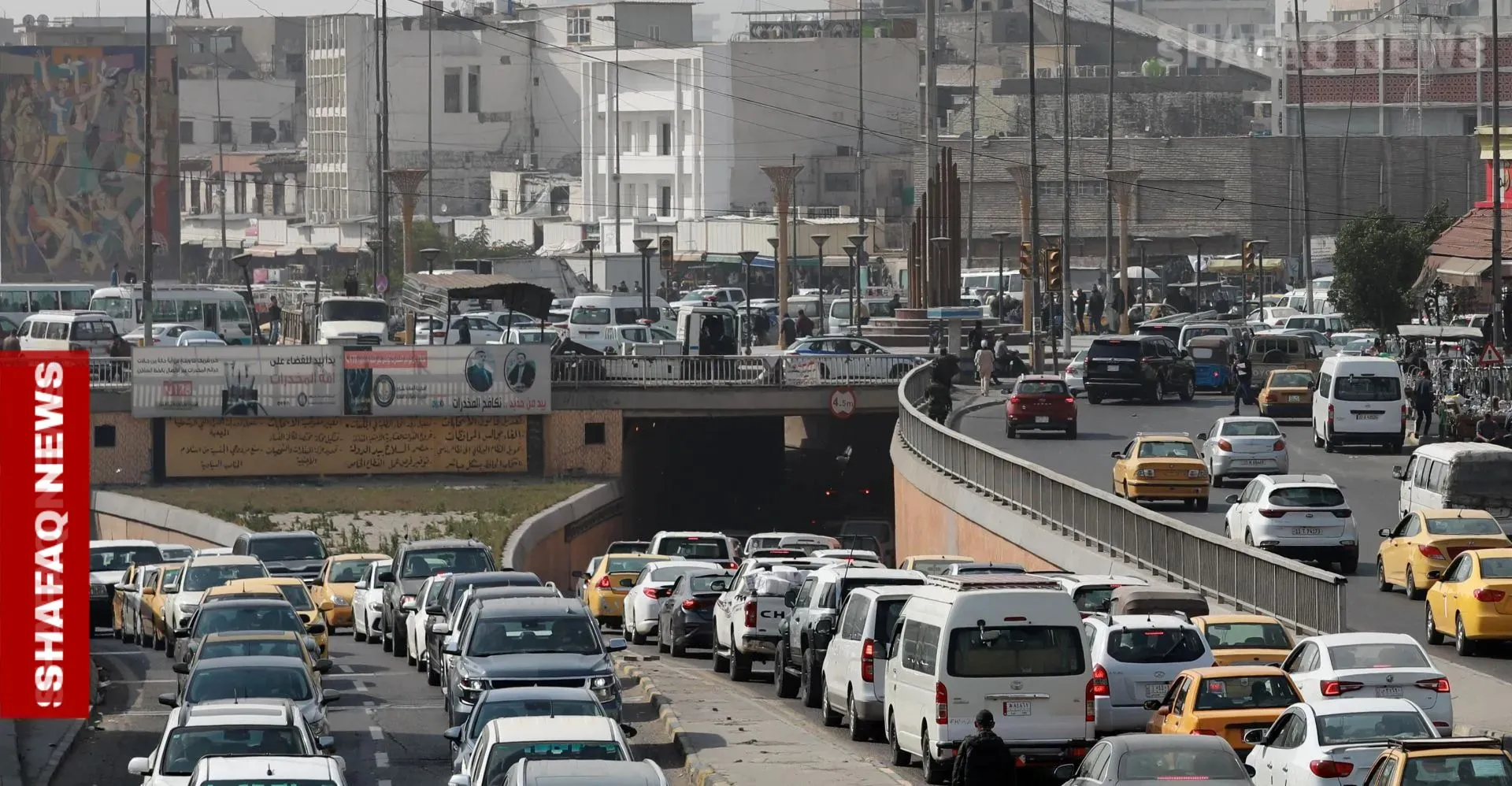
Despite years of investment in bridges and infrastructure, Baghdad’s streets remain choked, with commuters often spending hours crawling through traffic during peak periods. The Iraqi capital’s road network is struggling under an unprecedented surge in vehicles, prompting questions about when relief might arrive.
Bribes or Bridges
Observers point to poor planning, the absence of integrated solutions, and reliance on local fixes—such as constructing bridges that merely shift congestion from one area to another—without addressing underlying causes.
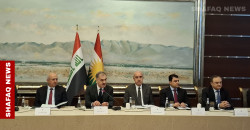
Member of the Parliamentary Transport Committee Aqeel Al-Fatlawi conveyed to Shafaq News that "hopes were pinned on infrastructure projects to solve traffic congestion, but reality has proven otherwise."
He noted that building bridges failed to produce the anticipated benefits, cautioning that, despite massive expenditures, many bridges were ineffective, and some were completed for electoral purposes, as they could be finished within the current government’s term.
“There are suspicions of corruption in granting exemptions to executing companies and bypassing official tender procedures,” the lawmaker emphasized.
Read more: Traffic congestion drains Iraq’s economy, hampers growth
Stressing that the Transport Committee does not oppose bridge construction, "provided it is within a sound and well-studied plan," Al-Fatlawi criticized the sidelining of alternative strategic projects such as the suspended monorail, which could have more effectively and sustainably eased pressure on the city’s roads.
Stop the Imports
Transport expert Basel Al-Khafaji noted to Shafaq News that traffic jams in Baghdad will not be resolved as long as cars continue to be imported without controls, with attractive installment sale schemes, and without policies to phase out old vehicles.
Government data highlighted that vehicles now exceed the city’s street capacity by more than seven times, overburdening a system already strained by rapid population growth. Baghdad’s population has surged from 6 million in 2010 to over 9 million today, while 200,000–300,000 new cars are added each year. In 2023 alone, Iraq imported about 636,000 vehicles, a figure expected to reach 1.1 million by 2025.
Al-Khafaji pointed out that congestion is now responsible for dozens of traffic accidents daily, “amid a lack of serious government interventions.’’ Ministry of Interior statistics indicate that traffic accidents in Iraq reached 11,552 in 2023, causing 3,019 deaths, while Baghdad alone recorded 12,019 incidents, averaging 1,092 annually. Of these, 22% were fatal and 67% resulted in injuries.
"Any new project under the current approach is just a temporary fix, not a solution to the core problem," he warned.
Read more: Rusting ambition: Iraq’s railway stalled by neglect
Baghdad Bursting Beyond Its Roads
Meanwhile, spokesman for the Ministry of Construction, Housing, and Municipalities, Nabil Al-Saffar, defended his ministry’s efforts, emphasizing that population growth and the surge in car numbers in recent years have outpaced the capacity of the old infrastructure, which was not designed for this scale.
"Baghdad has been constrained by decades of conflict, rapid informal settlement growth, and the concentration of governmental and commercial services in central districts," he remarked to our agency.
Highlighting that the ministry has implemented a package of projects over the past three years to ease bottlenecks in Baghdad, Al-Saffar noted that the first package included 16 projects out of 60, with most completed in priority areas experiencing the heaviest congestion.
He also detailed that past projects encompassed 13 river-crossing bridges, six new bridges under the first and second packages, 32 overpasses, seven tunnels, three new roads, and 12 fully completed projects, each consisting of multiple components such as overpasses, tunnels, and roads.
The total budget for these projects exceeded $1.2 billion, reflecting the government’s significant investment in infrastructure despite challenging fiscal conditions.
Stating that these projects "made a difference in some areas, reducing travel time and noticeably easing congestion," Al-Saffar acknowledged that further complementary projects remain necessary, depending on financial allocations.
Read more: Baghdad metro, Najaf-Karbala train: grand plans, ground reality of delays
$380M burnt
Daily congestion in Baghdad now costs residents an estimated 2–3 hours each day in traffic, leading to fuel wastage, lost productivity, and increased air pollution. Traffic delays generate annual economic losses of about 500 billion Iraqi dinars (around $380 million).
Environmental studies further indicated that vehicle emissions in Baghdad have risen sharply in recent years, aggravating respiratory illnesses and lowering overall air quality. According to the 2024 Global Traffic Scorecard, workers in heavily congested cities lose between 100 and 150 hours annually, translating into economic losses equivalent to 2–5% of GDP in comparable urban settings.
To confront these challenges, Iraq has launched additional large-scale projects aimed at tackling long-term traffic and transportation issues. The Baghdad Elevated Train (BET), the country’s first elevated automated metro system, is expected to cover more than 85% of the capital and its suburbs, carrying nearly 5 million passengers daily.
Meanwhile, the Iraq Railways Extension and Modernization (IREM) Project, with a budget of $930 million, seeks to upgrade rail services between Umm Qasr Port in the south and Mosul in the north, cutting travel times and expanding freight capacity.
Read more: Iraq’s stalled projects: Chronic bottlenecks and new revival efforts
Traffic management efforts in Baghdad also include installing surveillance cameras and radars at key intersections, alongside improved traffic signal operations to better regulate vehicle flow.
Looking further ahead, Iraq’s Grand al-Faw Port—part of a $17 billion infrastructure initiative—aims to establish a strategic trade corridor linking the Middle East and Europe through Turkiye. The country also introduced the TIR (Transports Internationaux Routiers) system in April 2025, marking a significant step in modernizing international logistics and trade facilitation.
Written and edited by Shafaq News staff.