Israeli business official: Turkiye looking to renew commercial ties


Shafaq News – Middle East
The head of Israel’s Business Sector Authority, Dubi Amitai, revealed on Friday, that senior executives from several Turkish companies have recently initiated contact to explore the restoration of economic ties with Israel.
In remarks to Israel’s Channel 12, Amitai noted that the Turkish government aims to position itself as a key player in shaping the evolving dynamics of the Middle East and the Gaza Strip—a role that, in his view, requires managing relations with Israel.
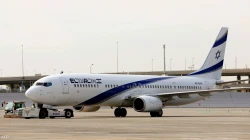
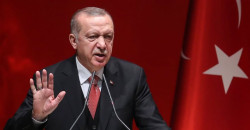
He observed that Turkiye has begun crafting a new economic approach toward Israel, citing reports that President Recep Tayyip Erdogan plans to reinstate direct flights between Ankara and Tel Aviv as a step toward normalization.
The Israeli Business Sector Authority, which includes 14 organizations representing the country’s business leaders, plays a prominent role in overseeing foreign trade partnerships and economic cooperation.
Israeli assessments suggest that Erdogan recognizes the necessity of engaging with Israel to participate in the reconstruction of Gaza, given Israel’s control over border crossings and access infrastructure into the enclave.
“It’s hard to imagine Israel relinquishing control over the primary entry points for goods into Gaza,” Amitai remarked, adding that “anyone looking to take part in reconstruction will need to engage with us.”
Despite previous diplomatic crises—including the 2010 Israeli raid on the Turkish aid flotilla Mavi Marmara—Israel managed to secure alternative trade routes. However, Amitai stressed that Turkiye bore the greater economic loss, as most bilateral trade consisted of Turkish exports.
Data from the Bank of Israel, published in March, underscore the impact of Ankara’s trade restrictions during the recent Gaza conflict. Before the suspension, Turkiye accounted for roughly 6% of Israel’s total imports, supplying key materials such as cement, gypsum, iron, and steel. Israeli exports to Turkiye, by contrast, made up only 2.5% of Israel’s total exports.
Although Israeli exports to Turkiye dropped by around $1 billion following the trade halt, the bulk of the economic damage fell on the Turkish side. The bank’s report noted that “Turkiye was a key supplier of construction inputs, but once Israel found alternatives, Turkish exports took the heavier hit.”
Amitai argued that Erdogan has likely recognized Israel’s ability to withstand the disruption, while Turkish firms suffered steep losses. “To revive his economy, he must reopen that door,” he asserted.
At the same time, Amitai acknowledged that Israel’s own recovery will be lengthy and difficult, pointing to intensifying global boycotts, labor shortages in construction and infrastructure, and mounting war-related debt.
Read more: Erdogan calls Israel a global threat, Rejects Syria partition plans
He cautioned that even if international protests subside, negative sentiment toward Israel will continue to weigh on Israeli companies operating abroad, warning that overreliance on low-cost labor remains a barrier to adopting faster, more advanced construction technologies.
Addressing Israel’s fiscal outlook, Amitai pointed to the combined impact of soaring war debt and higher interest rates following a credit rating downgrade, warning that the burden will stretch across future generations.