Al-Zaidi at the White House: A sustainable partnership or continued crisis management?


Shafaq News
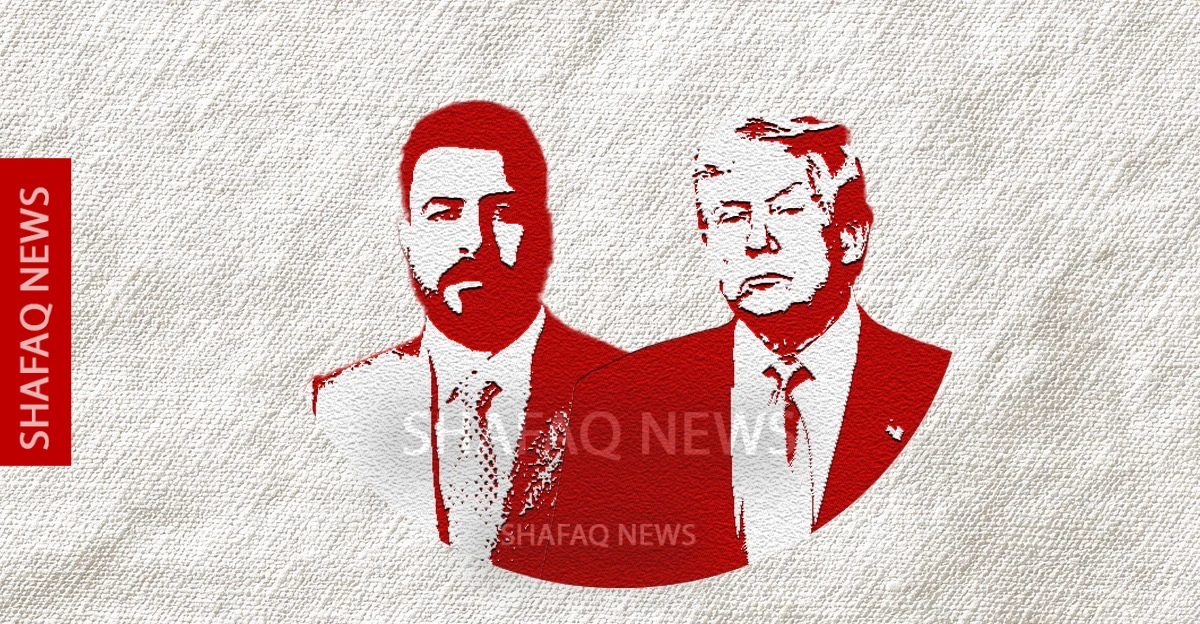
At a time of mounting regional complexity marked by renewed tensions between Washington and Tehran and their potential repercussions for Iraq and global energy markets, Iraqi Prime Minister Ali Al-Zaidi arrived in Washington on Monday at the head of a high-level government and economic delegation in his first foreign visit since taking office.
The visit encompasses several interrelated files, beginning with strengthening economic and investment ties between Baghdad and Washington, extending to security issues and efforts to ensure that arms remain exclusively under state control, and culminating in discussions on the future of the strategic relationship between the two countries as the Iraqi government seeks to move beyond crisis management toward building long-term partnerships.
Read more: Iraq PM al-Zaidi to Washington with energy deals front, “militia file” unresolved
A New Relationship With Washington
Issam Al-Faili, professor of political science at Mustansiriyah University, viewed Al-Zaidi's visit as part of efforts to reaffirm the nature of Iraq's relationship with the United States, particularly in light of the support the prime minister has received from the US administration since the formation of his government.
In remarks to Shafaq News, Al-Faili argued that Al-Zaidi has reinforced that trajectory by focusing on issues long prioritized by Washington, foremost among them combating corruption and addressing the issue of uncontrolled weapons.
He noted that US President Donald Trump was keen to provide clear support for Al-Zaidi, whether by welcoming his appointment as prime minister or by attempting to open a new path away from the traditional political class that had managed the political scene over the past years.
“Such support creates the impression that Washington wants to establish a new transitional relationship with Iraq,” he said, adding that this relationship is based on practical priorities, most notably fighting corruption, bringing weapons outside state authority under government control, and expanding American investment.
He further explained that efforts to activate the 2009 Strategic Framework Agreement (SFA) between Iraq and the United States, particularly its economic dimension, had faced obstacles in recent years linked to “corruption and the proliferation of uncontrolled weapons.”
"For that reason, the current government is trying to take practical steps to address these issues."
Al-Faili also considered the proposal to establish a joint sovereign fund between Iraq and the United States, backed by reserves amounting to 500 million barrels of oil, as an attempt to introduce a new model of cooperation. In his assessment, the proposal sends a message to the US administration that Baghdad is approaching the partnership differently from previous governments, whose agreements with Washington largely remained within a protocol framework.
"The United States is moving toward strengthening its political and economic relationship with Iraq during the coming period."
Read more: Iraq's September 30 weapons deadline leaves terms of disarmament unresolved
Regional File Remains On The Agenda
As tensions between Washington and Tehran resurface, questions have emerged over whether Iraq could play a role in easing regional strains, given its geographic position and interconnected interests with both sides.
Addressing this issue, Hassan Fadam, a senior figure in the al-Hikma Movement led by Ammar Al-Hakim, anticipated that the regional file would feature in the discussions, though not as the sole focus of the visit.
Speaking to Shafaq News, Fadam explained that the inclusion of US-Iran tensions on the agenda is directly tied to Iraq's economy as well as its political and security conditions, pointing out that the international community recognizes the extent to which Iraq is affected by any escalation in the region.
"The Iranian-American dispute is complex and cannot be resolved through a dialogue or meeting between the Iraqi prime minister and the US president held over a matter of hours.”
Fadam added that major powers possess detailed files on the issue and have been conducting negotiations for months without reaching an outcome. Consequently, he argued, it would be unrealistic to expect a single visit to determine the course of that process.
Instead, the discussions are expected to focus primarily on matters directly concerning Iraq, including the economy, security, stability, bilateral relations, the future of the US presence following the conclusion of the Global Coalition's mission in Iraq at the end of September, in addition to expanding American investments and the activities of US companies inside the country.
Read more: No exit but Hormuz: Iraq's economic vulnerability exposed
Economic and Investment Priorities
MP Safaa Lafta of the Sadiqoon bloc, the political wing of Asaib Ahl al-Haq led by Qais Al-Khazali, maintained that the prime minister's visit, together with the accompanying delegation, is fundamentally linked to bilateral relations between Baghdad and Washington.
Lafta told Shafaq News that the objective of the visit is "to strengthen the Iraqi state and the political system, and to organize economic, commercial, and investment relations between the two countries."
He added that although regional developments may arise during the meetings, the primary emphasis remains on issues directly connected to Iraq's national interests, underlining that the current stage requires enhancing the state's ability to build balanced relationships that serve Iraq's economy and reinforce domestic stability.
Read more: Iraq's Dawn Crackdown by numbers: 67 arrests explained
Oil and Revenue Challenges
Meanwhile, MP Ahmed Dagher of the Reconstruction and Development Coalition, headed by Mohammed Shia Al-Sudani, pointed out that Iraq continues to face economic challenges largely stemming from its heavy dependence on oil exports.
Dagher explained, in an interview with Shafaq News, that Iraq had experienced an economic crisis due to the disruption of oil exports, which constitute the country's principal source of national revenue, describing Al-Zaidi's visit as part of a package of solutions that Iraq needs at this stage, particularly since some of the country's crises are linked to domestic factors and require government measures aimed at diversifying oil export outlets.
"We hope that the visit will produce practical results that serve Iraq and help address its economic challenges.”
Read more: Iraq's oil revenues under US financial guard 23 years after invasion
Written and Edited by Shafaq News Staff.