Million-Vote Moment: What the KDP’s surge means for Kurdistan and Baghdad


Shafaq News
On one of the closing nights of the electoral campaign, as music faded and flags dipped, Kurdistan Region President Nechirvan Barzani paused, then set a clear benchmark: the Kurdistan Democratic Party (KDP) would receive one million votes.
At the time, even senior party figures treated it as an ambitious slogan. Internal projections, according to KDP sources, pointed to roughly 800–850,000 votes at best. But when ballot boxes were counted, the “million” had moved from campaign rhetoric to political fact.
According to preliminary figures from Iraq’s Independent High Electoral Commission and party tallies, the KDP surpassed 1.09 million votes nationwide, consolidating its position as the dominant Kurdish party and one of the largest vote-winners in Iraq overall. In Erbil and Duhok, the party recorded particularly high margins, while in mixed and disputed areas, it improved on previous showings or held ground against rivals.
This surge did not happen in a vacuum. It unfolded in an election where Iraqi Prime Minister Mohammed Shia al-Sudani’s Reconstruction and Development Coalition (Al-Ima’ar Wal Tanmiya) emerged as the leading national bloc, securing more than 1.3 million votes and a first-place position in several southern provinces, but still short of a majority in the 329-seat parliament. Against that backdrop, the KDP’s million-vote milestone has reshaped both intra-Kurdish dynamics and the bargaining environment in Baghdad.
Read more: Indecisive victory: PM Al-Sudani's second term faces Shiite balancing act
Years in the Making
From his position in the Kurdistan Region Presidency, advisor Khairi Bozani argues that the result is less a surprise and more the product of a long recalibration.
“This outcome wasn’t produced in a few weeks of campaigning,” he told Shafaq News. “It reflects years of recalibrating the relationship between the party and its base.”
Bozani sees the million votes as an expression of “a street that sought stability after years of uncertainty,” and credits President Barzani’s measured rhetoric with reconnecting parts of the electorate to what he describes as a broader national project rather than a narrow partisan identity.
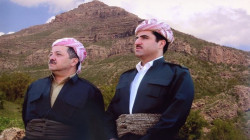
He also points to the party’s three senior leaders—Masoud Barzani, Nechirvan Barzani, and Masrour Barzani—as a “triangle of equilibrium” that, in his view, gave the KDP a coherent image: a historical leader, an institutional president, and an executive prime minister working in tandem.
A New Generation, A Different Language
The result also reflects a generational shift that many parties in the Kurdistan Region have struggled to address.
Political researcher Hoshyar Malo argues that the KDP adjusted its message faster than its competitors.
“For the first time, the party moved away from the narrative of victimhood,” he said. “The young generation is not persuaded by references to Anfal or chemical attacks. They live online and compare campaigns globally.”
Anfal refers to the late-1980s campaign under Saddam Hussein’s regime during which thousands of Kurds were killed and villages destroyed.
According to Malo, the “challenge” Nechirvan Barzani set on stage did not remain a slogan. It evolved into a campaign that was more forward-looking and digitally driven, underpinned by what he described as “supportive proofs”: visible economic projects, infrastructure, and a record of governance that, in his assessment, “did not fall short of its promises to its base.”
“Convincing a young person to leave his home and vote is far harder than getting a like on social media,” Malo noted. “The KDP did the harder job.”
Yet the generational story is not exclusively a KDP narrative. Over the past years, movements such as New Generation (Al-Jeel Al-Jadeed) have branded themselves as vehicles of youth discontent and urban frustration, particularly in the Patriotic Union of Kurdistan (PUK) stronghold, Al-Sulaymaniyah, and parts of the diaspora. In this election, however, preliminary numbers from the Kurdistan Region show them trailing far behind the KDP in Erbil and Duhok, with more modest showings in Al-Sulaymaniyah and Kirkuk.
Read more: The Kurdish spine of Iraq’s elections: Unity tested by division
For analysts, that gap suggests that while opposition and protest-oriented forces retain symbolic appeal and social media visibility, the KDP was more successful at turning online engagement into actual turnout.
The Kurdish Map: KDP on Top, PUK Holds Core Strongholds
The million-vote result also crystallized an evolving Kurdish electoral map. Media tallies and preliminary official data indicate that the KDP came first among Kurdish parties, with the PUK a distant second, securing a little over half of the KDP’s total vote nationwide.
Territorially, the pattern is mixed:
In Erbil and Duhok, the KDP dominates by large margins, reinforcing its status in its traditional heartland.
In Al-Sulaymaniyah and parts of Kirkuk, the PUK remains the leading Kurdish force, retaining its historic base even as it faces growing competition.
In Nineveh and some disputed districts, the KDP’s gains, including in places such as Khanaqin in Diyala, where it ended a long PUK hold on a key seat, signal a return to more assertive outreach beyond its core geography.
For the PUK, these results underscore both resilience and constraint: the party continues to anchor Kurdish representation in Al-Sulaymaniyah and Kirkuk, yet it faces a widening numerical gap with the KDP at the all-Iraq level. For smaller Islamist and reformist parties, the outcome confirms limited but persistent niches rather than a breakthrough.
Beyond Kurdistan: Baghdad Recalculates
Numerically, the KDP’s more than one million votes place it just behind Al-Sudani’s Coalition in total ballots won, but ahead of many established Shiite and Sunni blocs. That ranking matters less for formal seat arithmetic—given Iraq’s complex coalition system—than for political signaling.
Any government seeking broad-based legitimacy will likely need a Kurdish partner capable of delivering a cohesive parliamentary bloc.
Long-running disputes over oil exports, budget transfers, and public-sector salaries in the Kurdistan Region return to the negotiating table with a party that can claim a fresh electoral mandate.
At the same time, the national picture remains fragmented. Al-Sudani’s coalition is on track to be the largest parliamentary force but still short of the majority needed to form a government alone. Shiite factions, Sunni alliances, and Kurdish parties—including the PUK and smaller groups—will all weigh the balance between participation, opposition, and tactical bloc formation.
Read more: Iraq’s 2025 poll: +21M voters, new law, fading monitors, and fierce bloc rivalries
In that environment, the KDP’s million votes do not guarantee it specific ministries or legal concessions. They do, however, strengthen their leverage in insisting that any future federal arrangement address core Kurdish demands within a clearer, legally actionable framework.
Campaigning Without Cosmetic Messaging
Political writer Badr Ismail Sheroki told Shafaq News that the KDP’s campaign was internally framed as a stress test rather than a victory tour.
“These elections were managed with a candid assessment of challenges,” he said. “The leaders chose not to stand behind problems or use them as excuses. They placed them plainly on the table and turned them into a work program rather than slogans.”
Sheroki described what he sees as a division of labor in the party’s upper ranks: a founding leader focused on long-term vision, an executive branch working within the constraints of day-to-day governance, and an institutional presidency acting as a consensus-builder. In his view, that structure gave the campaign a mix of symbolism, practicality, and reassurance at a time when many voters—inside and outside Kurdistan—expressed fatigue with promises that rarely translate into policy.
The Man Who Said the Number Before It Happened
For former MP Ali Hussein Feyli, who served in the third Kurdistan Parliament, the million votes are less about a number and more about timing.
He told Shafaq News the achievement represents “a strategic opportunity to convert electoral capital into institutional governing capacity, with implications both local and regional.”
In his reading, the Kurdish president offered a “practical and reasonable leadership model,” combining administrative experience with targeted social messaging, modern campaign tools, digital outreach, crisis-response cells, and steady backing from party leader Masoud Barzani—what Feyli calls the “legitimacy shield” behind the public challenge.
To turn votes into a durable influence, Feyli outlined three requirements:
-Immediate implementation of practical promises, particularly on services and economic management.
-Transparent internal mechanisms to consolidate the victory and prevent complacency.
-Stronger, rule-based negotiations with Baghdad, using legal and constitutional instruments rather than ad hoc deals.
Three Statements, One Direction
In the hours after the million-vote threshold became clear, Masoud Barzani, Nechirvan Barzani, and Masrour Barzani each issued statements that, while different in tone, converged on similar themes.
Masoud Barzani began with the electorate rather than the party, congratulating “the people of Kurdistan and all Iraqis,” and framing the election as a test of Iraq’s ability to preserve a democratic path rather than merely a partisan milestone.
Nechirvan Barzani described the outcome as a “historic and significant victory” not only for the KDP but “for Kurdistan and all of Iraq,” echoing language he used in public messages that emphasized partnership and shared national ownership of the result.
Masrour Barzani, the party’s second deputy leader and Kurdistan Region Prime Minister, framed the million as a beginning rather than an endpoint, calling it a mandate to intensify reform and service delivery, and stressing that the KDP’s showing should be judged by what follows in governance.
For Feyli, these three messages reflected “a unified approach based on accurate reading, political will, and a determination to face—not avoid—obstacles.”
A Mandate Under Examination
Inside Kurdistan, voters will measure the KDP’s mandate against its ability to stabilize relations with other Kurdish parties, manage economic pressures, and address public concerns over governance, transparency, and opportunities for the younger generation. Opponents and critics will test whether the party uses its new leverage to dominate institutions or to reset power-sharing on clearer, rule-based terms.
In Baghdad, the party’s performance will be judged in coalition talks: can it secure sustainable arrangements on oil, budget transfers, and salary guarantees that reduce recurring crises between Erbil and the federal government? Or will it find itself constrained by broader national bargaining among Shiite blocs, Sunni alliances, and external actors?
What began as a bold line in a campaign speech has become a measurable political fact. Whether the “million-vote moment” turns into a lasting chapter in Kurdistan’s political history will depend less on the number itself and more on what the KDP—and its partners and rivals—do with the mandate it represents.
Written and edited by Shafaq News staff.