Kirkuk official invokes constitution against provincial council freeze


Shafaq News- Kirkuk
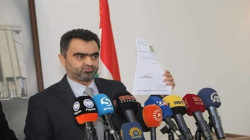
Suspending Iraq’s provincial councils and freezing their budgets would require a clear constitutional and legal basis, Kirkuk Provincial Council member Ahmed Fatih Kirkuki told Shafaq News on Monday, rejecting a push by lawmakers for such measures.
Kirkuki pointed to Article 122 of the Iraqi constitution, which grants broad administrative and financial powers to provinces not incorporated into a federal region under the principle of decentralization and regulates the election and powers of provincial councils and governors through legislation. The Federal Supreme Court, he added, had established that the councils derive their existence from the constitution and that abolishing them would require a constitutional process.
Parliamentary oversight, according to the official, should be distinguished from collectively suspending the councils. “If a provincial council fails to perform its duties or commits violations, the body, the violations, and the evidence should be identified,” he said, noting that legal action could then be taken while Parliament retains the authority to hold those responsible accountable through constitutional and legal mechanisms.
On funding, the constitution provides provinces with a fair share of federal revenues, while freezing council budgets could affect local institutions and public services rather than council members alone. Kirkuki stressed that provincial representatives were elected by voters and should therefore be dealt with under the constitution and law rather than through collective measures based on generalized violations.
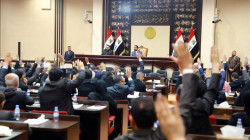
On Sunday, a group of MPs sent an official letter to Parliament Speaker Haibet Al-Halbousi requesting a vote at the next parliamentary session on suspending provincial councils and freezing their budgets for the remainder of their term, which runs through the end of 2027. The proposal cited Articles 20 and 2 of amended Law No. 21 of 2008 on Provinces Not Incorporated into a Region, which respectively empower Parliament to act when a council seriously breaches its duties or violates the constitution or other laws and place provincial councils under parliamentary oversight.
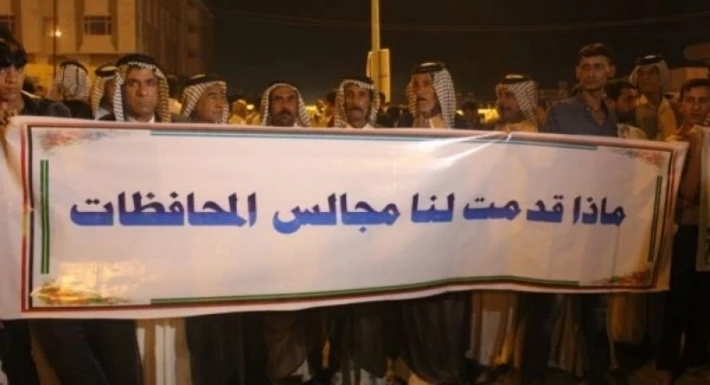
Iraq’s Parliament dissolved the councils in 2019 following the nationwide Tishreen protests against corruption, political patronage, and the handling of public funds, amid widespread criticism of their performance and effectiveness. The bodies returned after provincial elections in 2023, with responsibilities including electing provincial governments, approving service-related budgets, and overseeing executive departments.
Read more: Why Iraq’s provincial councils are struggling to deliver