Kirkuk Council seeks answers on Turkic Union membership


Shafaq News- Kirkuk
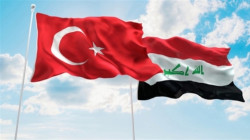
Kirkuk's recent admission to the Union of Turkish World Municipalities (TDBB) has sparked political debate, with some Iraqi officials interviewed by Shafaq News welcoming its investment potential while seeking greater clarity on the commitments reached during Governor Mohammed Seman Agha's talks in Turkiye.
The announcement followed the governor's trip to Ankara, where Kirkuk formally joined the TDBB, an international organization that brings together municipalities and local administrations from Turkic-speaking countries and regions to promote cooperation through joint projects in infrastructure, local governance, urban development, environmental protection, tourism, culture, training, and investment.
Deputy Provincial Council Chairman Nashat Shahwaiz said the council has yet to receive details of the understandings reached during the Ankara talks, stressing that members cannot assess their implications before reviewing their terms. While expressing support for any initiative capable of attracting foreign investment and creating jobs, provided its objectives and contractual commitments are clearly understood, he called on the governor to present the outcomes to the council upon his return.
Raad Saleh, head of the Provincial Council's Finance, Economy, Trade and Investment Committee, similarly portrayed the visit as part of official efforts to strengthen cooperation with Turkiye across several sectors. He stressed that "the benchmark is not signing agreements, but implementing them on the ground and turning them into projects that serve the province," adding that elected members would examine the results of the visit as part of their oversight role.
The Kurdistan Democratic Party (KDP), however, tied the development to Kirkuk's unresolved constitutional status. Senior party official Kawa Ahmed Fathallah said the province's future and administrative boundaries should be settled exclusively through Article 140 of Iraq's Constitution, which lays out a process of normalization, a population census, and a referendum on whether Kirkuk would join the Kurdistan Region or remain under Baghdad’s authority.
Fathallah described decades of Arabization policies, land confiscations, forced displacement, and the Anfal campaign under the former Baathist regime as unresolved grievances that must be addressed through constitutional and legal mechanisms. He warned that "decisions concerning Kirkuk taken outside the province and without the will of its residents will not achieve stability," renewing his party's call to restore rights to displaced communities and reinstate the province's pre-1970s administrative boundaries.
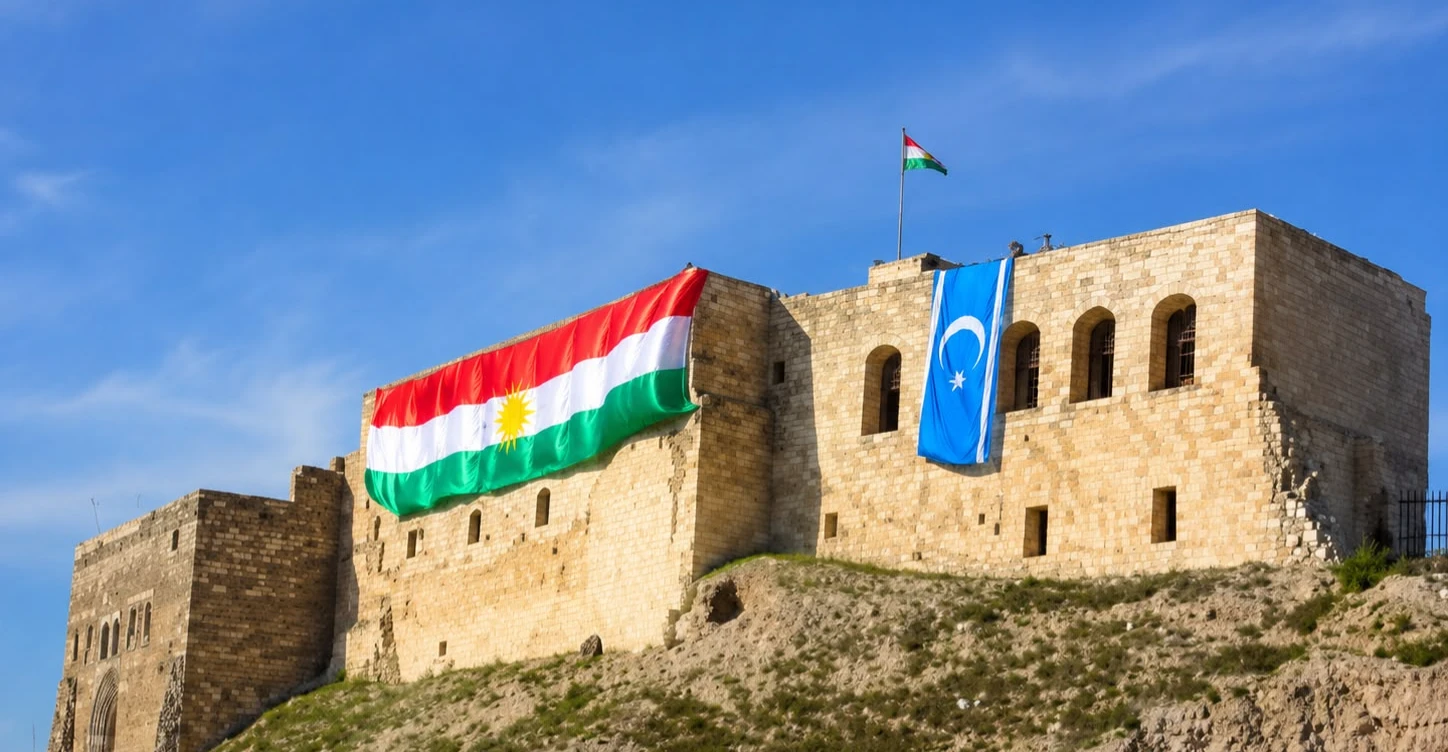
Kirkuk is one of Iraq's most ethnically and politically contested provinces. Home to nearly 1.9 million people, according to the 2024 census, it includes Kurdish, Turkmen, Arab, Chaldean, Assyrian, and other communities. Kurdish parties advocate implementing Article 140 as the constitutional mechanism for resolving the province's status, while Turkmen groups regard Kirkuk as a historic center of their community and many Arab parties oppose its incorporation into the Kurdistan Region.
Read more: Discover Iraq: Kirkuk, a city of oil, culture, and conflict