Iraq’s largest bloc meeting fails amid premier nominee dispute


Shafaq News– Baghdad
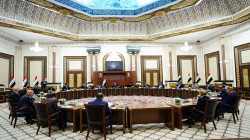
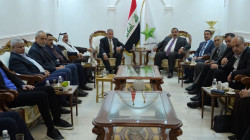
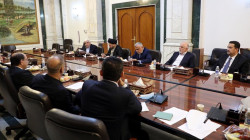
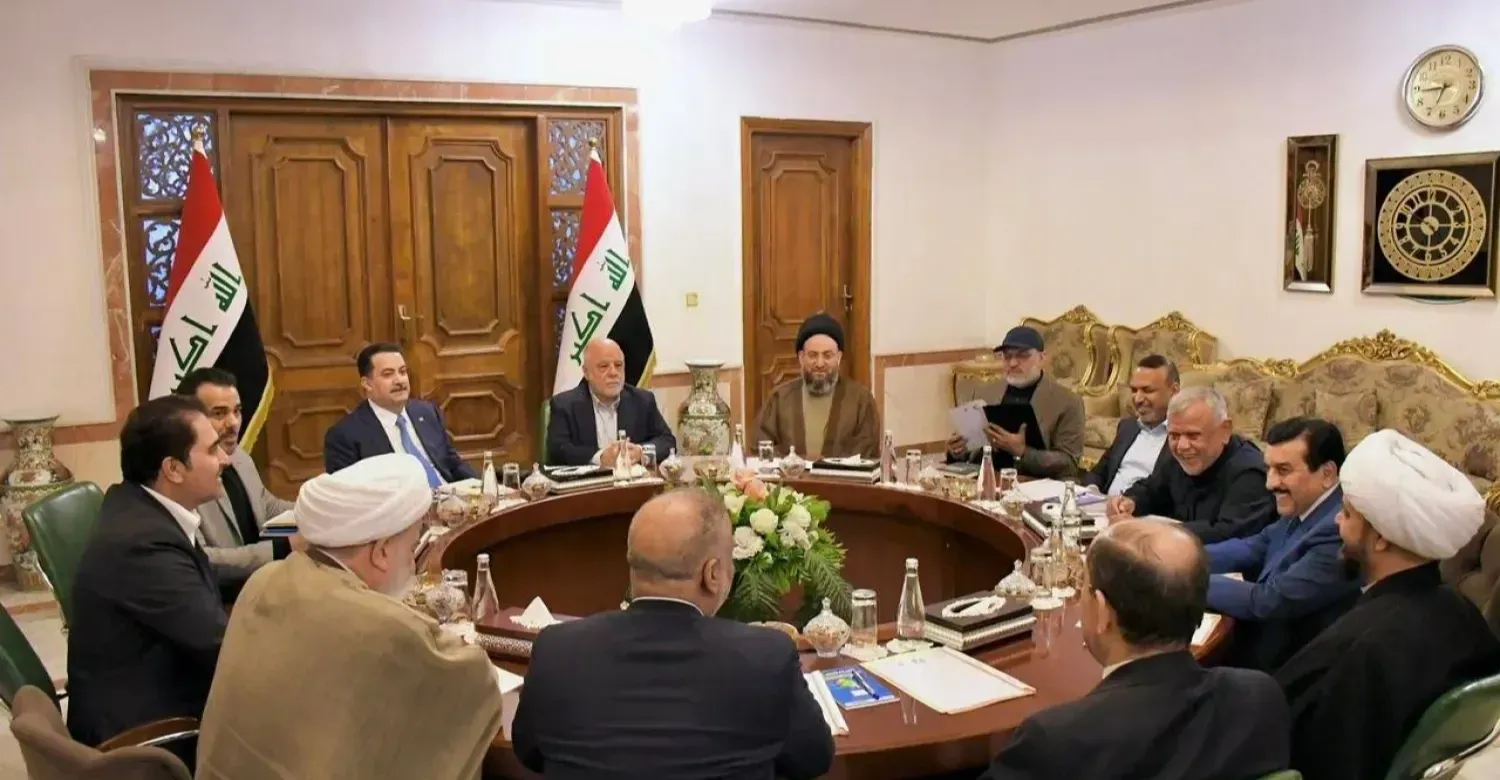
Divisions over a “controversial” nominee as head of Iraq’s government prompted the cancellation of a planned Shiite Coordination Framework (CF) meeting, a political source revealed to Shafaq News on Sunday.
The source said factions within the CF —a coalition of political parties that holds decisive influence in parliament— rejected passing any candidate “except by agreement and unanimity,” adding that Al-Hikma Movement led by Ammar al-Hakim and the Sadiqoon bloc led by Qais Al-Khazali “insist on applying the agreed criteria,” foremost that the nominee “must not be a controversial figure” and should ensure “balance at the domestic and external levels.”
According to the source, the disagreement does not place the alliance under immediate pressure, as the CF has up to 15 days after the election of the president to settle on its candidate. If consensus fails, he added, “internal voting remains an option,” provided the nominee meets the established conditions.
The canceled meeting, scheduled for Saturday, had been intended to address internal differences over the choice of prime ministerial nominee but failed to convene. While the source did not identify any individual by name, political sources had previously affirmed that the dispute centers on the possible return of former prime minister Nouri al-Maliki, whose candidacy faces opposition from Hikma and Sadiqoon, alongside reservations expressed by Badr Organization chief Hadi al-Amiri.
The debate unfolds as al-Maliki’s State of Law Coalition, which secured 29 seats in the recent parliamentary elections, positions him as a leading contender within the CF. In parallel, caretaker Prime Minister Mohammed Shia al-Sudani, whose Reconstruction and Development (Al-Ima’ar wal Tanmiya) Coalition won 46 seats, withdrew from seeking a second term.
Read more: Nouri Al-Maliki: A name that still divides and tests the politics of memory
Under Iraq’s post-2003 power-sharing system, the presidency is held by a Kurd, the premiership by a Shiite Arab, and the speakership of parliament by a Sunni Arab. CF-aligned forces control around 180 of the 329 seats in parliament, giving the alliance decisive influence over the formation of the next government.