Disarmament dispute could threaten Iraq economy, MP warns


Shafaq News- Baghdad
Failure to bring weapons under Iraqi state control could expose the country to greater international pressure, while any US sanctions would threaten salaries, debt payments, and the wider economy, parliamentary Finance Committee member Jamal Kocher said on Thursday.
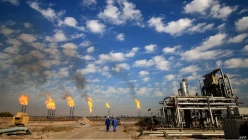
Kocher told Shafaq News that Prime Minister Ali Al-Zaidi and the Finance Ministry had said public-sector salaries were secured, while state revenues, particularly from oil, had begun to recover. The bigger risk, however, was an “economic shutdown” caused by disrupted oil exports or international isolation.
Finance Ministry data show Iraq spent 30.769 trillion dinars ($23.5B) on public-sector salaries in the first half of 2026, while oil generated about 79% of federal revenue. Crude exports rose to about 2.34 million barrels per day (bpd) in August from roughly 1.35 million bpd in July, but remained below the more than 3.3 million bpd exported before the regional war disrupted Gulf shipping.
Read more: No exit but Hormuz: Iraq's economic vulnerability exposed
Iraq’s economic stability, Kocher said, depended on access to the international financial system, SWIFT, and foreign investment, and failure to meet the weapons-control timetable could prompt a tougher international stance toward Baghdad.
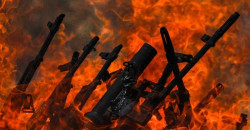
The State Administration Coalition's, the ruling alliance of Sunni, Shia, and Kurdish parties, has set September 30 as the deadline for ending armed activity outside state institutions, warning that violations afterward would fall under Iraq’s Anti-Terrorism Law.
Khalid Walid, a member of former premier Mohammed Al-Sudani’s Reconstruction and Development Coalition, told Shafaq News on Thursday that negotiations between the ruling Shiite Coordination Framework and armed factions were making progress toward placing weapons under state control.
Read more: Tension meets dialogue as Iraq approaches September 30