Iraq revives rice cultivation for 2026 summer farming plan


Shafaq News- Baghdad
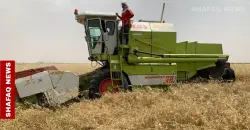
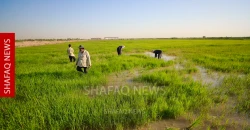
Iraq has moved forward with its 2026 summer farming plan, expanding cultivation and restoring rice production after a one-year suspension, as improved rainfall and higher reservoir levels offer limited relief to a system still under pressure.
The plan, recently approved by the Ministries of Agriculture and Water Resources, includes summer maize, vegetables, cotton, sunflower, sesame, and millet in an effort to balance food demand with limited water resources.
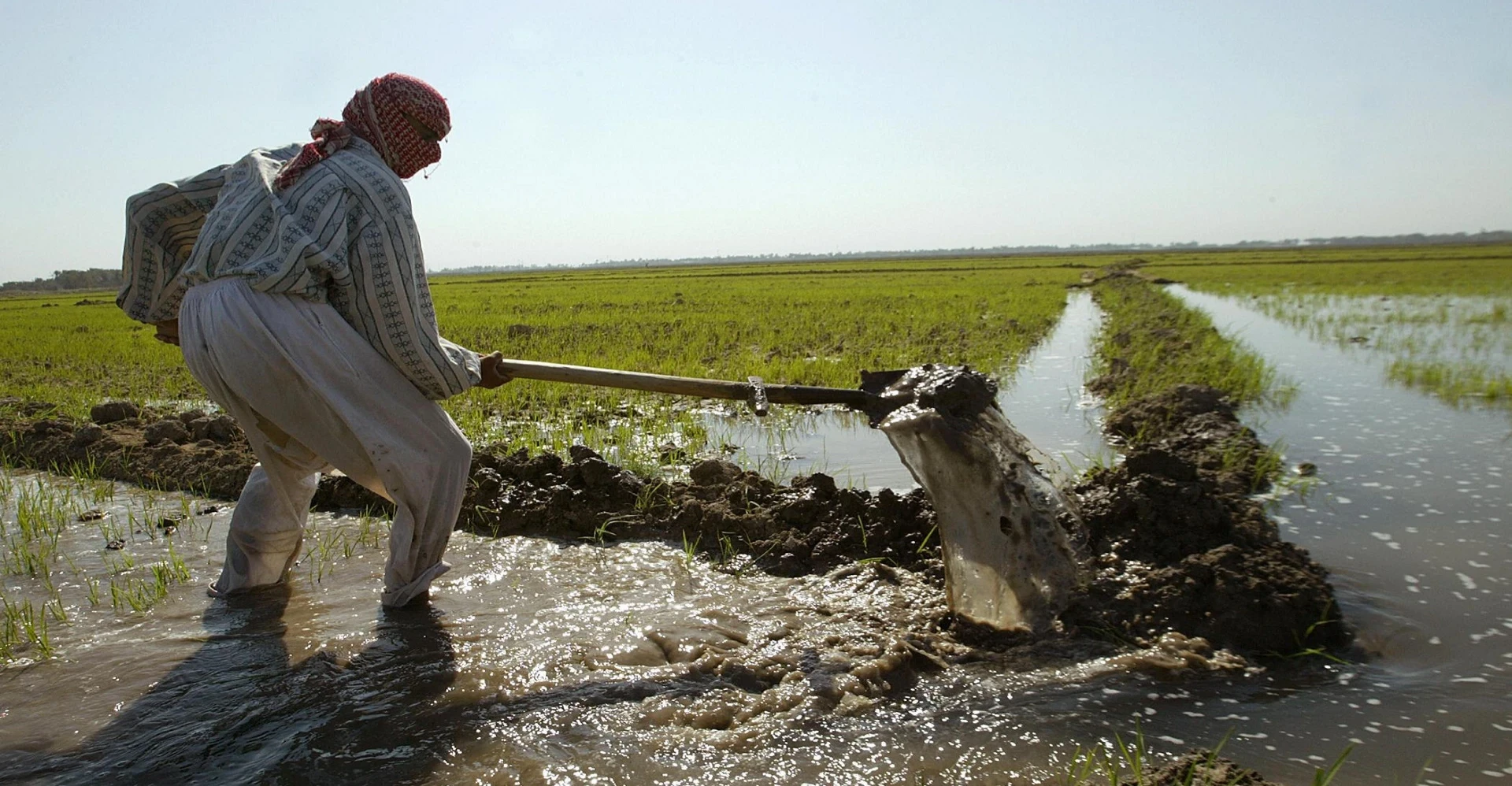
“Rice, which is among Iraq’s most water-intensive and politically sensitive crops, returns to summer fields this year,” Mehdi Damad al-Qaisi, adviser at the Ministry of Agriculture, told Shafaq News, pointing out that the crop remains part of the country’s strategic food basket and feeds directly into the public ration system.
Cultivation will be concentrated in Najaf, al-Diwaniyah, and al-Muthanna, with smaller plots spread across Diyala, Maysan, Babil, and Dhi Qar. Najaf leads with 170,000 dunams, followed by 120,000 in al-Diwaniyah, while al-Muthanna receives 11,900 dunams.
Overall, the summer plan covers about 1.44 million dunams. Of that, 1,078,188 dunams depend on river irrigation, while 362,277 dunams are irrigated through groundwater wells.
Read more: Iraq’s water crisis: A structural rewrite of agricultural governance
Yet the water situation remains uneven across the country. Some regions have benefited from improved flows, but levels on the Euphrates continue weak, leaving uncertainty over how smoothly the plan can be carried out.
Speaking to our agency, water and agricultural expert Adel al-Mukhtar characterized Euphrates storage as “constrained,’’ adding that while the agricultural layout for the season appears workable, caution stays necessary given current conditions.
He also pointed to maize cultivation as relatively well structured, while observing that Iraq’s reliance on fluctuating inflows from Turkiye and Iran continues to shape planting decisions year after year.
For former parliamentary Agriculture Committee member Zozan Kojer, however, the issue extends beyond seasonal figures. Describing the plan as one that shifts annually depending on water reserves, drought conditions, rainfall patterns, upstream releases, and market demand, she urged stronger oversight of planting areas, broader adoption of modern irrigation systems, and wider use of laser land levelling.
More critical assessments view the renewed expansion of rice farming as a reflection of deeper structural limits. Water expert Tahsin al-Mousawi cautioned that allocating more than 300,000 dunams for rice under unstable water conditions carries considerable risk, especially as Iraq continues to lack binding agreements on water shares with upstream countries.
“The dependence on flood irrigation and short-term seasonal planning is a bad approach,” he warned, stressing that without a shift in priorities, Iraq risks repeating a familiar cycle of temporary relief followed by renewed shortages, as climate change accelerates desertification, soil salinity, and declining river flows across the country.
Read more: Iraq faces severe drought as water inflows decline