Hatra’s solar phenomenon inspires astronomical tourism initiative


Shafaq News- Nineveh
Heritage researcher Ahmed Taha has launched a “Reviving the Sun of Hatra” initiative to document a twice-yearly solar alignment at the ancient city of Hatra in Nineveh, calling for efforts to promote the phenomenon.
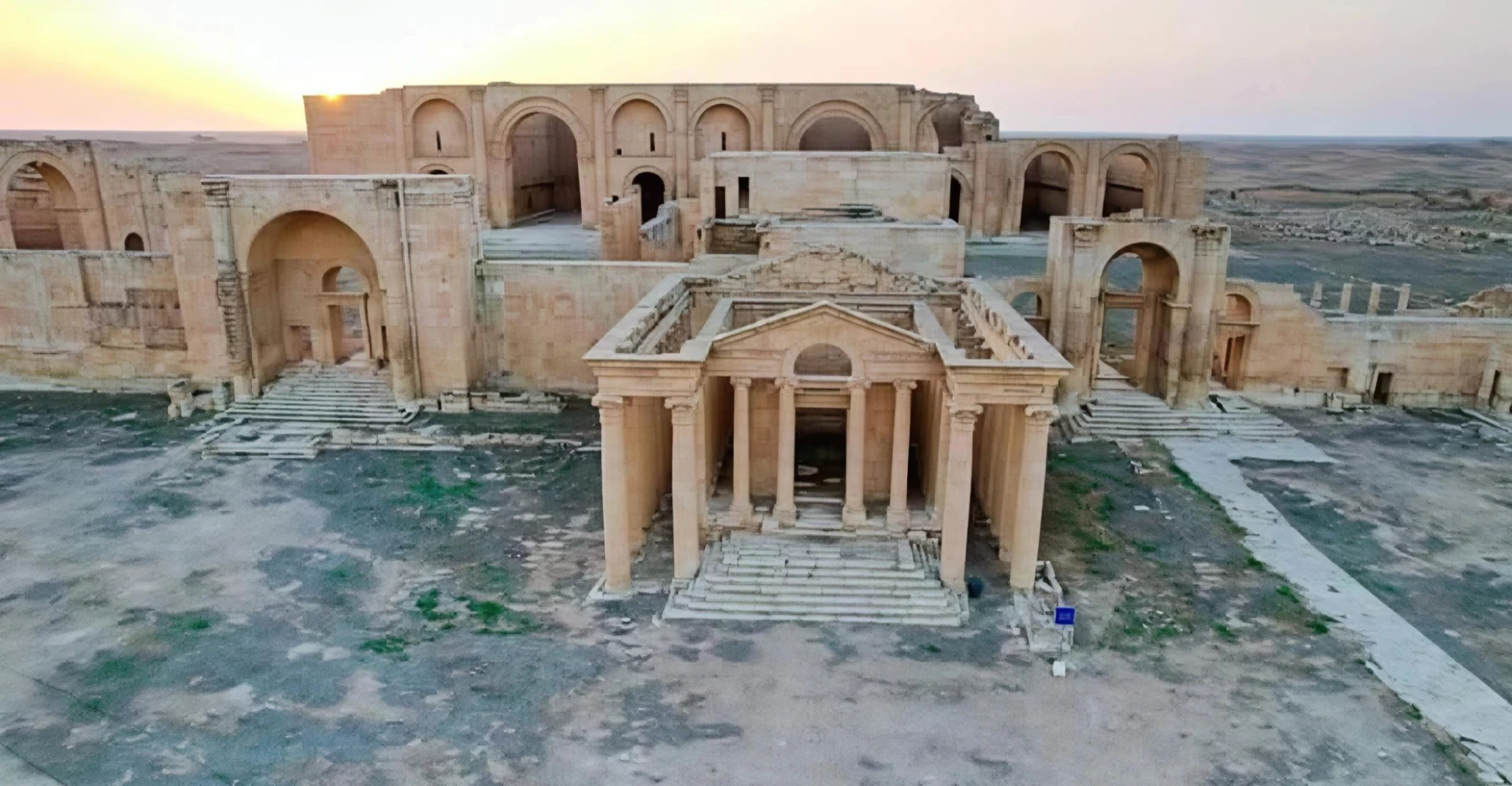
Taha told Shafaq News that the sun's rays strike the facades of specific arches and iwans —vaulted halls open on one side— at a precise right angle on October 22 and February 22 each year. He cited research by the late scholar Majid Abdullah Al-Shams in his study “Hatra, the Arab Capital.”
“The phenomenon reflects not only religious rituals but also the architectural skills of ancient Iraqi builders and their understanding of seasonal and economic cycles,” he said, linking both dates to Mesopotamia's agricultural calendar. October 22, he explained, marked the transition to the autumn and winter growing season for wheat and barley, while February 22 signaled the retreat of frost and the start of spring and summer farming activities, including transplanting seedlings and pruning trees.
Taha expressed his willingness to develop a fieldwork plan to identify observation points and scientifically document the phenomenon in cooperation with media outlets and research institutions. The initiative aims to establish Hatra as an international destination for astronomical and historical tourism.
Located in the Jazira desert southwest of Mosul, the ancient Kingdom of Hatra, also known as Arabaya, became Iraq's first UNESCO World Heritage Site in 1985. The city combined Hellenistic and Roman architecture with Eastern decorative features, and developed into a major religious and trading center before its fall in the mid-third century AD.
Hatra's temple architecture was closely linked to the worship of Shamash, the sun god and the city's principal deity. Its builders used sophisticated astronomical knowledge to align temple entrances and windows with sunrise and sunset on dates associated with the equinoxes and solstices, allowing the temples to function as “stone astronomical calendars” marking religious festivals and agricultural seasons. However, further archaeological and technical surveys are needed to establish the phenomenon's scientific and tourism significance.
Read more: Discover Iraq: Nineveh rebuilds its heritage and future