US-Iran ceasefire deal leaves Lebanon without guarantees



Shafaq News (Updated at 12:41)
Lebanon did not negotiate the agreement that now governs its fate. On June 14, the United States and Iran announced separate statements —Trump posting on Truth Social, Iran's Supreme National Security Council issuing a formal communiqué— each claiming to have reached a memorandum of understanding ending the war.
The two texts shared three facts and little else. One of those facts mattered enormously to Beirut: Tehran's statement named Lebanon explicitly as a front where hostilities would end immediately and permanently. Washington said the deal “will bring Peace and Security to the whole Region,” without mentioning Lebanon by name.
Beirut was not consulted, and its government did not welcome the announcement so far. That silence, in the political grammar of Lebanese statecraft, was a precise and deliberate response to being written into a deal authored entirely over its head.
The Lebanon clause may prove among the agreement's most consequential and difficult-to-enforce provisions. It names a front that neither Washington nor Tehran can control on the ground, binds a party, Israel, that is not a signatory and has publicly rejected the clause's authority, and offers a Lebanese state protection it lacks the domestic capacity to guarantee. The disconnect between what the clause promises and can deliver is the document's defining structural weakness, and Lebanon is where that weakness will be felt first.
A Party to the Outcome, Not the Negotiation
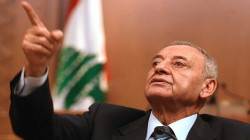
Lebanese President Joseph Aoun and Parliament Speaker Nabih Berri on Monday welcomed the US-Iran memorandum of understanding. Aoun said he valued the agreement's acknowledgment of Lebanon's particular circumstances, and called on all parties to translate the understanding into practical steps that would end the cycle of violence and open a path toward recovery and reconstruction. Aoun also thanked the states and parties, without naming them, that worked to ensure Lebanon was included in the de-escalation efforts, citing the scale of suffering Lebanese communities had endured in recent months.
Berri, for his part, said the memorandum preserves Lebanon's full sovereignty without compromising the country's independence or freedom of national decision-making.
Aoun had stated earlier that the problem was plain before the MoU was announced. In exchanges with a UN Security Council delegation, he told visiting officials that Iran was "using Lebanon as a bargaining chip in their negotiations with the US. It is unacceptable." The accusation described something precise: Lebanon has functioned throughout this conflict as a theater of Iranian deterrence and Israeli military pressure, with Beirut possessing neither the capacity to control its own territory nor the diplomatic leverage to shape the frameworks purporting to govern it.
Nothing in the June 14 text changes that. But the text's silences raise questions more consequential than its stated provisions. There is no clause explicitly prohibiting Israeli forces from issuing evacuation orders to southern Lebanese villages under the cover of a ceasefire, a tactic that would render the agreement's protection theoretical for the communities it nominally covers.
The language barring Israel from consolidating the military positions it currently holds in southern Lebanese territory was also absent, meaning a ceasefire could freeze an occupation in place rather than reverse it. And no monitoring mechanism, credible reference body empowered to investigate violations, or agreed standard for the definition of a breach were also announced, which means the party most likely to invoke pretexts for renewed hostilities faces no institutional obstacle in doing so.
These hypothetical concerns imported from outside the text follow directly from what the document does not say.
Israel's Position: Outside The Framework, Inside Lebanon
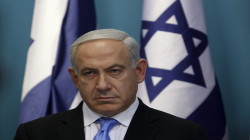
No party has been more direct about the MoU's Lebanon clause than Israel, and its directness has taken military as well as diplomatic form. On the evening of June 14, hours before the memorandum was announced, Israeli strikes killed at least three people in Beirut's southern suburbs. Prime Minister Benjamin Netanyahu and Defense Minister Israel Katz issued a joint statement the same day: "Israel will not tolerate firing at its territory."
Netanyahu informed President Trump that Israel does not consider itself bound by the Lebanon provisions of the emerging agreement. According to Israeli officials cited by Yedioth Ahronoth, he communicated that Israeli forces will not withdraw from Lebanese territory, will maintain current positions, and will continue operations against Hezbollah infrastructure —responding to any attack regardless of any framework's provisions.
The Israeli Security Cabinet also convened and expressed broad support for that posture, but divided on the degree of force and the diplomatic cost of rupturing ties with Washington.
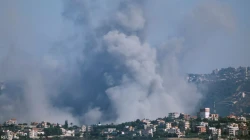
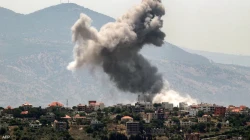
Operations on the ground continued the following day. Lebanon's National News Agency reported Israeli artillery shelling on Mansouri, Kfar Tibnit, and Nabatiyeh al-Fawqa. The army detonated a remote-controlled armored vehicle on the Haris-Tibnin road. A drone struck a vehicle in Kfar Tibnit with reported casualties. Explosions were reported in Khiam. The MoU's ink had not dried before its primary prohibition was being tested militarily.
Read more:Israel's war fell on Christians and Shiites in Southern Lebanon
Israel's underlying logic is consistent with its stated position throughout the conflict. Finance Minister Bezalel Smotrich articulated it within the cabinet: Lebanon falls within Israel's direct security sphere; Iran is the domain of US-led diplomacy. The distinction, in Israeli strategic terms, means the MoU's Lebanon clause addresses a category Israel simply does not accept as applicable to its ongoing operations. Absent any text explicitly prohibiting Israeli freedom of military and security movement inside Lebanese territory —language the MoU does not contain— that logic carries no legal counterweight within the agreement itself.
Hezbollah's Veto, And The State's Paralysis
The clause also collides with a domestic reality that Beirut cannot resolve by political will alone. Hezbollah's leader Naim Kassem rejected the June 4 Israel-Lebanon ceasefire framework, characterizing any demand for the group's fighters to withdraw from southern Lebanon as "surrender and defeat." That rejection preceded the MoU and was unaddressed by it.
Lebanon has maintained a separate, US-mediated negotiating track with Israel, but Hezbollah has consistently insisted on linking both tracks, conditioning any movement on the Lebanese-Israeli front to the broader US-Iran framework. The MoU now provides that framework. Whether Hezbollah treats it as sufficient political cover to de-escalate, or as a diplomatic instrument that constrains Israeli action while preserving its own posture intact, will determine whether the Lebanon clause has any operational meaning on the ground. The Lebanese state has no power to compel an answer in either direction.
That powerlessness extends further. There is no guarantee, inside or outside the MoU, that Beirut will deploy the Lebanese Armed Forces to the south independently of any arrangement with Israel. A Lebanese government that was excluded from the negotiations producing this ceasefire has limited political incentive, and arguably limited legal justification, to implement its provisions unilaterally.
If Beirut concludes that it is not a party to the agreement, it may equally conclude that the agreement creates no obligation on its part to act. The possibility that the Lebanese government withholds a deployment order, from institutional caution, factional pressure, or the logic that a non-party bears no implementation burden, is precisely the kind of pre-emptive failure the MoU's drafters appear not to have considered.
There is also the subtler risk that Lebanese political authority, as it has at various points historically, accommodates Israeli framing on Hezbollah rather than resisting it, not through explicit collaboration but through the language of its public positions and the sequencing of its decisions. The MoU contains no text that functions as a structural obstacle to that drift. Whether those responsible for the agreement's implementation are attending to these possibilities is a question the document itself does not answer.
Read more:Lebanon's fragmented power blocks peace with Israel
Diplomatic Recognition Without Enforcement
The Lebanon provision establishes, within a US-Iran bilateral framework, that Lebanon is a covered front, a position Beirut can invoke in Security Council deliberations, in its dealings with Washington, and in any future negotiations over a permanent agreement. For a government that has spent months being acted upon rather than consulted, that is a marginal but real diplomatic foothold.
What the clause cannot deliver is enforcement. It does not bind Israel. It does not address Hezbollah's weapons or territorial presence. It creates no monitoring body, no timeline for Israeli withdrawal, and no consequence for violations. A ceasefire without a verification framework is, in the experience of previous Lebanese agreements —the 1989 Taif, the 2006 UN Security Council Resolution 1701— a political statement rather than a security guarantee. Resolution 1701 prohibited offensive operations in southern Lebanon and mandated Israeli withdrawal; nearly two decades later, neither provision had been fully implemented when this war began.
The broader unresolved problem of the June 14 agreement compounds Lebanon's exposure. Iran's nuclear file, the Hormuz mine-clearance timeline, and the sequencing of a permanent deal each represent potential points of collapse —any one of which could reopen the military dimension of the conflict and render the Lebanon clause irrelevant before it is ever tested. Iran has stated explicitly that permanent negotiations are conditional on prior US compliance with the MoU. Washington has made no equivalent acknowledgment. If that divergence produces a breakdown before the June 19 signing, or within the 60-day window the agreement reportedly establishes for final negotiations, Lebanon will find itself once again inside a conflict it did not choose, operating under a framework it did not negotiate, with no mechanism to absorb the consequences.
Written and edited by Shafaq News staff.