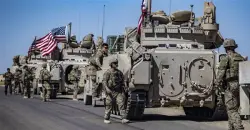
Syria’s calm: An end to threat or a start of a complex security phase for Iraq?


Shafaq News
As Syria moves into a new phase marked by ceasefire agreements and the reassertion of Damascus’ authority over areas previously controlled by the Syrian Democratic Forces (SDF), security concerns are intensifying next door in Iraq. The central one is whether Syria’s fragile transition could generate new, less visible threats for Iraq, particularly along one of the region’s longest and most sensitive frontiers.
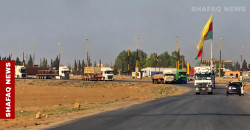
Iraq shares a 618-kilometer border with Syria, nearly half of which —around 285 kilometers— runs through Nineveh province, an area shaped by rugged terrain, overlapping security jurisdictions, and a long history of infiltration by ISIS. While Iraqi authorities insist the border is secure, analysts interviewed by Shafaq News warn that the evolving situation inside Syria could test those defenses in ways that walls and cameras alone cannot fully contain.
A Border Secured, But Not Sealed
Security expert Mukhallad al-Darb cautions against viewing border control in absolute terms. “There is no such thing as complete security in any country, especially when it comes to borders,” he says, stressing that border protection depends on constant coordination and intelligence-sharing rather than physical measures alone.
Al-Darb notes that Iraq has significantly reinforced its frontier with Syria through three human and logistical defensive belts, supported by trenches, barbed wire, thermal cameras, and the deployment of border guards and armored units. These measures, he says, have brought the border close to full control.
Yet he also points to “soft spots,” particularly near Sinjar Mountain and Faysh Khabur, areas administered by the Kurdistan Region where federal forces are not fully deployed. “These zones could still be exploited for infiltration attempts,” he warns, emphasizing that the challenge is not geography alone, but how authority is exercised across it.
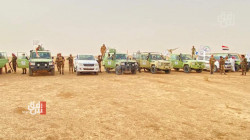
According to al-Darb, Iraqi forces remain on high alert, with continued troop reinforcements along the border and ongoing security coordination with Damascus aimed at preventing any deterioration that could affect Iraq’s internal stability.
The Prison File: A Risk Beyond the Border
While border defenses dominate official narratives, political analyst Saif al-Saadi argues that the real danger lies deeper inside Syrian territory, within the detention facilities holding thousands of ISIS fighters.
“Iraq’s security is directly affected by what happens in Syria,” al-Saadi says, noting that Iraq’s long western border makes proactive measures unavoidable. However, he stresses that the most serious threat is not infiltration, but the fate of ISIS detainees.
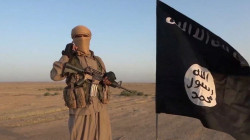
According to the US State Department, there are almost 9,000 ISIS fighters held in prisons across northeastern Syria, including facilities in Hasakah, Qamishli, Raqqa, and the notorious Ghuwayran prison, which alone previously housed around 12,000 inmates. Many of these detainees are foreign fighters from more than 40 countries, most of which have refused to repatriate their nationals.
Al-Saadi warns that this situation recalls Iraq’s own experience with displacement and detention facilities after 2017, including the Jadaa and Al-Amal camps in Mosul, which posed long-term security and social challenges. “These detainees represent a ticking time bomb,” he says, calling for stricter measures, enhanced intelligence cooperation, and closer coordination with Washington to prevent ISIS from exploiting any instability.
Political Transitions, Security Consequences
Security analyst Saif Raad Talib views Iraqi concerns as both logical and unavoidable, given Syria’s changing political landscape. Linking recent developments to what he described as a Turkish-backed shift in Syria, including decisions that effectively ended the role of the SDF in some areas, Talib identifies Nineveh as Iraq’s primary zone of concern, and its 285-kilometer border segment as a “critical frontier” vulnerable to infiltration due to its terrain and fragmented control. He also warns about clashes near detention sites such as al-Aqtan prison in Raqqa, which holds ISIS members.
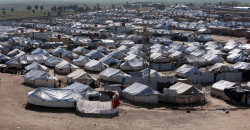
Beyond the prisons, Talib highlighted the broader ecosystem surrounding them. An estimated 55,000 to 60,000 people, mostly women and children linked to ISIS fighters, remain housed in Al-Hol camp, located near Iraq’s border with Nineveh. “This environment continues to produce extremist narratives and future security risks,” he says.
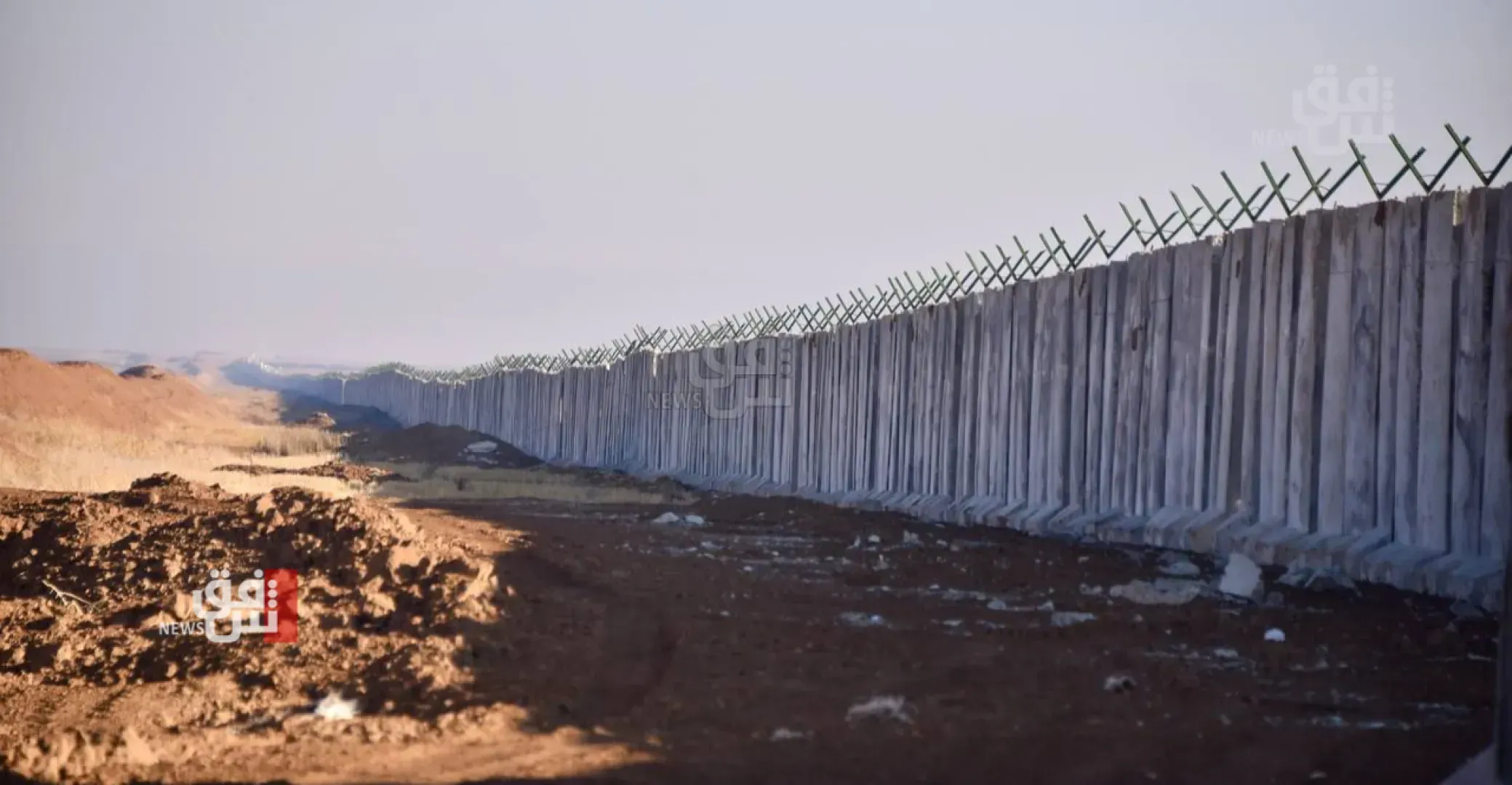
Talib contrasts this with the situation in the western province of Al-Anbar, where the border is reinforced by a concrete wall —now nearing completion— thermal surveillance systems, drones, and three fixed military defense lines, making infiltration there “almost impossible.” By contrast, he argues, parts of Nineveh’s border remain divided between federal authorities, the Kurdistan Region, and areas influenced by the Kurdistan Workers' Party (PKK), calling for targeted reinforcement in those zones.
Political Warnings from Baghdad
Concerns are not limited to security experts. Mohammed al-Baldawi, a lawmaker from the Sadiqoon parliamentary bloc, the political wing of Asaib Ahl Al-Haq, voices alarm over “unhealthy regional dynamics” unfolding amid multiple ongoing conflicts.
Al-Baldawi warns that clashes between Syrian government forces and the SDF, combined with reports of prison openings and the release of ISIS-linked detainees, “pose a direct threat to Iraq’s security and demand heightened vigilance.”
Official Reassurance—and Strategic Caution
Balancing these warnings, Sabah al-Numan, spokesperson for the Iraqi commander-in-chief, insisted that the Iraq–Syria border is fully secured by the Border Guard Command. He describes border security as a top government priority, particularly in relation to neighboring Syria.
“Construction of the concrete border wall is approximately 80 percent complete, with plans to extend it along the entire frontier,” Al-Numan explains, citing also sufficient manpower, advanced technical and logistical systems, fixed defense lines operated by the army and Popular Mobilization Forces (PMF), and round-the-clock aerial surveillance, and high-level coordination with Kurdistan Region border guards.
“Stability in Syria remains a critical factor for Iraq’s own security and for regional balance more broadly.”
Between Assurance and Uncertainty
Recent announcements by the PMF regarding the reinforcement of the 10th and 25th brigades along the border, warnings by leader Muqtada al-Sadr against dealing with Syrian developments “naively,” and Global Coalition and Turkish activity in Mosul, the capital of Nineveh, over less than 24 hours, reflect a broader recognition in Baghdad: the threat has not disappeared—it has evolved.
In this environment, security for Iraq is more about managing uncertainty: detention facilities, fragmented authority, foreign fighter limbo, and the long shadow of ISIS networks that thrive in gray zones rather than open battlefields.
The challenge for Iraq, analysts agree, is ensuring that the end of Syria’s battles does not become the prelude to a quieter, more unpredictable security test at its western gate.
Written and edited by Shafaq News staff.