Iraq's air defense void: How US vetoes, and Russian limits leave Baghdad exposed


Shafaq News
Iraq is caught between two forces it cannot confront: the airpower of its nominal protector, and the political cost of seeking protection elsewhere. As American and Israeli strikes against Iran-aligned targets inside Iraqi territory multiply, Baghdad's air defense vacuum has shifted from a long-acknowledged liability into an acute national security emergency —one whose resolution is blocked, analysts say, by the very alliance architecture meant to guarantee Iraqi sovereignty.
On Wednesday, Iraq's Ministry of Defense confirmed that a strike on the Habbaniyah military clinic and an engineering unit left seven soldiers dead and thirteen wounded —the latest in a pattern of aerial attacks that have hit Popular Mobilization Forces (PMF) positions across al-Anbar, Baghdad, Babil, Kirkuk, Nineveh, Diyala, and Saladin provinces since hostilities between the United States, Israel, and Iran erupted on February 28. Dozens of casualties have accumulated. And on the ground, a second threat is stirring in the space the strikes have opened.
A Structural Defense Deficit
Retired Major General Jawad al-Dahlaki, a Baghdad-based security and strategic analyst, frames Iraq's predicament with unusual bluntness. "Iraq has no air control and no effective ground-based defenses," he told Shafaq News, a deficit he traces not to negligence but to architecture.
The first jaw of the trap is contractual. Iraq's Strategic Framework Agreement (SFA) with the United States and the Global Coalition was designed, in part, to guarantee Iraqi sovereignty and security cooperation, but it does not constitute a formal air defense support. That guarantee has become a legal and political paradox: the threat now comes from the guarantors themselves.
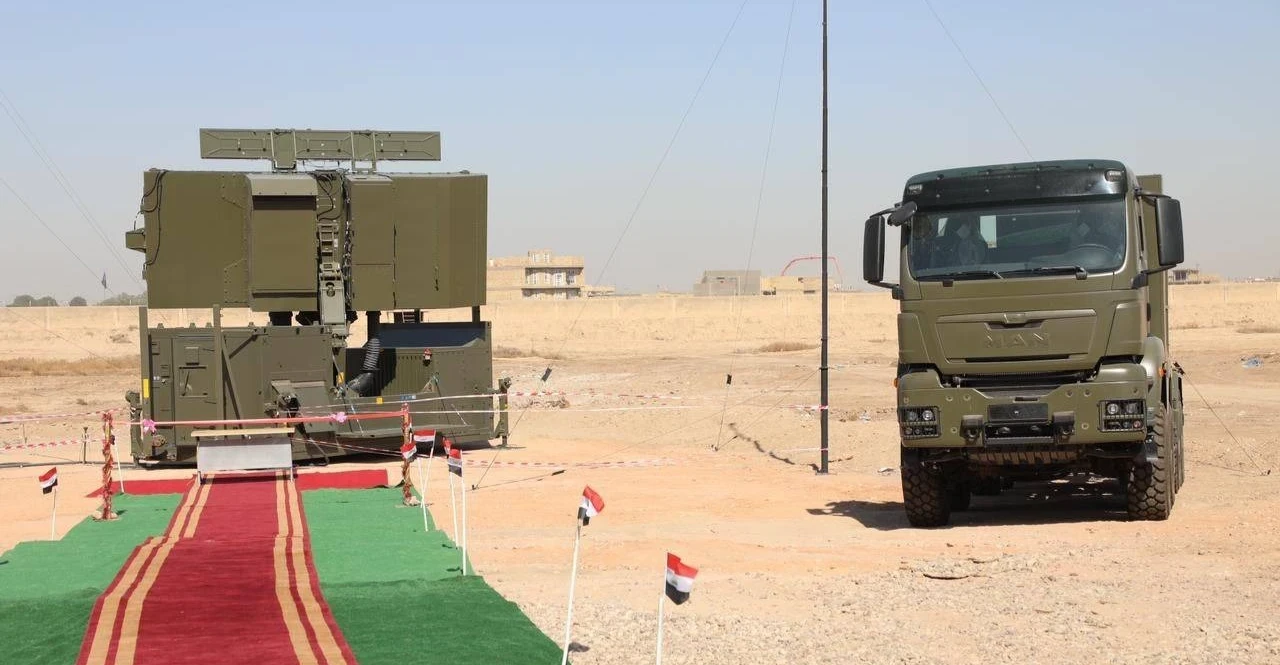
The second jaw is technological. Iraq's air defense corps has submitted detailed proposals for early warning systems and advanced missile batteries. Washington has blocked them according to a military official who spoke to Shafaq News anonymously, including requests routed through South Korea, a US ally, to reduce the political friction of a direct American sale. The reasoning, al-Dahlaki explained, is twofold: fear that sophisticated air defense technology could fall into the hands of Iran-aligned factions operating inside Iraq, and concern that effective Iraqi air defenses would shield Iranian assets during periods of American-Israeli escalation against Tehran.
The logic is coherent from Washington's perspective. From Baghdad's, it is a structural veto on sovereignty.
Read more: Kurdistan Region records 470+ attacks, 107 casualties since Feb 28
ISIS and the Security Vacuum
The military consequences of this vacuum extend beyond the strikes themselves. Al-Dahlaki warned that ISIS fighters have begun moving in western Iraq, exploiting the repositioning of security forces displaced by repeated aerial bombardment —an assessment aligns with broader patterns reporting on ISIS opportunism in ungoverned spaces. Attempts to strike Baghdad prisons holding senior ISIS leadership —with the apparent aim of freeing them— have also been reported.
This is the understated dimension of the current crisis: the degradation of Iraq's fixed security infrastructure by airstrikes is creating operational freedom for a third actor that neither Washington nor Tehran wants discussed in this context. The air war, in other words, has a ground dividend and ISIS is collecting it.
The Cost Equation and the Alternatives
The financial architecture of modern air defense makes Iraq's position even more precarious. Intercepting a drone that costs a few thousand dollars requires a missile like the PAC-3 MSE, priced at $4.1 million per round. The math of attrition favors the attacker at every exchange ratio.
Cheaper alternatives exist and have been documented. Germany's IRIS-T SLM system runs between 150 and 200 million euros per battery —expensive, but within reach for a state managing substantial oil revenues. South Korea's Cheongung-2 (M-SAM) offers interceptors at one to two million dollars each, providing credible low-tier coverage against drones and short-range missiles. The heavy American systems —THAAD and Patriot— remain necessary for protecting large strategic assets but are neither politically available nor economically viable as Iraq's primary defense layer.
The options exist. The access does not.
Moscow and Beijing: The Corridor Washington Is Closing
Inside the Iraqi parliament, a faction of legislators tied to the Shiite Coordination Framework— the dominant political bloc governing Baghdad— has concluded that the answer lies east. Mukhtar al-Mousawi, a senior member of the Badr Organization led by Hadi al-Amiri and a key figure within the Framework, put the position directly: "It is illogical to import defense systems from the United States to target its own aircraft. We must turn toward the Russian or Chinese axis." He acknowledged immediately that "Washington is placing a veto on this path."
The statement is politically significant less for what it proposes than for what it reveals: that Iraq's governing coalition —not its opposition— is openly articulating alignment with Moscow and Beijing as a national security necessity.
Iraqi lawmaker Miqdad al-Khafaji of the Hoqooq bloc, the political wing of Kataib Hezbollah, revealed last week that legislators are gathering signatures to summon caretaker Prime Minister Mohammed Shia al-Sudani and his security ministers for an emergency session, framing the current situation as "a real state of war with America and Israel." A separate legislative initiative is advancing to pass a law specifically funding air defense procurement —a mechanism designed to create statutory pressure for action that executive negotiations have failed to produce.
Whether these maneuvers translate into actual procurement is a different equation. Russia's calculus, according to Asif Melhem, director of the JSM Research Center in Moscow, is more constrained than Baghdad's parliamentary rhetoric suggests.
Read more: ISIS detainee transfers: “Third-generation” threat puts Iraq’s security to the test
Moscow's Arithmetic
Melhem argues that the current conflict —which he frames as targeting Iranian and by extension Russian-Chinese regional influence— has concentrated Russian strategic attention on Iraq as "the gateway to West Asia." But Russian willingness to arm Baghdad has hard limits. "Russia can offer a great deal," he told Shafaq News, "but within a precise equation: it cannot provide weapons that constitute a direct strategic threat to America in Iraq right now. What it can offer is defensive deterrence."
That means systems like the S-400, which are capable enough to constrain American air operations, are off the table, at least publicly, because Moscow cannot absorb the diplomatic cost with Gulf states and Turkiye, whose relationships Russia has carefully maintained throughout the Ukraine war and its regional spillovers. Electronic warfare systems and defensive missile batteries occupy a middle ground where Russian engagement is possible, but only if packaged in a way that does not visibly antagonize Riyadh, Ankara, or Abu Dhabi.
The corridor toward Moscow is real. It is also narrow, conditioned, and subject to Russian interests that do not perfectly align with Iraqi ones.
Read more: Iraq’s neutrality fades: Formal war involvement draws closer?
Washington's Conditional Offer
The American position is neither purely permissive nor simply obstructionist — it is conditional, and Baghdad finds the conditions equally unsatisfying. Retired Colonel Myles B. Caggins, former senior spokesperson for the Global Coalition, confirmed to Shafaq News that the National Defense Authorization Act for Fiscal Year 2026 includes provisions studying the deployment of air defense systems in Iraq, alongside $212.5 million earmarked for Iraqi force training and equipping.
Caggins directed his sharpest language not at Baghdad's procurement gaps but at the factions creating the threat environment: "Iran-aligned militias operating outside the law continue to launch repeated attacks, keeping civilians in constant fear." He noted that the Kurdistan Region alone has absorbed more than 400 rockets and drones since the conflict began, causing an estimated one billion dollars in lost oil revenues and millions more in infrastructure damage, and called on Congress to immediately fund anti-drone and missile defense technology sales to the Kurdistan Region specifically.
Washington's emerging posture appears to differentiate between the Iraqi state and Iraq's Iran-aligned armed factions as it is offering defensive support to one while continuing to strike the other. For a government in Baghdad that cannot operationally or politically separate itself from the PMF, this distinction offers little practical relief.
A Sovereignty Bind without an Answer
What emerges from the accumulated positions of al-Dahlaki, Melhem, Caggins, and the parliamentary voices represents a sovereignty crisis with no visible exit. Iraq cannot accept American air defense terms without legitimizing the strikes. It cannot turn to Russia without triggering American countermeasures and regional complications. It cannot legislate its way to air cover. And it cannot leave its skies open without watching ISIS reconstitute in the security gaps the bombardment creates.
The strategic trap al-Dahlaki describes is, at its core, a trap of alignment —the price Iraq pays for being simultaneously the host of American forces, the political home of Iranian-backed factions, and the geographic center of a regional war it did not choose and cannot exit. Every weapons decision Baghdad faces is also a declaration of whose side it is on.
That is a paradox Iraqi politics has spent two decades refusing to answer cleanly. The open sky above Habbaniyah suggests the cost of ambiguity is rising.
Read more: How the Iran–US–Israel war exposes Iraq’s defense paralysis
Written and edited by Shafaq News staff.