Iraq’s November elections in crisis: Major political blocs withdraw


Shafaq News
The
credibility of Iraq’s upcoming parliamentary elections, scheduled for November
11, is facing a deepening crisis as prominent political forces announce their
withdrawal, citing structural corruption and an uncompetitive political
environment.
Among the most significant departures are those of former Prime Minister Haider al-Abadi’s al-Nasr (Victory) Coalition, which is currently a part of the National State Forces Alliance that held four seats in the Parliament, and the influential Sadrist bloc/Patriotic Shiite Movement (PSM) led by Moqtada al-Sadr, which held 73 seats and formed the largest bloc in the 328-member chamber before its 2022 resignation, a move that left Iraq’s legislature fractured and unable to form a majority government for nearly a year.
The al-Nasr
Coalition, in a statement issued June 27, announced it would instead support
the National State Forces Alliance. Speaking to Shafaq News, Aqeel al-Rudaini,
spokesperson for the Coalition, disclosed the motives behind the decision. “The
move was driven by several reasons, especially the political money dominating
the electoral scene,” he stated, adding, “A party that refuses to exploit state
funds simply cannot compete in this environment.”
Al-Rudaini
revealed that the campaign financing expectations had become insurmountable.
“Any candidate is expected to pay no less than one billion dinars (about
$765,000) just to run.”
The
Coalition’s decision was also due to the absence of financial and political
tools that could enable a meaningful campaign. “But through this, we hope to
contribute to correcting the course of the political process going forward.”
“We remain
part of the National State Forces Alliance and may support some of its
candidates,” he clarified, adding that “there is no alternative to the ballot
box for forming the next Parliament and government.”
He called on
the Independent High Electoral Commission (IHEC) to urgently address the misuse
of public resources and state institutions by ruling parties and candidates.
Yet the Commission has faced repeated credibility challenges in recent cycles,
with observers citing its limited enforcement powers and failure to prevent
political parties from exploiting state-linked institutions and employees.
A
Political Storm
The
announcement drew swift attention across Iraq’s political spectrum. Independent
MP Jawad al-Yasari described the move to Shafaq News as “surprising,” likening
it to the PSM’s earlier departure from Parliament despite holding a commanding
presence.
Al-Yasari
attributed these decisions to the unethical conduct of certain dominant forces,
which is “neither clean nor acceptable.” As a result, “even individual
candidates are stepping back due to the existence of unfair competition.”
He went on
to explain this conduct, warning that “there are credible reports of
vote-buying and efforts by some factions to directly sway citizens through
illicit means.”
Meanwhile,
Munaf al-Moussawi, Head of the Baghdad Center for Strategic Studies, told our
agency that the al-Nasr Coalition’s move was also driven by “a clear
realization that there is no serious path toward reform within the current
political system.”
Al-Moussawi
noted that Moqtada al-Sadr has, on multiple occasions, explained the reasoning
behind his own exit, most recently in his response to a letter from the
President of the Republic urging reconsideration. In that response, al-Sadr
reiterated that “the presence of corrupt actors controlling all levers of
power, along with the notorious Electoral Law and the absence of real
international oversight, renders transparent elections impossible.”
The law in
question was overhauled in 2020 following mass protests, introducing a single
non-transferable vote system across multiple electoral districts to empower
independents. However, in 2023, Parliament amended the law to reinstate a
modified Sainte-Laguë proportional system, a method widely criticized for
favoring large parties and weakening the electoral prospects of independents
and emerging blocs.
The expert
emphasized that these concerns are no longer whispered behind closed doors.
“There is now open talk about the role of moneyed interests, vote buying, and
the trading of loyalty for influence.”
He warned
that under these conditions, the November elections, if held on schedule, will
“lack transparency, integrity, and credibility,” potentially reproducing the
same entrenched ruling elite. That, he said, is exactly why the PSM stepped
away from the process: “Their reform project cannot be implemented in a system
that simply regenerates the same power structures.”
In light of
these developments, al-Moussawi revealed that “certain blocs may push to delay
the vote in hopes of persuading the PSM and other key players to return to the
fold,” which reflects a “growing recognition that a highly fragmented electoral
field could undermine Parliament’s legitimacy.”
But
al-Moussawi also issued a stark warning: “If the current system persists
without fundamental reform, it risks total collapse.”
Notably,
Iraq’s Federal Supreme Court, the only body authorized to certify election
results and adjudicate constitutional disputes, has been hampered by vacant
seats and stalled judicial appointments, as several members have retired, died
or resigned recently, and efforts to name replacements have been delayed by
political divisions.
This legal
void threatens to delay the ratification of election outcomes or obstruct
rulings on potential fraud claims, raising the specter of a post-election
constitutional crisis.
A Wider
Crisis
The concern
is not limited to the Sadrist or al-Nasr camps. In May, the National Line (Al-Khat Al-Watani) Bloc
also pulled out of the elections due to a lack of “any meaningful reform
agenda” or electoral programs capable of “addressing the roots of the crisis
that has paralyzed the state since 2003.”
More
recently, in early June, Manhal al-Ghariri, Secretary-General of the Tawazon
Party and a prominent political activist, urged party leaders to consider
withdrawing as well.
Speaking to
Shafaq News, al-Ghariri warned that the elections have become merely “a formal
process that re-entrenches the same failed political class, due to the grip of
major parties on financial and state resources.”
Multiple
political insiders have previously revealed to our agency how dominant parties
have already begun deploying vast sums to shape the electoral field, confirming
that political entities are offering large amounts to both candidates and
voters, with some reportedly spending billions on individuals who possess
tribal or political influence to secure loyalty and turnout.
Observers
noted that this scale of financial dominance has reached levels that smaller or
reform-oriented parties cannot match. Even those with external backing or
regional alliances find themselves unable to compete against entrenched
domestic players with access to public resources and institutional levers, such
as state employees and special voting* blocs.
The Way
Forward
With the
parliamentary elections still officially scheduled for November 11, and
electoral campaigning expected to begin shortly before that, the field is
narrowing fast. If more major blocs step aside, or if the environment remains
structurally skewed, Iraq’s next Parliament may be shaped not by representative
competition, but by the absence of it.
The systemic
implications are stark: as confidence erodes in the mechanisms of democratic
renewal, the threat of public disengagement grows, further weakening state
legitimacy in a country already struggling with economic hardship, foreign
interference, and post-conflict instability.
Whether the
November vote proceeds on schedule or is delayed, the central challenge
remains: without credible reform, transparent oversight, and an equitable
electoral playing field, Iraq risks entrenching the very crises it seeks to
overcome.
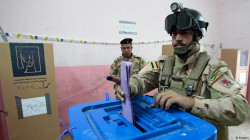
*Iraq’s special voting system, which allows security forces and displaced persons to vote ahead of the general population, has allegedly been repeatedly exploited by dominant parties to mobilize bloc voting under pressure or oversight.
Written and edited by Shafaq News staff