Iraq’s Dawn Crackdown spreads through state institutions: What the latest cases reveal


Shafaq News
Iraq’s Dawn Crackdown, or Sawlat al-Fajr, has moved beyond the dramatic raids that marked its opening weeks, evolving into a broader campaign reaching municipal offices, land registries, electricity institutions, banks, provincial administrations and senior political figures.
Prime Minister Ali al-Zaidi launched the nationwide anti-corruption drive on June 28. By August 9, Shafaq News had documented the detention of at least 210 officials, lawmakers, public employees and business figures during the campaign’s first six weeks. The government has not issued a continuously updated consolidated arrest count.
The operation did not end with the first waves of arrests. A Shafaq News review between August 11 and August 31 identified more cases involving corruption, bribery, embezzlement, illicit enrichment, forgery, fraud, misuse of public funds or closely related investigations and convictions.
Dhi Qar Stands Out
Among cases tied to specific provinces, Dhi Qar appeared most frequently in Shafaq News' August 11–31 review, with most involving Nasiriyah and its municipal administration.
The cases included arrests of municipality employees, allegations involving public land, forged documents, suspected damage to public funds, bribery and manipulation of property transactions.
On August 17, a former head of Nasiriyah Municipality’s Property Division was sentenced to six years in prison for taking bribes and manipulating land transactions. Authorities said hundreds of documents —including deeds, receipts, sale agreements and official correspondence— had been seized during the investigation.
Two days later, a municipal employee facing several corruption warrants evaded an attempt to arrest him. Authorities were examining alleged manipulation involving tens of thousands of residential plots as well as suspected waste in investment and health contracts.
The pressure continued through the end of the month, when security forces and Federal Integrity Commission personnel raided the Nasiriyah Municipality building and arrested a surveying expert over alleged misuse of public funds.
By then, Shafaq News had documented more than 23 arrests in Dhi Qar since the Dawn Crackdown began, in addition to the dismissal of several directors-general.
The pattern made Dhi Qar —and Nasiriyah Municipality in particular— one of the most prominent provincial centers of the campaign in Shafaq News' review.
Baghdad ranked second in the August 11–31 review, while other cases were reported in Al-Muthanna, Saladin, Babil, Najaf, Maysan, Al-Anbar, Basra, Nineveh, Al-Diwaniyah and Al-Sulaymaniyah.
Other cases were national in scope or did not belong cleanly to a single province.
Read more: Iraq detains 35 officials in weekly corruption sweep
Municipalities, Land And Property Dominate
Municipal government, local administration, land and property accounted for the largest cluster of cases reviewed by Shafaq News. Other cases involved the electricity, oil, health, security, culture, investment, transport and industry sectors, as well as other public institutions.
Some cases involved finance, banking, pensions and currency offices as well as senior political or public offices.
Land appears repeatedly as both a public asset vulnerable to manipulation and a mechanism through which suspected illicit gains can be concealed.
In Baghdad, authorities foiled an alleged attempt to seize state land using forged ownership documents.
In Basra’s West Qurna area, investigators uncovered an alleged network using forged documents in land-compensation claims.
In Najaf, a bribery investigation involved a forged municipal barcode connected to the ownership of a land plot.
The largest single land-related operation reported during the period came in Al-Muthanna, where the National Security Service announced the arrest of 61 people over an alleged property-record forgery network.
Investigators said more than 90 transactions had been manipulated or forged, causing losses estimated at around two billion dinars, or about $1.5 million. The suspects included government employees, lawyers and real-estate office owners.
The repeated appearance of municipalities and land offices suggests that the campaign is increasingly reaching the administrative level where citizens, investors and government employees interact directly with state property, permits, records and public contracts.
Electricity Emerges As Another Pressure Point
The electricity sector was the second major institutional cluster. The cases ranged from arrests and bribery convictions to allegations of illicit enrichment and financial violations involving current or former officials.
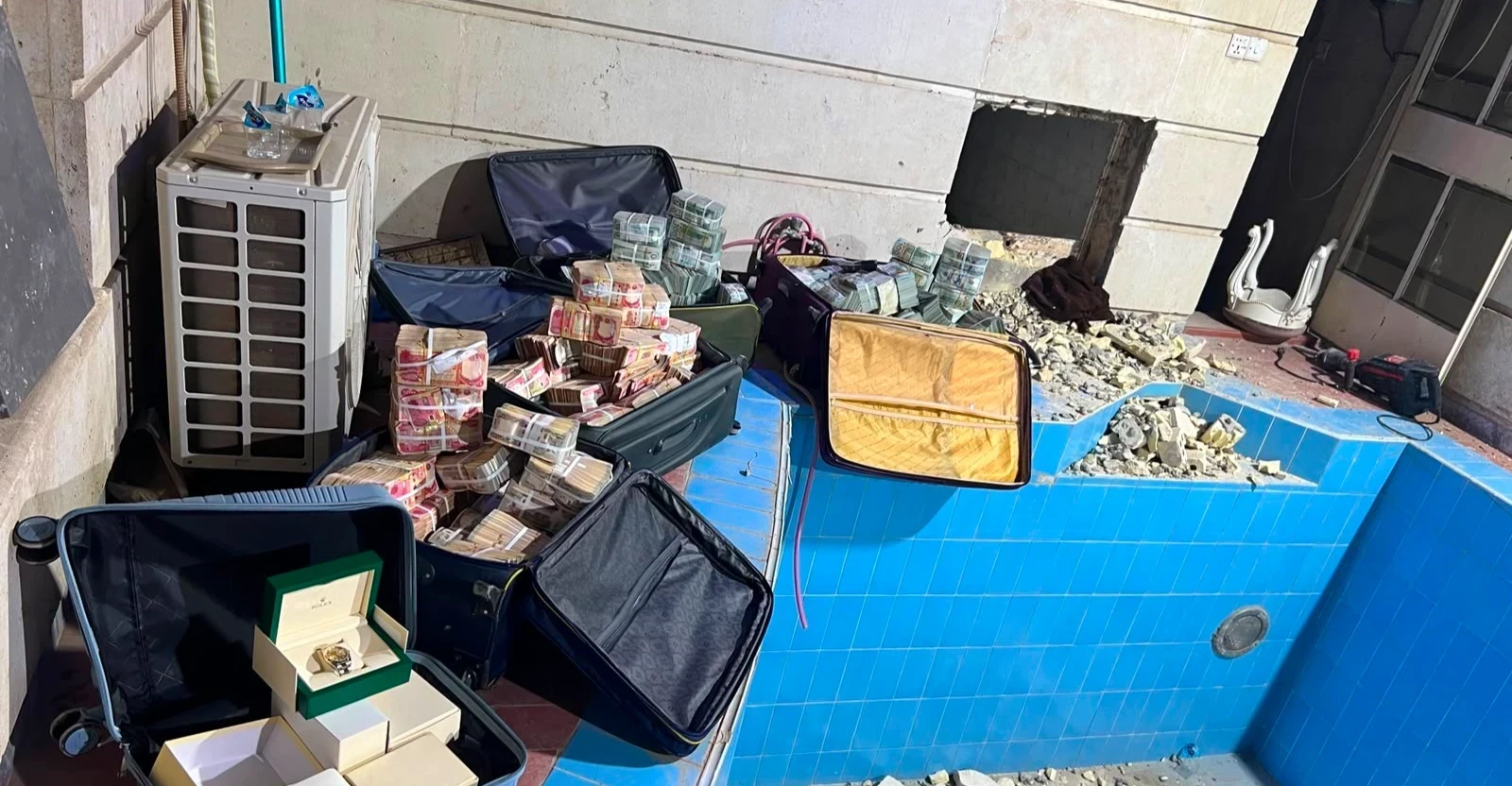
One investigation led to the seizure of millions of dollars and gold from an electricity official. Other cases involved employees of electricity directorates, officials at generation and distribution companies, and convictions over bribery or illicit gains.
By the second half of August, electricity had clearly become one of the campaign’s most visible institutional fronts.
Read more: Corruption arrests in Iraq pass 210 under PM al-Zaidi
Banks, pensions and public money
A further part of the campaign centered on banking, pensions, currency or other state financial systems.
The cases stretched from an employee of state-owned Rafidain Bank accused of misuse of public funds to allegations involving pension payments issued in the name of deceased beneficiaries.
An Integrity Commission audit announced in August identified 16,384 deceased beneficiaries whose pension payments had not been stopped, alongside around 40,000 biometric payment cards issued using outdated records.
In Najaf, investigators separately detained Rasheed Bank employees over pension payments allegedly embezzled for years in the name of a deceased retiree.
Authorities also opened reviews into losses at state-owned banks, while security forces announced operations against counterfeit currency, fake dollar sales and digital-wallet fraud.
From Local Employees To Senior Figures
At the same time, enforcement has continued to reach higher levels of public office.
The August cases included former lawmakers, a former governor, a former deputy minister and other senior officials.
Shafaq News also documented that a wider corruption review had reached former prime ministers and lawmakers, while the Central Bank later ordered asset restrictions involving political figures under investigation.
On August 30, a former MP and a former oil official were reported sentenced in separate corruption cases involving illicit enrichment.
Saladin: From Public Fees To Hidden Property
Saladin provides another example of how investigations have widened from individual transactions to accumulated wealth.
Cases during the period included the conviction of a former governor, alleged embezzlement involving the Traffic Directorate and the arrest of 21 people in an investigation into unauthorized parking areas and fee collection.
Then, on August 29, the Federal Integrity Commission disclosed records connected to about 95 properties during an investigation involving a senior Real Estate Registration official.
Investigators said properties had been registered in the names of relatives and intermediaries and were examining allegations of bribery, misuse of office, illicit enrichment and money laundering.
Authorities seized property records, contracts, cash, gold, computers and other materials during the investigation.
The case illustrates another shift in the campaign: from identifying suspect payments to tracing how alleged proceeds may have been converted into real estate, gold and other assets.
Asset Recovery Becomes A Second Front
The Dawn Crackdown has increasingly been presented not simply as an arrest campaign but as an effort to return stolen money to the state.
By August 9, an estimated 482.6 billion dinars (about $371.6 million) had been recovered in cash and assets, according to figures cited by the Eco Iraq Observatory. The total included cash as well as roughly half a ton of gold.
International specialists in tracing stolen and smuggled funds also joined Iraqi teams in Baghdad in August, with authorities seeking to track assets transferred abroad and pursue suspects outside the country.
Separately, the Iraqi National Security Service said on August 27 that it had recovered more than 93 billion dinars (around $70 million) for the state treasury during the first half of 2026, while also reporting seizures of dollars and Iraqi currency in its operations.
A Campaign Shifting From Raids To Prevention
During a visit to the Federal Integrity Commission, Prime Minister al-Zaidi ordered the implementation of a reward system for corruption whistleblowers, tighter monitoring of border crossings and greater public disclosure of those implicated in graft.
He also called for monthly and quarterly progress reports and increased scrutiny of high-value provincial and federal contracts.
The Integrity Commission said field teams had been established to audit contracts throughout state institutions and that reviews had already been completed at eight ministries, with others continuing.
Officials also announced completion of Iraq’s National Integrity and Anti-Corruption Strategy through 2030.
That development marks an important evolution in the Dawn Crackdown.
The first phase was measured largely through who was arrested.
The next may increasingly be judged by which systems are changed, how much money is recovered, whether major cases reach final court judgments, and whether the same forms of corruption return after the raids end.
Read more: Iraq detains top officials in anti-corruption sweep: What we know so far
Written and edited by Shafaq News staff.