Exclusive: Iraq’s Rafidain Bank faces renewed corruption files over $1.6M losses


Shafaq News
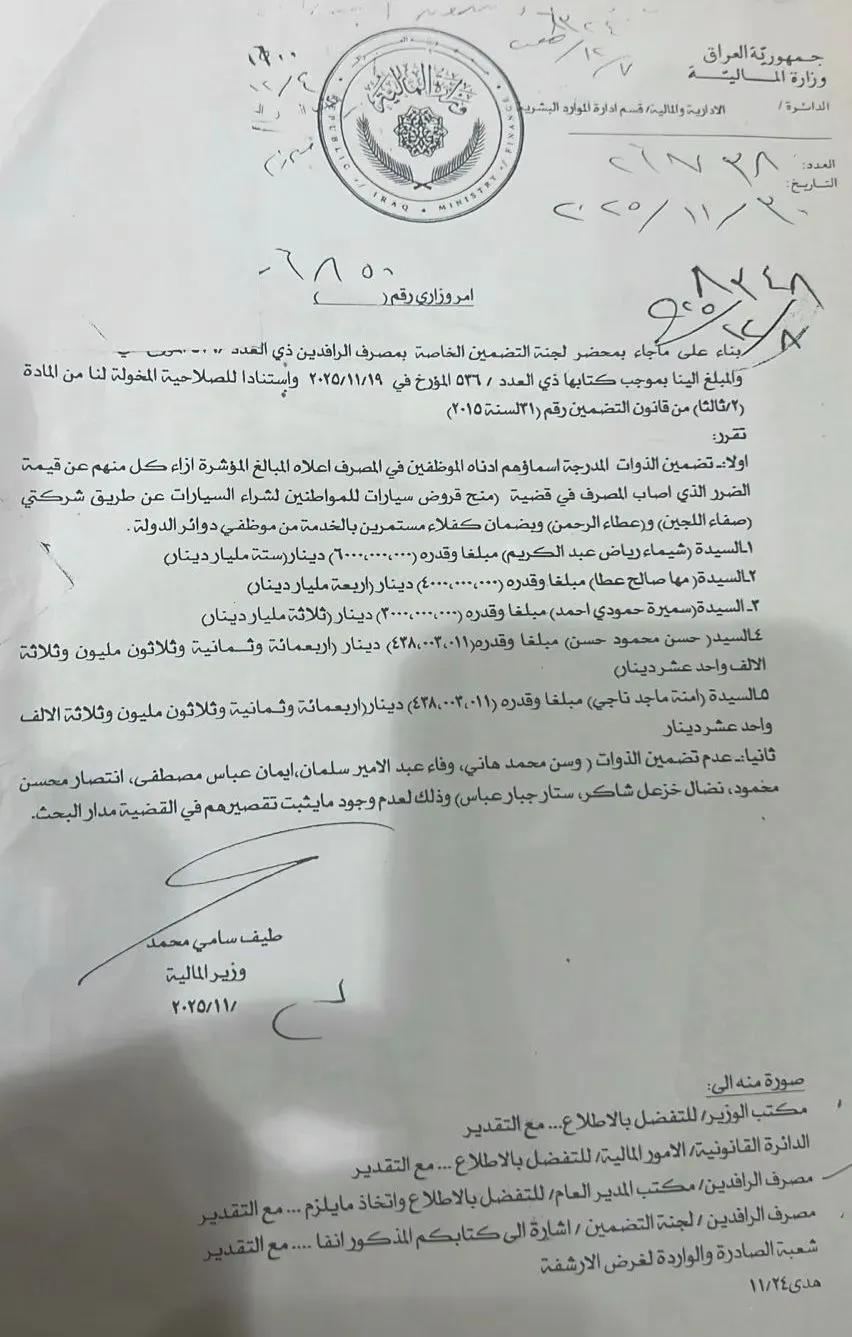
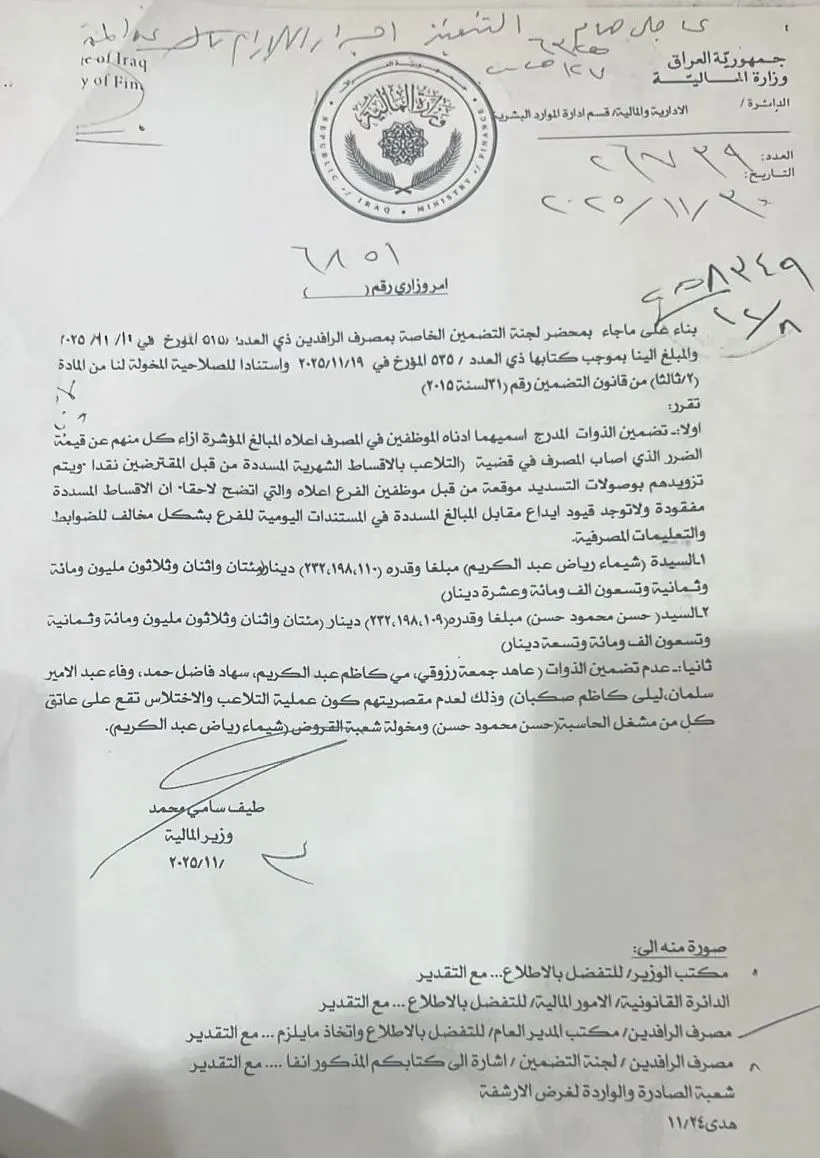
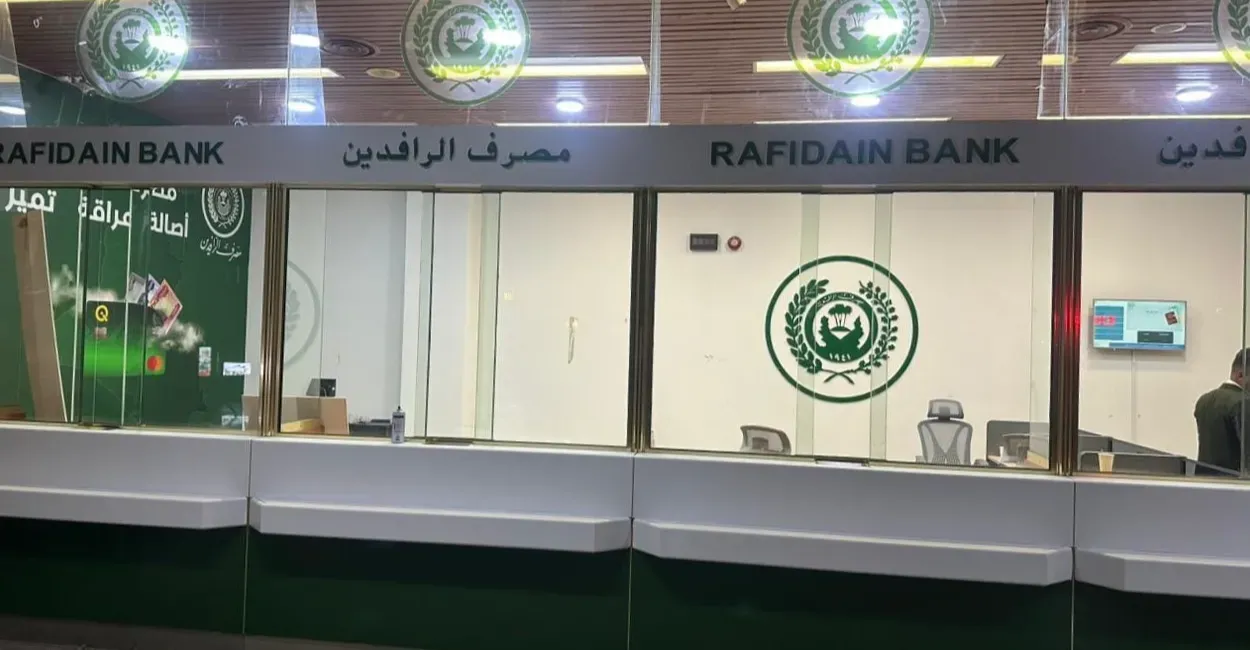
Official documents obtained by Shafaq News reveal corruption and public fund losses at the state-owned Rafidain Bank amounting to more than 14 billion Iraqi dinars ($1.6M), linked to financial and administrative violations involving bank employees.
According to the documents, which include official correspondence issued by Iraq’s Ministry of Finance and addressed to Rafidain Bank, several employees were implicated in corruption cases, most notably involving the manipulation of monthly loan installments paid in cash by borrowers, where collected amounts were found to be missing and not matched by corresponding deposits in official banking records.
The documents also point to another corruption file related to car loans granted to citizens, which was marred by financial and administrative violations that resulted in further losses of public funds.
Informed sources told Shafaq News that the corruption files extend beyond the cases identified in the documents. They include alleged abuse of official positions through privileges, travel missions, and large financial expenditures outside legal frameworks, as well as suspected irregularities in account balances and financial transfers.
The sources, who preferred to stay anonymous due to the sensitivity of the issue, also referred to a separate file concerning penalties imposed on Rafidain Bank branches outside Iraq, along with other files that have not yet been disclosed.
“Regulatory bodies —particularly the Integrity Commission, the Federal Board of Supreme Audit, and the judiciary— are required to conduct direct, on-site audits and form mobile inspection teams at the bank and its branches,” the sources stressed, warning against relying solely on reports submitted by the bank, especially amid accusations that inaccurate or misleading data may have been provided by officials in coordination with other involved parties to conceal corruption and public fund losses.
The sources confirmed that investigations into these files have not been conclusively settled, noting that there is a trend toward obliging those involved to repay the amounts under suspicion. They added that judicial procedures remain unclear at this stage, suggesting that only one employee may have been detained in connection with the case, although no official confirmation has been issued so far.
Link to the 2022 Mustansiriya Branch Case
Shafaq News had previously addressed a major corruption case at Rafidain Bank in a 2023 report, which detailed the embezzlement of 14 billion Iraqi dinars at the bank’s branch in Baghdad’s Shorja area including funds linked to housing loans for the Bismayah residential complex. The Integrity Commission said the case was referred to the Rusafa Investigation Court, specialized in integrity, money laundering, and economic crime, which ordered the detention of the suspects under Article 316 of the Iraqi Penal Code.
At the time, borrowers from Bismayah told Shafaq News that they were shocked when they visited the branch to make monthly payments and were told that installments they had already paid were “not recorded in the branch’s system.”
An informed source later told our agency that the investigation file had effectively stalled, describing it as having “gone to dust.”
A senior official at the Ministry of Finance told Shafaq News at that time that the 14 billion dinars embezzled at the Mustansiriya branch resulted from large-scale manipulation of loan and installment payment receipts, including Bismayah housing loans and other credit facilities. The official said the case was uncovered by the Integrity Commission on August 8, 2022.
According to a government source, approximately 500 borrowers were affected by the embezzlement, including 228 citizens whose down-payment records —representing 10% of Bismayah housing units— were lost, with individual payments ranging between 10 million and 30 million dinars, under the 2020 payment system.
Leaked documents reviewed by Shafaq News showed that the Ministry of Finance’s Compensation Committee for Rafidain Bank assessed financial damages and issued formal decisions identifying employees subject to liability, while exempting others due to insufficient evidence of direct involvement. The documents indicate that the committee relied on internal audits and branch-level financial records to determine responsibility.
An Integrity Commission official stressed that Rafidain Bank’s board is responsible for compensating affected citizens, particularly those who possess official receipts proving payment, emphasizing that borrowers bear no responsibility for the bank’s failures.
Meanwhile, members of Iraq’s previous parliament declined to comment when contacted by Shafaq News at the time, citing a lack of information regarding the file.
Investigations into the newly revealed documents remain ongoing, with regulatory and judicial bodies yet to announce final outcomes or comprehensive accountability measures.
Written and edited by Shafaq News
staff.