Disguised Barrels: Iraq's entanglement in Iran’s oil evasion


Shafaq News
US sanctions announced in September against Iraqi-Kittitian businessman Waleed al-Samarrai have once again drawn Iraq into the debate over Iranian sanctions evasion. Washington accused al-Samarrai’s network of passing off Iranian crude as Iraqi exports, generating hundreds of millions of dollars for Tehran and its affiliates.
The case highlights a broader issue raised by American officials: that Iraq’s geography, energy infrastructure, and political environment make it a natural pathway for oil smuggling schemes, despite Baghdad’s repeated denials.
Methods Of Smuggling And Disguise
Over the past decade, Iran has developed a complex set of techniques to move crude and fuel products despite US sanctions. According to the US Treasury and industry monitoring firms such as Kpler and Vortexa, these methods include blending Iranian crude with barrels of Iraqi origin, producing certificates of origin that identify the cargo as Iraqi, and using shell companies registered in jurisdictions such as the Marshall Islands or Liberia to obscure ownership.
Maritime deception plays a central role. Tankers often conduct ship-to-ship transfers in international waters, with some vessels temporarily disabling their Automatic Identification Systems (AIS) to conceal movements or broadcasting manipulated coordinates. Such practices make it difficult to trace the source of the oil, particularly in the northern Gulf, where Iraqi and Iranian waters are geographically close.
This activity has been linked to what the US Treasury describes as Iran’s “shadow fleet,” a collection of older tankers acquired specifically for sanctions-evasion purposes. These ships frequently change flags, operate without standard insurance, and rely on opaque ownership structures. The result is an international network designed to blur accountability and hinder enforcement.
Iraq’s Exposure
For Iraq, the challenge lies in how these operations intersect with its own oil sector. Iraq shares narrow Gulf waters with Iran, and tankers operating just beyond territorial limits can conduct transfers outside the immediate reach of Iraqi oversight. Although the State Oil Marketing Organization (SOMO) insists it employs advanced tracking systems, including those provided by the US firm Kpler, enforcement responsibilities are divided between SOMO, naval forces, and port authorities. This fragmentation can create space for illicit activity.
Iraq is also exposed through transnational business networks. Figures such as al-Samarrai or, earlier, Iraqi-British national Salim Ahmed Said, have been sanctioned by Washington for allegedly operating schemes that blended Iraqi and Iranian cargoes. These individuals typically make use of offshore entities and global shipping registries, limiting Iraq’s ability to assert direct jurisdiction.
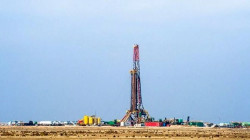
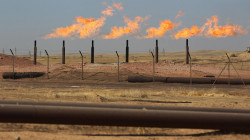
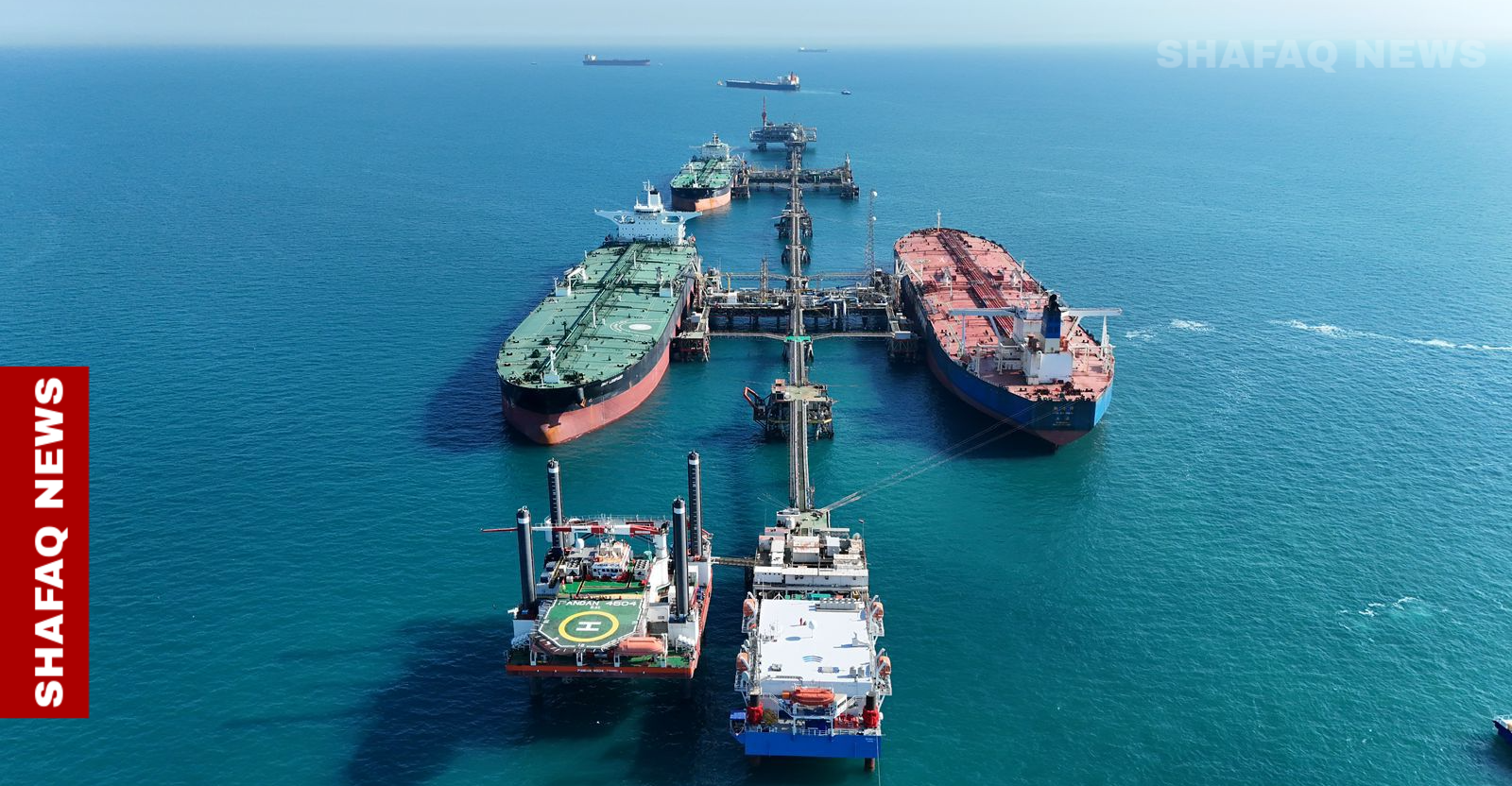
Oil expert Nabil al-Marsoumi, speaking to Shafaq News, noted that suspicions have centered on the al-Qayyarah oil field, where only a small fraction of production is consumed domestically and the remainder could potentially be mixed with Iranian crude to bypass sanctions. He also pointed to Berth 41 at Khor al-Zubair as a focal point for suspected trafficking of crude and fuel oil, highlighting areas where Iraq’s exposure is most acute.
Baghdad’s Denials And Enforcement
SOMO has categorically rejected accusations that Iraqi crude has been mixed with foreign supplies. In early September, its director-general, Ali Nizar al-Shatari, stated that exports are monitored “from loading to delivery” through international tenders and transparent banking channels. He argued that the mere presence of unfamiliar tankers in regional waters “does not necessarily indicate smuggling.”
Baghdad has also highlighted its enforcement role. In August, Iraqi naval forces detained a Liberian-flagged tanker during inspections near Basra. Officials described the operation as part of a broader crackdown on fuel smuggling and said the case was referred for judicial review. Iraqi authorities did not state that the incident was linked to Iranian oil smuggling, and Iranian officials did not comment on the detention.
Despite these assurances, the US Treasury Department has reiterated that sanctions-evasion networks continue to exploit Iraq’s oil ecosystem, stressing that revenues from these operations benefit Iranian entities, including the Islamic Revolutionary Guard Corps–Quds Force.
Al-Marsoumi also observed that SOMO has recently withdrawn from transporting crude from production fields to Khor al-Zubair, leaving this responsibility to oil companies. He suggested the move was intended to distance the organization from operational controversies linked to product leakage and allegations of smuggling through southern ports.
Evidence Of Disguised Flows
International trade data has added complexity to the debate. Chinese customs records in recent years have shown imports of “Iraqi” oil exceeding Iraq’s officially declared exports by around 100,000 barrels per day. Analysts such as TankerTrackers and Vortexa suggest that these discrepancies point to Iranian cargoes entering China under Iraqi documentation, facilitated by forged bills of lading and AIS manipulation.
Some tankers have reportedly simulated loading near Oman’s Sohar port while lifting crude in Iranian waters. Kpler has documented vessels that “go dark” for periods before reappearing with declared cargoes, though it notes that spoofing of Iraqi terminals has been less common than spoofing near Oman. For fuel oil, however, some false signals linked to Iraq’s Basra terminal have been observed in small volumes.
Similar patterns have affected other states. China’s reported imports from Malaysia in 2025 far exceeded Malaysia’s actual production capacity, suggesting Iranian crude was marketed under Malaysian origin. But Iraq’s dependence on US security cooperation and international investment makes the reputational risks especially acute.
Iraq’s Oil Minister Hayyan Abdul-Ghani acknowledged earlier this year that Iranian cargoes had circulated with forged Iraqi documents, saying Baghdad had raised the matter with US authorities. However, Iran’s Deputy for International and Commercial Affairs at the Oil Ministry, Ali-Mohammad Mousavi, affirmed that Iranian oil sales comply with accepted standards and norms in oil transactions. Mousavi indicated that Abdul-Ghani’s statements were conveyed “incompletely,” as they were based on claims attributed to American officials.
Implications For Iraq
The persistence of smuggling schemes has several implications for Iraq. Concerns about the origin of cargoes may deter some buyers, placing pressure on SOMO’s ability to market crude competitively. Diplomatic friction with Washington is also likely to intensify if Iraq is perceived as failing to close loopholes. Domestically, stronger enforcement could meet resistance from Iran-aligned groups that view such measures as siding with US pressure. At the regional level, intensified monitoring by both US and Iranian forces in Gulf waters raises the risk of confrontation, in which Iraqi exports could become collateral.
Economic researcher Ahmed Eid told Shafaq News that Iraq “loses an estimated $2-4 billion annually” due to these practices, which directly reduce state revenues and strain the federal budget. He warned that such schemes distort production and export data, undermining Baghdad’s ability to finance development projects and eroding confidence in the national economy.
According to Eid, using Iraq’s name in smuggling operations “damages the country’s reputation before the international community,” making it appear unable to control its resources and discouraging foreign investment. Eid added that continued manipulation of Iraq’s oil identity may push the United States and international partners to “tighten oversight of Iraqi oil exports, including meticulous reviews of contracts, licenses, and shipping documents,” which would further burden state institutions.
Iran’s reliance on passing off shipments as—possibly—Iraqi also carries political consequences for Baghdad. US officials view repeated discrepancies and sanction designations as evidence that Iraq has become entangled—whether willingly or not—in Tehran’s sanctions-evasion chain. This perception complicates Iraq’s efforts to deepen energy partnerships with Western companies and governments, particularly as Baghdad seeks to reassure investors of transparency in its oil sector.
Yet Haitham al-Heeti, professor of political science at the University of Exeter, downplayed the scope of the most recent US sanctions, describing them as “an isolated measure against a businessman and his company rather than the Iraqi government.” He told Shafaq News that the move gained “outsized media attention for political and electoral reasons,” but emphasized that it nevertheless serves as a warning to Baghdad to monitor the dealings of private actors more closely.
Ghazi Faisal, director of the Amman-based Iraqi Center for Strategic Studies, told Shafaq News that authorities appear not to have pursued these networks, noting that “more than 300,000 barrels per day are smuggled from Basra with the facilitation of political parties and figures in power.” He attributed this to “either a lack of seriousness or an inability by the government to curb smuggling tied to complicit banks, front companies, and forged documentation.”
Faisal argued that while Washington exposes and sanctions these networks, Baghdad struggles to address the structural weaknesses that enable them.
For now, Iraq is positioned uncomfortably at the center of Iran’s shadow fleet and related disguise tactics, and Baghdad has taken visible steps to assert control over its oil exports. However, discrepancies in trade data, US sanctions, and repeated reports from shipping intelligence firms suggest persistent vulnerabilities.
Written and edited by Shafaq News staff.