Armed factions in the region: Retrenchment, repositioning, or decline?


Shafaq News
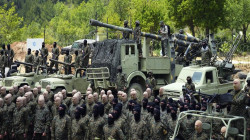
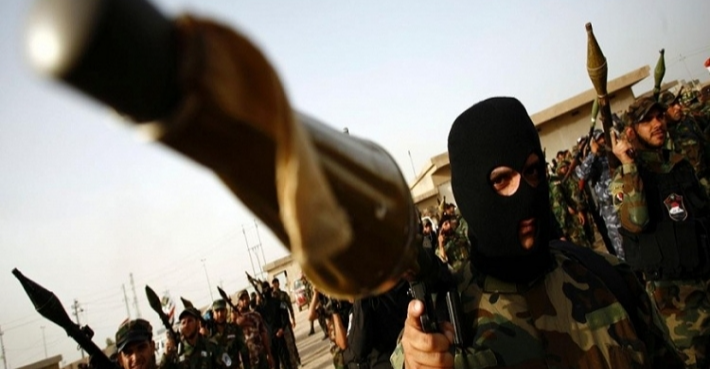
Once a constant presence on the frontlines, the region’s pro-Iranian armed factions are now less visible. Their silence, however, does not necessarily signal defeat. Analysts warn that under intensifying international pressure and shifting regional alliances, these groups are recalibrating rather than collapsing—poised to reemerge when conditions allow.
While some see the downturn as weakness, others describe it as a deliberate pause driven by political understandings and external constraints. The debate underscores a wider uncertainty: whether this moment marks the fading of Iran’s regional proxies or merely a strategic regrouping before the next confrontation.
“Not Weakness” but Political Understandings
In Baghdad, security expert Sarmad al-Bayati rejects the narrative of decline.
“There is no weakness. Some groups in Iraq still maintain their strength,” he explains, linking the slowdown in attacks to tacit deals with the Iraqi government and political leaders. This restraint, he argues, is less about eroded capacity than about calculated caution to avoid escalation.
Al-Bayati notes that Lebanon’s Hezbollah and Yemen’s Houthis have taken heavy hits, yet remain intact. Yemen’s rugged geography, he stresses, has helped the Houthis preserve their command structure despite sustained strikes.
Factions Hold Back, Not Fade Away
Another Iraqi expert, Mukhlid Hazem, also views the lull as tactical. He points out that factions retain significant firepower, including medium and heavy weapons, but are holding back to avoid political blowback inside Iraq.
Hazem cautions that this equilibrium is fragile. Continued sanctions and pressure on Iran, he says, could quickly unravel: “If military confrontations against Iran resume, factions may open support fronts, which is what many fear.”
Resistance in Repositioning
From Beirut, Lebanese researcher Ghaleb Sarhan emphasizes adaptation rather than decline, portraying the apparent retreat as part of wartime maneuvering, coordinated across what is often called the Axis of Resistance—Iran and its allied groups, including Hezbollah, Iraqi armed forces, and the Houthis.
According to Sarhan, Hezbollah has restructured in Lebanon, Iraqi factions are preparing for escalation, and the Houthis continue to launch strikes on Israel. He credits Tehran with sustaining this strategy: “Iran, as the head of the Resistance Axis, has inflicted heavy blows on Israel,” he says, pointing to the recent twelve-day war.
In his view, pressure only hardens these movements: “The more pressure increases, the more resistance intensifies.”
Read more: A broader conflict in the region: Analysts divided on timing but agree on danger
A Coordinated Plan to Dismantle Militias?
By contrast, Lebanese analyst George al-Aqouri sees a turning point, arguing that after October 7, 2023, world powers quietly reached consensus on dismantling Iran’s armed proxies.
“There is an international consensus on this,” al-Aqouri notes, stressing that even Russia and China refrained from blocking the move. For him, Hezbollah’s arms are no longer a domestic debate but part of a global push to end Iran’s “use of militias” as bargaining chips.
Al-Aqouri recalls decades of Lebanese disputes over sovereignty: “A real state cannot coexist with parallel arms.” Now, he argues, the regional tilt toward stability and economic recovery strengthens calls for disarmament.
Houthis: A Different Landscape
From Sanaa, Mohammed Abdullah al-Naami, a member of the Houthi political bureau, stresses that Yemen’s context sets it apart.
“The conditions of Iraqi and Lebanese factions are complicated, but in Yemen, the situation is more favorable,” he says. Al-Naami attributes this resilience to broad Yemeni public support for the Palestinian cause: “The Yemeni leadership is implementing the people’s will in confronting aggression.”
He argues that this popular backing gives the Houthis greater freedom in military and political decisions, even under international scrutiny. That confidence was underscored Tuesday when the group announced a new campaign targeting US oil firms, breaking a previous understanding with Washington. Thirteen US companies, nine individuals, and two ships were declared “hostile entities,” effectively warning they could face attacks in the Red Sea and Gulf of Aden.
Read more: Countdown to a wider war: Why Iraq is the most vulnerable link in regional escalation
Quiet Battlefields, Uncertain Future
The perspectives diverge sharply, but they converge on one point: armed factions are downshifting, not disappearing.
Whether this marks the erosion of Iran’s regional network or simply a pause before a new cycle of confrontation will become clearer in the months ahead. For now, the region sits in a tense interlude, where silence on the battlefield may conceal the preparation for another storm.
Written and edited by Shafaq News Staff.