$1.4T spent, still thirsty and in the dark: Iraq’s budget legacy under scrutiny


Shafaq News
Since the 2003 US-led invasion that toppled Saddam Hussein and ushered in Iraq’s new political system, the country has passed through successive cycles of democratic governance—interim councils, elected parliaments, and constitutional drafting. However, behind the surface of institutional progress, one governing mechanism has defined Iraq’s modern trajectory: the federal budget.
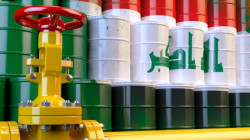
Initially intended to cover urgent reconstruction and operational costs in a war-battered country, Iraq’s annual budget was the main vehicle for delivering electricity, water, healthcare, and public services. Yet nearly two decades later, these same sectors remain paralyzed—casting doubt on whether the country’s vast oil wealth has been translated into real development.
A Wealthy Country, A Failing State
Iraq, home to the Tigris and Euphrates rivers and among the world’s top oil exporters, still grapples with drought-stricken cities, overflowing sewage, and chronic blackouts. Basic services—such as potable water and drainage—collapse with the first rainfall or summer heatwave. While official rhetoric promised revitalization, funds were siphoned, projects abandoned, and corruption normalized.
Can a country with this level of resources fail so profoundly? A comprehensive review by Shafaq News reveals the answer.
$1.396T in Budgets: Where Did It Go?
Shafaq News reviewed all publicly available Iraqi federal budgets from 2006 to 2024, identifying a total of $1.396 trillion in allocations:
-2006–2009: Budgets ranged from $34 to $43 billion, with limited detail and few visible outcomes.
-2010: A surge to $72.5 billion included large reconstruction promises—like rebuilding Baghdad’s Sadr City and modernizing Basra and Nineveh—that never materialized.
-2011–2013: Budgets peaked at $115 billion in 2013, still with no systemic infrastructure gains.
-2014-2020: No budgets were passed due to ISIS's incursion and political turmoil.
-2015–2019: Budgets fluctuated between $66 and $112 billion, mirroring oil prices and instability.
-2021: $89.6 billion allocated, including large energy-related loans.
-2022: Another political deadlock year with no budget.
-2023–2024: Historic highs—$153 billion and $155 billion respectively—under a newly introduced three-year budget plan.
-2025: is yet to be approved due to political disagreements.
According to economists consulted by Shafaq News, these amounts could have funded a national dam network, modern power grid, urban drainage systems, and even a sovereign wealth fund for future generations. Instead, they argue, the country is trapped in a cycle of waste and inertia.
Water Crisis Amid Budget Surpluses
Despite soaring budgets, Iraq faces unprecedented water scarcity. Entire provinces—Maysan, Dhi Qar, and Basra—suffer from arid farmland, declining crop yields, and depleted fish stocks. Yet, the cost of building two critical dams—Basra and Makhoul—is a fraction of annual spending:
-Basra Dam: Estimated at $1.1 billion. Discussed for over a decade. Still not built.
-Makhoul Dam: Announced in 2022 with a projected $3 billion price tag. Still in the planning phase.
Environmental studies, including UN-backed assessments, warn Iraq is just five years away from “critical water poverty,” yet execution remains stalled.
Flooded Streets, Collapsed Drains
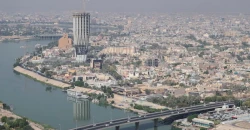
Seasonal rainfall routinely submerges Baghdad and other cities in stagnant water, exposing the absence of functional sewage infrastructure. Projects meant to address this are themselves mired in delays and mismanagement:
-Hilla Grand Sewage Project in Babil Province: Halted for a decade, revived in 2019 for $290 million.
-Al-Saniya Project in Al-Diwaniya Province: Contracted for $26 million with no clear progress.
Economists argue these cases show that funds are funneled into stalled contracts or front companies, not actual development.
Electricity: $17 Billion and Still in the Dark
Despite being one of the world’s top oil producers, Iraq endures daily power outages. The core issue: Iraq imported gas-powered plants without ensuring gas supply, forcing reliance on Iranian imports—costing $17 billion since 2017.
Examples of energy budget inefficiencies include:
-2021 Budget: Contained $145 million in power-related loans, plus $100 million for maintenance.
-Al-Dora Station (Baghdad): Allocated $301 million for maintenance alone, with no measurable improvement.
Scandals
Moreover, significant portions of budgeted amounts are either unspent or lost to inflated contracts. Notable scandals include:
-2012 Russian Arms Deal: Cancelled amid $4.2 billion corruption allegations.
-2022’s Theft of the Century: $2.5 billion embezzled from the tax authority. The main suspect, Nour Zuhair, was later released on bail and regained assets.
Currency Smuggling and US Intervention
By 2022, rampant money laundering—often via banks tied to political elites—prompted the US to impose international financial oversight on Iraq’s banking system to curb dollar smuggling.
A Bureaucracy-Funded State
Operational spending—salaries, pensions, and personal allowances—dominates the budget. Iraq employs over 4 million civil servants and pays 2 million retirees. Prime Minister Mohammed Shia al-Sudani confirmed that last year’s public payroll alone reached 64 trillion dinars (roughly $49 billion).
Meanwhile, Shafaq News investigations found that Iraq’s parliament has cost $325 million since 2006 in salaries, allowances, and security.
According to a 2023 policy review by the Iraqi Economists Network, Iraq’s federal budget process “prioritizes disbursement over delivery,” with more than two-thirds of spending absorbed by salaries, subsidies, and imports.
Regional Comparisons: Spending vs. Outcome
Over the past 18 years, Iraq’s total expenditure has surpassed many larger or more diversified economies:
-Iraq: $1.396 trillion spent for a population of ~44 million, yet it suffers from decaying infrastructure, persistent blackouts, and water stress.
-Turkiye: Spent $1.2 trillion for 85+ million people—delivering modern highways, rail, food self-sufficiency, and industrial expansion.
-Iran: Spent $1.1 trillion under sanctions, achieving self-sufficiency in medicine and agriculture, and a robust defense sector.
-Saudi Arabia: Topped $2.2 trillion, but built modern infrastructure, launched megaprojects like NEOM, and established an $800 billion sovereign wealth fund.
A System in Stasis
While regional peers harnessed their budgets for long-term national gains, Iraq remains mired in outdated systems, paper dams, and half-built stations. Budget cycles have turned into political bargaining chips rather than engines of national development.
As experts warn of worsening climate and energy pressures, the question facing Iraq’s next political cycle isn’t just about funding—but about whether the state can reform how it spends.
Note: All figures are estimates based on data from Iraq’s Ministry of Finance, the World Bank, and national sovereign funds.
Written and edited by Shafaq News staff.