Iraq’s Feyli Kurds still seek answers over missing relatives decades later


Shafaq News- Erbil
For decades, Feyli Kurdish families in Iraq have been waiting for an answer to a question that remains unresolved: What happened to their missing sons?
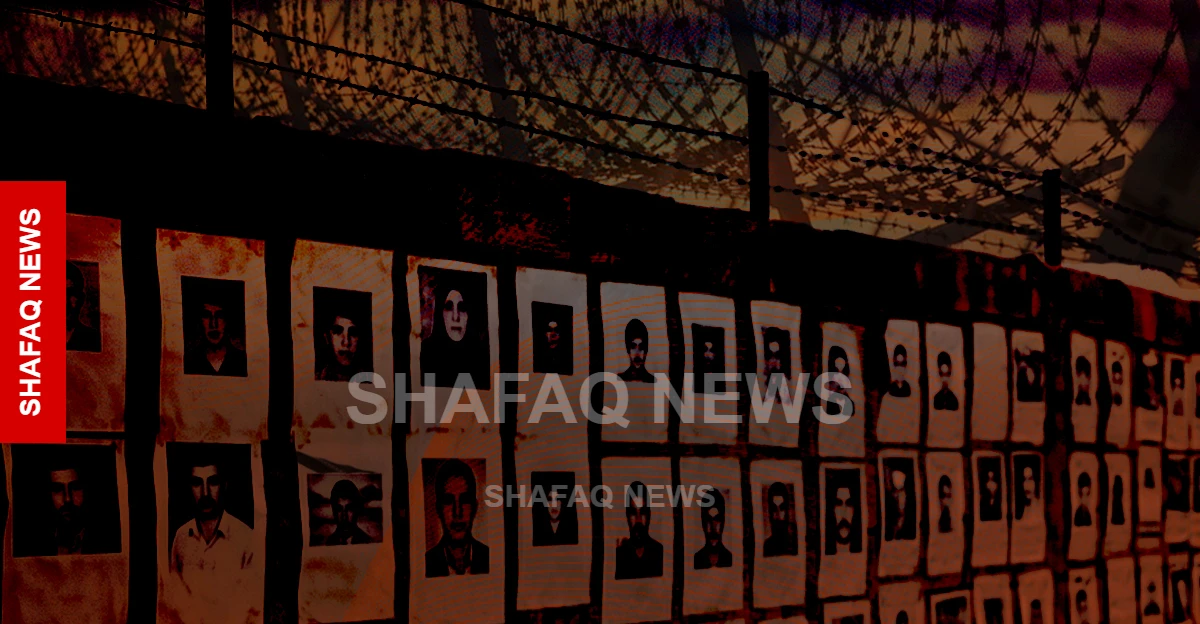
Thousands of young Feyli Kurds disappeared amid campaigns of forced displacement, arbitrary detention and the revocation of Iraqi citizenship under the former regime. While some cases were closed on paper, others remain unresolved, with families still waiting for evidence of what happened to their relatives or for their remains to be found.
On the International Day of the Victims of Enforced Disappearances, the issue has returned to focus, with calls for the truth to be established and justice delivered to families that have spent decades waiting to learn where their loved ones were buried.
Feyli Kurdish lawmaker Haider Abu Tara told Shafaq News that the community, particularly families of those forcibly disappeared, has yet to receive full redress. He recounted a case brought to him on Sunday by a woman seeking information about her missing brother, in which she was asked to provide his remains or any evidence confirming his death. “The family has still found nothing to establish his fate. We have not even found a piece of his remains,” he said.
The lawmaker held the current and previous governments responsible for a lack of seriousness in searching for the remains of those who disappeared and determining their fate. The passage of decades, he added, has not ended the families’ suffering as they continue to wait for answers and the return of their relatives’ remains.
Tareq al-Mandalawi, director general of the Legal Department at the Martyrs Foundation, affirmed that the case of missing Feyli Kurds remains unresolved, putting the number of young Feyli Kurds forcibly disappeared by the former regime at more than 22,000.
Most of those missing were university students, al-Mandalawi explained, after their families were forcibly deported to Iran, their movable and immovable property confiscated and their Iraqi citizenship revoked.
“The former regime detained and disappeared young men between the ages of 16 and 35 in several prisons and detention centers, including Abu Ghraib Prison.” Documents found at the National Pension Authority indicate that some of them were registered as volunteers on the battlefronts and later recorded as killed, according to al-Mandalawi.
Some documents and testimonies he reviewed also describe several missing Feyli Kurds being subjected to chemical experiments before being killed and buried in mass graves in the Samawah area. “I am a living witness to this.”
Al-Mandalawi called on the relevant government authorities to continue searching for the missing and their remains and to establish the truth for their families. Decades of disappearance, he stressed, should not prevent victims’ families from learning what happened to their relatives.
Legal expert Nour al-Din Mahdi attributed Iraq’s failure to enact a specific law criminalizing enforced disappearance to several factors, foremost among them delays in addressing the issue through legislation, despite Iraq having experienced widespread cases of enforced disappearance over several decades.
The cases have been addressed separately under various laws and decisions rather than through a unified statute defining enforced disappearance as a crime and establishing the responsibilities of relevant authorities and procedures for locating missing people, identifying remains and providing redress to their families, Mahdi said.
“A dedicated law would not only establish penalties for those responsible,” he added, but also provide a legal framework for managing cases of missing people by creating a national database, setting procedures for searches and investigations, regulating DNA testing, and guaranteeing families’ right to know the fate of their relatives, recover their remains and seek compensation and other forms of redress.
The continued absence of such legislation leaves part of the suffering of families of the missing, including Feyli Kurds, without a comprehensive legal remedy, Mahdi said, pointing out that the passage of time does not extinguish a family’s right to know the truth and the fate of a missing relative.
Sabah al-Fayli, a Feyli Kurdish citizen, told Shafaq News that August 30, which marks the international day commemorating victims of enforced disappearance, is a time to remember the 22,000 young men who disappeared.
We remember souls, dreams, and lives stolen unjustly, while while the people themselves disappeared without us knowing their fate, she noted, adding, “the missing were sons, fathers, brothers and loved ones, leaving behind families still waiting for news and hearts that have never stopped asking: Where are they?”
“I am a Feyli Kurd, and I carry this memory in my identity and in my memory. We will not forget those who disappeared, and their story will not end as long as there is a memory preserving their names and demanding truth and justice,” al-Fayli concluded.